Business in Egypt

Foreign Trade and Business in Egypt, Suez Canal. Cairo
- Introduction to Egypt
- Egyptian economy
- Growing Sectors of the economy
- International Trade of Egypt
- Investment in Egypt
- Open a business in Egypt
- Cost of doing business in Egypt
- Business Plan for Egypt
- Access to the Egyptian Market
Egyptian Businessman:
- Ahmed Mekky
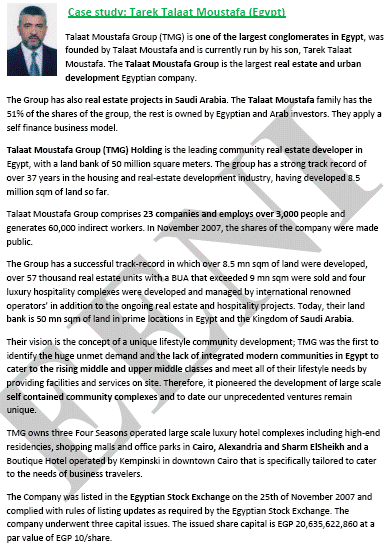
- Tarek Talaat Moustafa
- Hassan Abdalla
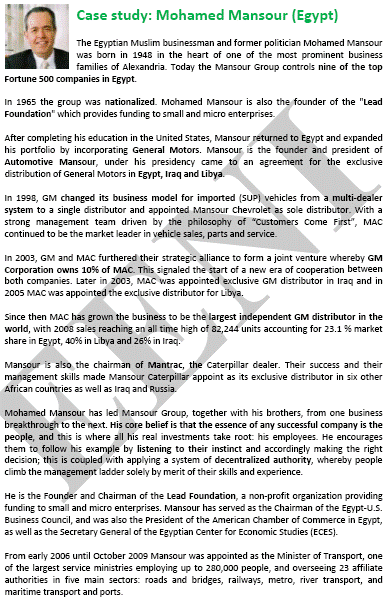
- Mohamed Mansour
- Onsi Sawiris - Orascom Telecomm
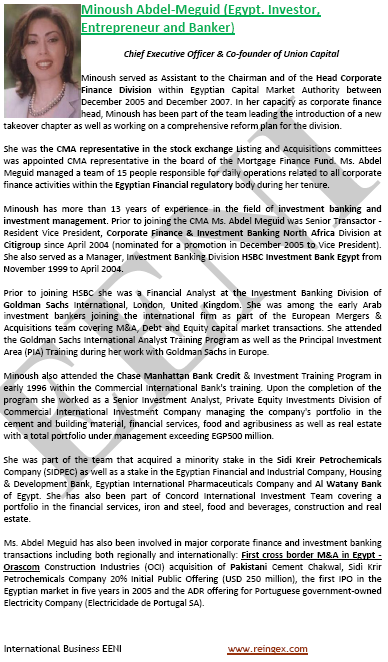
- Minoush Abdel-Meguid
The aims of the subject “Foreign Trade and Business in the Arab Republic of Egypt” are the following:
- To analyze the Egyptian Economy and Global Trade
- To understand the strategic importance of the Suez Canal
- To know the business opportunities in Egypt
- To explore the Egyptian trade relations with the country of the student
- To know the Egyptian Trade Agreements
- To examine the profile of Egyptian Businesspeople
- To develop a business plan for the Egyptian Market
Global Trade and Business in Egypt:

The Subject “Foreign Trade and Business in Egypt” belongs to the following Online Programs taught by EENI Global Business School:
Doctorate: Islamic Business, African Business, World Trade.

Masters: Business in Africa International Business.
Languages:  or
or  Égypte
  Egito
Egito  Egipto.
- Credits of the subject “Doing Business in Egypt”: 3

- Duration: three weeks
 Masters adapted to Egyptian Students.
International Trade and Business in Egypt
Egypt: Strategic location (Africa - the Middle East). Control of the Suez Canal.
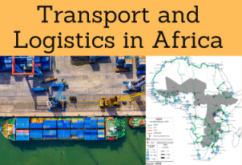
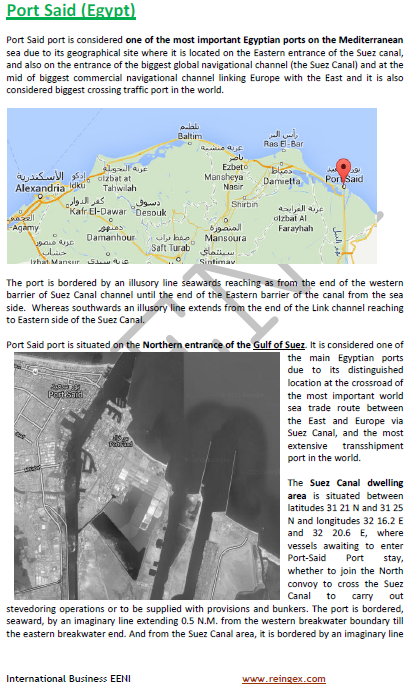
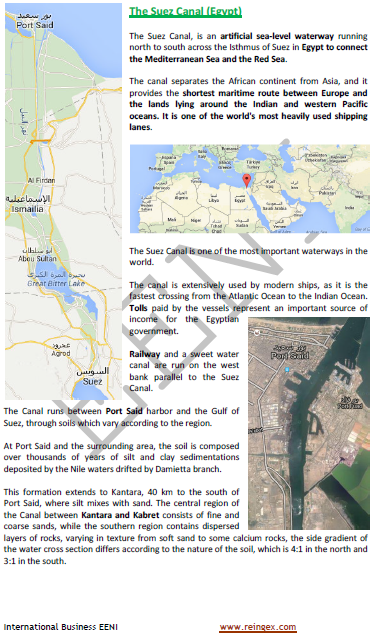
- Egyptian ports
- Suez Canal
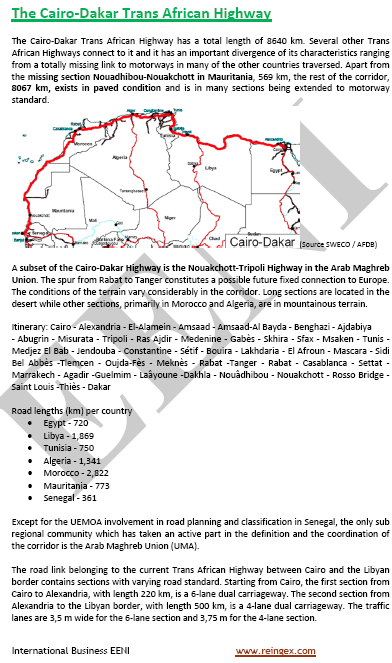
- Trans-African corridors;
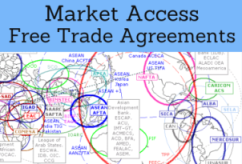
Egyptian Market Access and Trade Agreements.
- Egypt and the East African Economic Area
-
Arab Mediterranean Free Trade Agreement (العربية المتوسطية اتفاقية للتجارة الحرة -
اتفاقية أغادير)
- Egypt-Jordan-Morocco-Tunisia Free Trade Agreement (FTA) / Agadir Agreement
- Community of Sahel-Saharan States (CEN-SAD)
- Common Market for Eastern and Southern Africa (COMESA)
- COMESA-EAC-SADC Tripartite Agreement
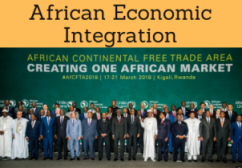
- African Continental Free-Trade Area
- Trade Agreement with Cameroon
- MERCOSUR-Egypt Agreement
- Turkey-Egypt Agreement
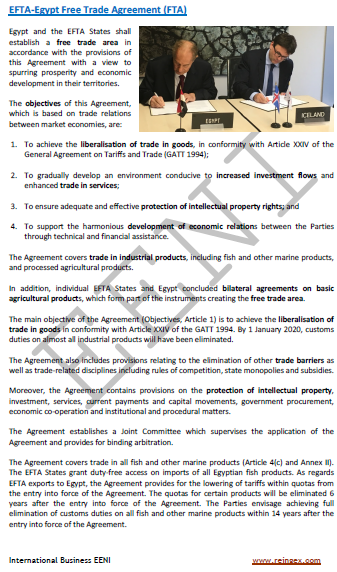
- EFTA-Egypt Agreement
- Islamic Trade Preferential System
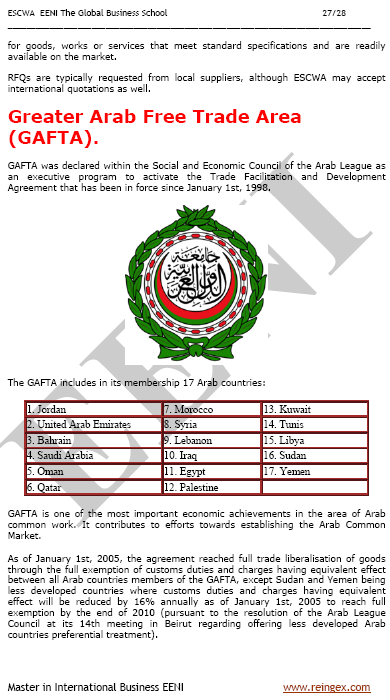
- Greater Arab Free-Trade Area (GAFTA)
- Arab Bank for Africa (BADEA)
- Arab Trade Financing Programme
- Global System of Trade Preferences
- Trade Negotiations Among Developing Countries
- Nile Basin Initiative
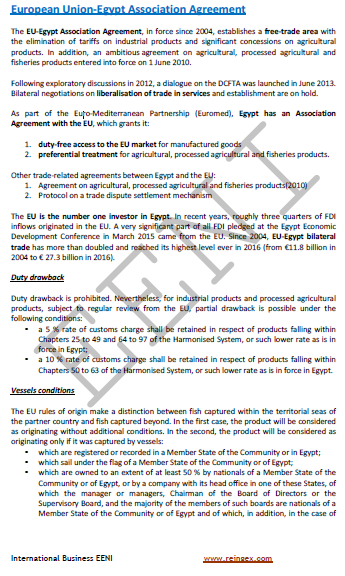
- European Union:
- UK-Egypt Agreement
- Organization of the Black Sea Economic Cooperation (Observer)
- SICA (observer)
- International Conference on the Great Lakes Region (ICGLR) - Guest Member
- IORA (dialogue partner)
- WTO
- GATS
- Agreement on the Application of Sanitary Measures
- Agreement on Technical Barriers to Trade
- Agreement on Preshipment Inspection
- Agreement on Safeguards
- Trade Facilitation Agreement
- WCO
- Single African Air Transport Market (SAATM / IATA)
- BIC
- Chicago Convention (ICAO)
- IMO
- Hamburg Rules
- IRU
- TIR Convention
- Guidelines on Safe Load Securing for Road Transport
- Customs Convention on Containers - not a member
Islamic Organizations. Egypt is a member of:
- Economic Commission for Western Asia (ESCWA)
- OIC
- Committee for Economic Cooperation
- Islamic Centre for Development of Trade
- Economic Centre for Islamic Countries
- Arab League
- Islamic Development Bank
- Afro-Arab Cooperation
- Asia-Middle East (Egypt) Dialogue
- Summit of South American-Arab Countries
- Arab Development Funds
African Organizations:
- Economic Commission for Africa
- African Union
- AU Convention on Preventing and Combating Corruption (not signed)
- AUDA-NEPAD
- African Development Bank
- Africa-Asia Partnership
- Africa-Korea Partnership
- Africa-Japan Cooperation
- Africa-South America Summit
- China-Africa Cooperation
- Africa-India Cooperation
- Africa-BRICS
- Africa-Turkey Partnership
- UN
- UNCTAD
- ITC
- WIPO
- WB
- WTO
- IMF
The Arab Republic of Egypt stands at a fortunate strategic location linking Asia (Middle East), Africa, and Europe
- Capital of Egypt: Cairo
- Largest cities: Cairo, Alexandria, Shubra El Kheima, Giza, Port Said, Suez
- Egyptian language: Arabic
- Egypt is Semi-Presidential Republic
- Egypt became independent from the UK in 1922
- Area of Egypt: 1,001,459 km²
- Egyptian population: 97 million people
- 20% of the Egyptian population is under the poverty line
- Currency of Egypt: Egyptian Pound
- Uncertainty after the Arab Spring, so great caution when doing business is advised
- Almost six out of ten Egyptians are under twenty-five years
- Egyptians are enthusiastic, educated, forward-thinking and open to new opportunities
- The educational system has improved significantly
- Egypt offers comparatively well-qualified
- The Arab Republic of Egypt has developed a multi-cultural community, mixing traditions of Africa and the Middle East
- Egyptian borders: Israel, Jordan, Libya, Palestine, Saudi Arabia and Sudan
More information: Egypt (EENI African Business Portal).
Egypt, the “cultural lighthouse” of the Arab Countries.
Religion in Egypt.
Islam is the state religion since 1980.
- Egypt is predominantly Sunni Muslim, with 80 million Muslims (94.7% of the population in 2010)
- Sharia is the primary source of legislation
- Fiqh (Islamic Jurisprudence): Maliki
- There are an estimated 12 million Coptic Orthodox
Egypt belongs to the East African Economic Area of the African Civilization, but culturally also it belongs to the Islamic Civilization.
Egyptian Economy.
- Egypt is a gateway to the largest markets by the way of preferential and regional trade agreements
- Egypt's 90 million population, growing at a rate of 2% annually, represents a significant local market for any investor
- customs duties reduction has opened the Egyptian market to international trade
- Business procedures have been reduced
- Corporate and personal taxes have been cut
- The cost of Doing Business in Egypt is greatly favorable, particularly labour and land costs
- Movement of products is being speeded up with an improved transport system
- The Egyptian ports are being modernized
- The Arab Republic of Egypt is the economic and cultural centre of a region of 800 million people and a hub for maritime traffic with commercial ports on the Mediterranean and Red Sea
- Egyptian GDP (nominal): 216,830 billion
- Inflation (CPI): 10.1%
- Unemployment in Egypt: 9.7%
- The main Egyptian economic sectors are tourism, textiles, cement, food industry, chemicals, metals, pharmaceuticals, hydrocarbons, construction, and light manufacturing
- Egypt is considered the gateway to some of the largest markets in the world (Egypt maintains preferential trade agreements with several countries)
- The airports are being remodeled to meet the growing flow of passengers and cargo; a modern road network is linking Egypt to the Middle East, Africa and, through the neighboring countries, to Europe
Ahmed Mekky is the co-founder and Managing Director (CEO) of Gulf Bridge International.
Egyptian Foreign Trade.
- Egyptian exports: 22.91 billion dollars
- The main Egyptian export markets are Italy, the U.S., Spain, India, Syria, Saudi Arabia, and Japan
- Egyptian imports: 43.98 billion dollars
- The major suppliers of Egypt are the U.S., China, Italy, Germany, and Saudi Arabia
Investment Environment in Egypt.
The Ministry of Investment implements definitive policies to promote and develop the foreign direct investment by:
- Creating the appropriate organizational and legislative environment for investment
- Foreign direct investment promotion
- Efficiency progress measurement