Doctorate in African Business, Online, AI


 WhatsApp
African Economy. Nigeria, Kenya, Uganda. Doctorate in African Business (online)

The objectives of the Professional Doctorate in International Business (DIB)
specialization in African Business (3 years, 180
ECTS,  )
offered by EENI Global Business School are to train Doctoral Student to be able
to research on topics related to business in Africa.
)
offered by EENI Global Business School are to train Doctoral Student to be able
to research on topics related to business in Africa.
Thus, a Doctoral Student can apply creative solutions and take appropriated business decisions related to African Markets.
The Doctorate includes the module: “AI for Global Business”
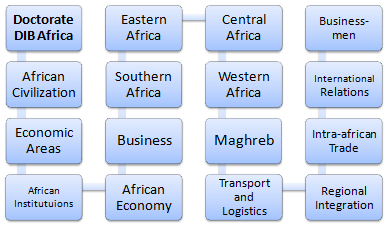
- Intra-African Trade
- African Economy
- African Socio-economic Transformation
- Doing Business in African markets
- African Regional Integration
- African Civilization
- African Economic Areas
- Logistics in Africa
- International Relations of Africa
- African Traditional Religions, Islam and Christianity in Africa
- AI for Global Business
Tuition Fees: EUR (€) 3,000
- Cash Payment (at enrollment date): 10% of discount. Amount to pay: € 2,700
- Payment with EENI financing:
- 70% at enrollment date: € 2,100
- 30% at the end of the Doctorate: € 900
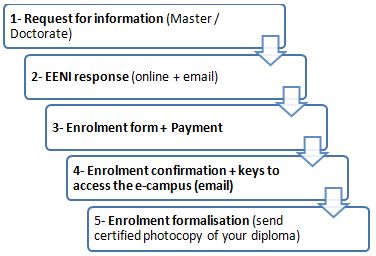
 Enrol / Request for Information

- Duration: maximum of three calendar years Maximum of three calendar years since the formalization of the Enrollment up to the thesis deposit. If, after the three calendar years period Doctoral Student has not deposited thesis, the Doctorate Programme Direction may authorise an extension of up to two years.
- Credits: 180

- Brochure of the Doctorate (PDF)
Download the Admission Form
Intended for graduates and professionals who wish to continue their professional career in the field of International Business with an emphasis in Africa.
The Doctorate in African Business is part of the category of the Doctorate in International Business (DIB), which has the dual aim of contributing to knowledge and practice.
A Doctorate in African Business that fits your schedule and helps you to get a better job.
Language of the Doctorate:
- All subjects offered are available in English and French
- Approximately 40% of subjects are also available in Spanish and Portuguese
- Thus, Doctoral Student can perform this doctorate entirely in English (or French, Spanish or Portuguese)
- The student should have a sufficient level to study the subjects in these languages
 Doctorat en Affaires en Afrique
  Doctorado en Negocios en África
  Doutoramento em Negócios na África.
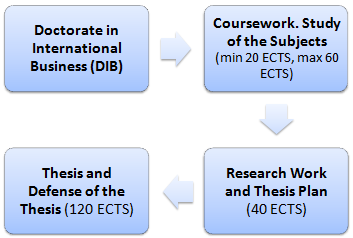
- Coursework. Study of Subjects (minimum 20 ECTS, maximum
60 ECTS)
- Candidates who have completed the Master in Business in Africa offered by EENI will be exempt from completing this training complement, validating all the doctorate subjects already studied in the Master, going directly to the research phase of the doctorate. In this case (Master 120 ECTS), total amount of the doctorate will be € 2,000
- Research Work and Thesis Plan (40 ECTS)
- Thesis and Thesis Defense (120 ECTS)
- EENI provides a range of Subjects related to Africa (more than 150 ECTS credits)
- Doctoral Student can select the most suitable subjects depending on the thesis
- Minimum ECTS to be selected is 20, maximum is 60
- Doctoral Student selects the subjects once formalized the enrollment
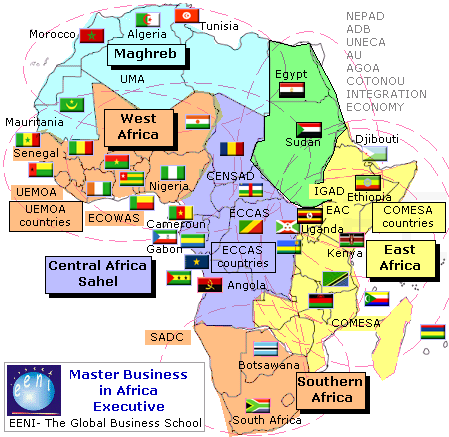
To facilitate the subject selection, these are organized into several blocks. Students work within one or more of the following subject areas.
- African Civilization
- Economic Areas of African Civilization
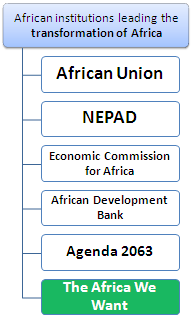
- African Institutions are Leading African Transformation (PDF) (structure) (5 ECTS)
- African Economy (PDF) (structure) (5 ECTS)
- Doing Business in Africa
- Southern Africa (PDF) (structure) (10 ECTS)
- East Africa (PDF) (structure) (34 ECTS)
- Central Africa (PDF) (structure) (18 ECTS)
- Western Africa (PDF) (structure) (29 ECTS)
- Maghreb (PDF) (structure) (9 ECTS)
- Transport and Logistics in Africa (PDF) (structure) (10 ECTS)
- Regional Integration in Africa (PDF) (structure) (8 ECTS)
- International Relations of Africa (PDF) (structure) (10 ECTS)
- AI for Global Business
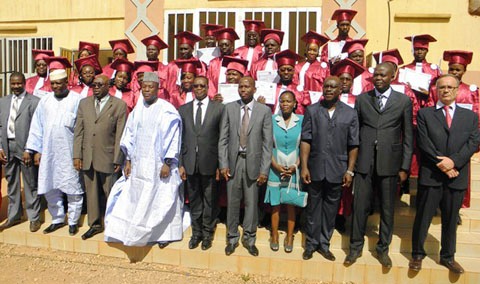
EENI Students in Burkina Faso
- Doctoral Student should select the most appropriate subjects for his thesis
- Doctoral Student can use any possible subject combination
- Minimum ECTS to be selected is 20, maximum is 60
Institutions are Leading African Socio-Economic Transformation (5 ECTS).
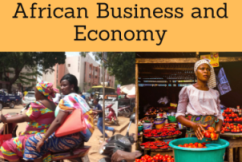
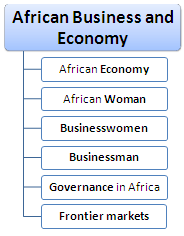
African Business and Economy (5 ECTS).
- African Economy
- African Women
- African Businesswoman
- African Businessman
- Governance in Africa
- African Frontier Markets
Download the syllabus “African Economy” (PDF).
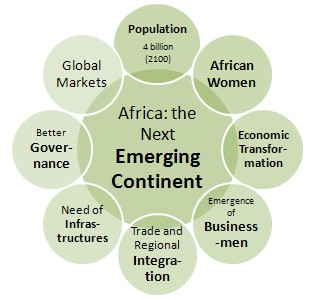
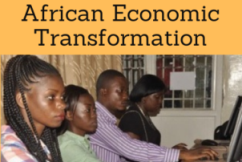
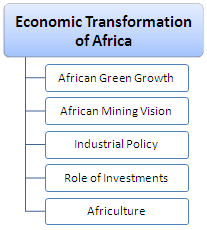
African Economic Transformation (5 ECTS).
- African agricultural sector
- African Mining Vision
- African Green Economic Growth
- African industry. African industrial policy
- Action Plan for the Accelerated Industrial Development of Africa
- Investment Role in African transformation
Download the syllabus “African Economic Transformation” (PDF).

Doing Business in Southern Africa (14 ECTS).
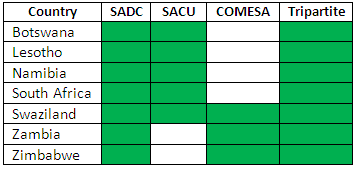
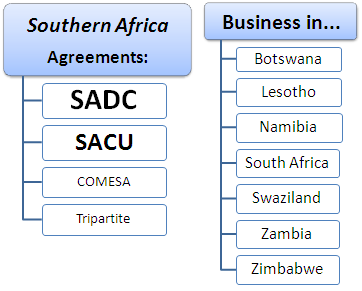
Regional Integration in Southern Africa. There are two economic communities in Southern Africa:
It must also take into account COMESA, and COMESA-EAC-SADC Agreement. All Southern African Countries belong to SADC and the tripartite agreement.
Southern African Countries with sea access:
- South Africa: The second African Economy. The first African car maker
- Namibia: an economy based on the mining and livestock
Landlocked markets of Southern Africa:
- Botswana: diamonds (1/3 of GDP)
- Lesotho: an African monarchy
- Eswatini: a small African Kingdom
- Zambia: an African Frontier Market
- Zimbabwe: vast mineral resources
Largest ports in Southern Africa.
Doing Business in East Africa (41 ECTS).
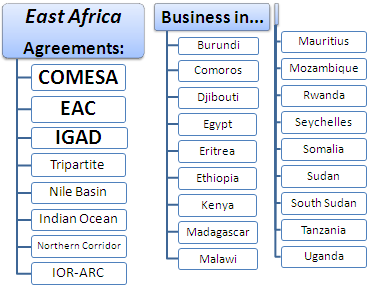
Regional Economic Integration in East Africa:
- Common Market for Eastern and Southern Africa (COMESA)
- Intergovernmental Authority on Development (IGAD)
- East African Community (EAC)
Other East African regional institutions.
- Nile Basin Initiative
- Conference on the Great Lakes Region
- Economic Community of the Great Lakes Region
- Indian Ocean Commission
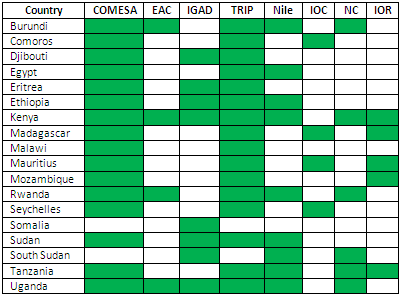
East African Countries with sea access:
- Djibouti: an economy based on marine transport and telecommunications
- Egypt: Control of the Suez Canal
- The State of Eritrea: an economy based on a subsistence agriculture
- Kenya: the largest economy in East Africa
- Mozambique: one of the poorest countries in the World
- Tanzania: an African frontier market
- Somalia
- Sudan: the largest African Country
Landlocked markets of East Africa:
- Burundi: one of the World's poorest countries
- Ethiopia: Headquarters of the Economic Commission for Africa (ECA) and the African Union (AU)
- Malawi: an agricultural country
- Rwanda: the most densely populated African Country
- South Sudan: the newest nation in the World
- Uganda: Open to foreign investment
Island Countries of East Africa:
- Comoros: 50% of Comorian live below the international poverty line (USD 1.25/day)
- Madagascar: one of the poorest African Countries
- Mauritius: one of the largest African financial centers
- Seychelles: the first African Country by Human Development
Largest East African Ports and logistics corridors.
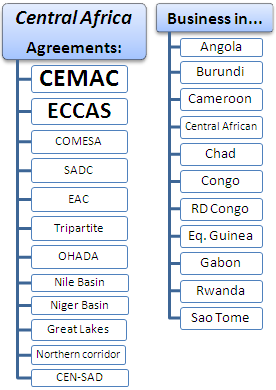
Doing Business in Central Africa (26 ECTS).
Regional Economic Integration in Central Africa.
- Central African Economic and Monetary Community (CEMAC)
- Economic Community of Central African States (ECCAS)
Largest ports in Central Africa.
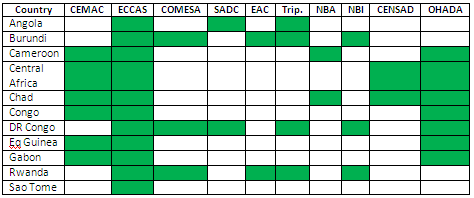
Central African Countries with sea access:
- Angola: an African frontier market
- Cameroon: 40% of GDP of the Central African Economic and Monetary Community
- Equatorial Guinea: the richest country per capita in Africa
- Gabon: a strategic position in Central African region
- Republic of the Congo: a heavily indebted poor country
- Democratic Republic of the Congo - 2025: 99 million of Congolese
Landlocked markets of Central Africa:
- Burundi
- Central African Republic: political crisis
- Chad: a new African petroleum exporter
- Rwanda
Island countries of Central Africa:
- São Tomé and Príncipe: A “tourist country”

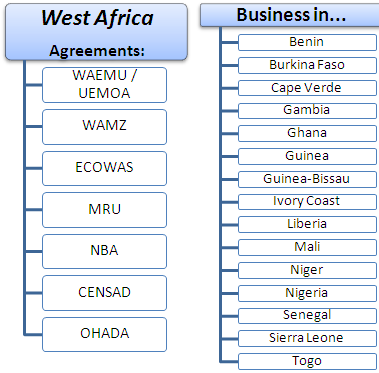
Doing Business in West Africa (33 ECTS).
In West Africa, there are three key economic institutions:
- Economic Community of West African States (ECOWAS)
- West African Economic and Monetary Union (WAEMU)
- West African Monetary Zone (WAMZ)
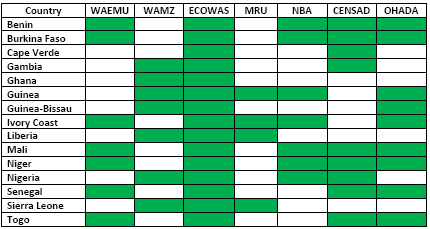
It is also necessary to consider the existence of:
- Organization for the Development of the Senegal River
- Niger Basin Authority
- Mano River Union
- Community of Sahel-Saharan States (CEN-SAD)
- G5-Sahel
West African Countries with sea access:
- Benin: predominance of the Beninese informal sector
- Gambia: an export agricultural oriented country
- Ghana: an African Frontier Market, the second African gold producer
- Guinea: vast bauxite and iron reserves
- Guinea-Bissau: one of the ten poorest countries
- Ivory Coast: an African Frontier Market. Headquarters of the African Development Bank
- Liberia: A nation with a President with Nobel Peace Prize (Ellen Johnson-Sirleaf)
- Nigeria: the largest African Economy. The Nigerian population in 2100: 1,000 million people
- Senegal: one of the less corrupt African markets
- Sierra Leone: the fastest growing West African market
- Togo: phosphates and agriculture. Port of Lomé
Landlocked markets of West Africa:
- Burkina Faso: one of the West African Countries that have implemented more reforms
- Mali: the third African gold producer, instability in the North
- Niger: world's largest uranium reserves
Island Countries of West Africa.
- Cape Verde: the growing of the Cape Verdean tourism sector
Largest ports in West Africa.
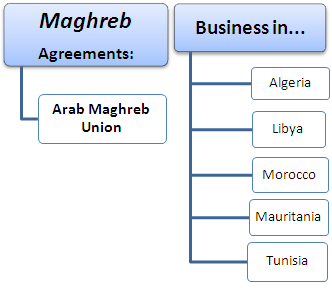
Doing Business in the Maghreb (9 ECTS).
- Arab Maghreb Union
- Algeria: an African Frontier Market. 50% of petroleum production in Africa
- Morocco: an African Frontier Market. The Emergence of the Moroccan Businessman
- Tunisia: the first world dates exporter. Top tourist destination
- Mauritania: the mining and fishing sector
- Libya: largest proven African petroleum reserves
Largest Maghrebian Ports.
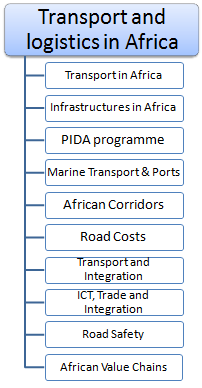
Transport in Africa (15 ECTS).
- Introduction to Transport in Africa
- Infrastructure in Africa
- Programme for Infrastructure Development in Africa (PIDA)
- African Ports. Maritime transport in Africa
- African transport corridors
- Costs of Road infrastructure in Africa
- Transport and regional integration in Africa
- ICT, trade, and regional integration in Africa
- African Road Safety Action Plan
- African Value Chains
Download the syllabus “Transport and Logistics in Africa” (PDF).
African Economic Integration (8 ECTS).
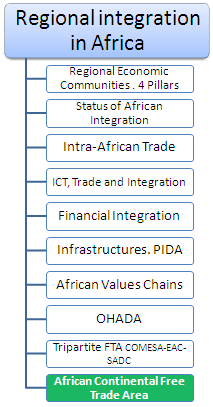
- Introduction to regional integration in Africa. Regional Economic Communities
- Status of Regional Integration in Africa
- Intra-African trade
- ICT and integration in Africa
- Financial integration
- Infrastructures
- African Value Chains
- Harmonization of Business Law in Africa (OHADA)
- COMESA-EAC-SADC Tripartite Agreement
- Towards the African Continental Free Trade Area
Download the syllabus “Regional Integration in Africa” (PDF).
International Relations of Africa (8 ECTS).
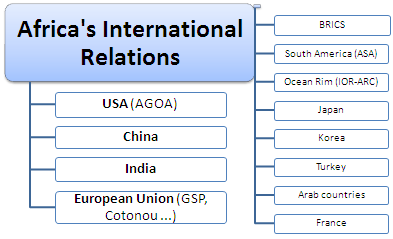
- Africa and the United States (AGOA)
- Africa and China
- Africa and India
- Africa-European Union Strategic Partnership
- France-Africa Relations
- Afro-Arab Cooperation
- Africa and Turkey
- Africa and the BRICS
- Africa and Asia
- Africa and South Korea
- Africa and Japan
- Indian-Ocean Rim Association (IORA)
- Africa and South America
Download the syllabus “International Relations of Africa” (PDF).
- Introduction to African Civilization
- History of Africa (PDF)
- Slave Trade
- African Historians
- Human development in Africa
- African Population Trends
- Islam, African Traditional Religions and Christianity in Africa

The objective of the "AI for Global Trade" module is to analyze the unstoppable disruptive capacity of Artificial Intelligence (AI) and its impact on business in Africa. AI affects all processes in the value chain (marketing, transportation, customs, customer relations, transparency, ethics, financial decisions, etc.) related to business on the African continent.
The African Union's continental artificial intelligence strategy, AI applications in financial decision-making in Africa and in African supply chains, etc., will also be analyzed.
- Introduction to AI in Global Business
- AI Technologies and Tools for International Business
- AI and Global Trade
- AI in Global Strategy and Decision-Making
- AI in Global Supply Chain Management
- AI in International Marketing and Customer Insights
- AI and Cross-Cultural Management
- AI in Global Finance and Risk Management
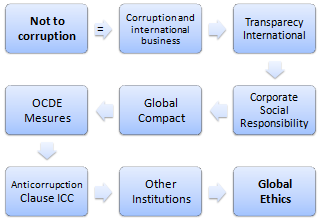
- Ethical and Regulatory Considerations in Global AI
- AI for Sustainability in International Business
- Future Trends in AI & International Business
To be admitted to the Doctorate, students must have earned a Master's Degree.
If you do not have a Master's Degree you can Enroll in the Master in Business in Sub-Saharan Africa. You will be exempt from the final Master's Thesis and you will be able to access the doctorate by going directly to the doctoral thesis preparation (you should not take the complement teachings of the doctorate)
The graduate students in the Master in Business in Sub-Saharan Africa offered by EENI can Enroll directly in the Doctorate in African Business validating all subjects already studied on the master
You must send by e-mail a certified photocopy of your diploma of master. This is necessary for the issuance of your diploma and not to enroll.
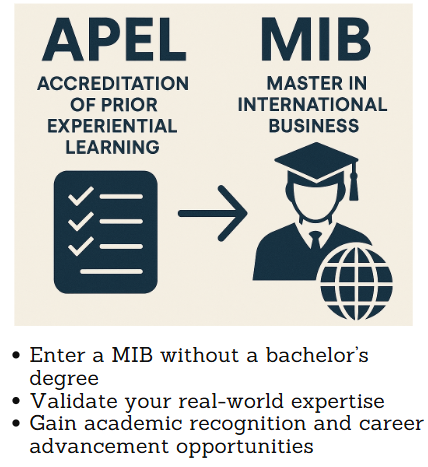
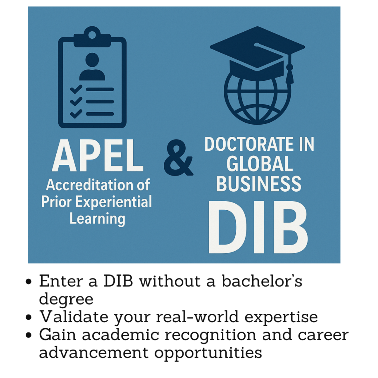
Those students, who are not in possession of a Master's Degree, may enroll trough APEL (Accreditation of Prior Experiential Learning) System.
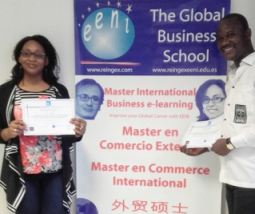
Students who pass the assessments and thesis will receive the Diploma of Professional Doctorate in International Business (DIB) specialization in African Business granted by EENI Global Business School.
The Diploma of Professional Doctorate is awarded after assessing:
- Level of participation of Doctoral Student in the Doctoral Subjects
- Research Work
- Thesis Defense
Once defended and overcame the thesis, Doctoral Student will receive its diploma.
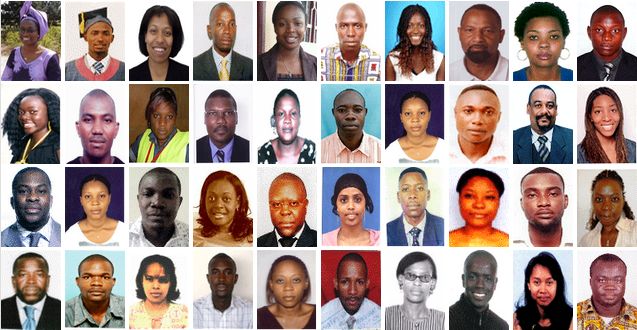
EENI African Students:
(c) EENI Global Business School (1995-2025)
Top of this page
