
Business in Rwanda. Kigali. Rwandan Economy





 WhatsApp
Rwanda: most densely populated African Country. Coffee, Tea, Foreign Trade, Logistics
The Republic of Rwanda (landlocked country) is a poor rural African nation with 90% of the population working in the agriculture sector
Top Rwandan export products: tea and coffee, minerals
Rwanda: a landlocked poor rural country.
The Republic of Rwanda is the most densely populated African Country.


- Introduction to the Republic of Rwanda (Central Africa)
- Rwandan Economy
- International Trade of Rwanda
- Business and Investment Opportunities in Rwanda
- Infrastructure
- Agriculture
- Energy
- Tourism
- Information and Communication Technology
- Mining
- Financial Services
- Property (real estate) and Construction
- Manufacturing
- Case Study: Bralirwa
- Transport and Logistics
- Rwanda Development Board (RDB)
- Access to the Rwandan Market
- Business Plan for Rwanda

The objectives of the subject “Foreign Trade, Logistics and Business in Rwanda” are:
- To analyze the Rwandan Economy, Logistics and Global Trade
- To conduct research on business opportunities in Rwanda
- To explore the Rwandan trade relations with the student's country
- To learn about Rwandan Trade Agreements
- To examine the profile of Rwandan companies
- To develop a business plan for the Rwandan Market

The Subject “Foreign Trade, Logistics and Business in Rwanda” is included within the curriculum of the following academic programs at EENI Global Business School:
Doctorate in African Business.

Master in Business in Africa, Transport and Logistics in Africa.

Languages:  or
or  Rwanda
  Ruanda
  Ruanda.
Masters adapted to  Rwandese students.
- Subject Credits “Doing Business in Rwanda”: 1

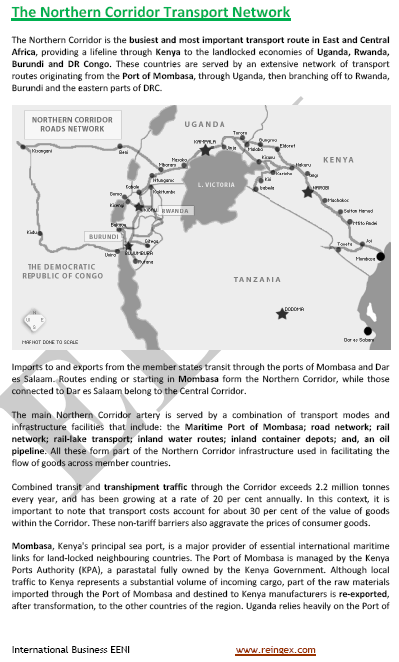
International Trade, Logistics and Business in Rwanda.
Rwandan Preferential Access and Trade Agreements:
- Rwanda and the Central African Economic Area / East African Economic Area
- Common Market for Eastern and Southern Africa (COMESA)
- East African Community (EAC)
- COMESA-EAC-SADC Agreement
- African Continental Free Trade Area
- Economic Community of Central African States (ECCAS)
- Rwanda-EU
- Trade Agreement with India
- Rwanda-U.S.
- AGOA United States-Rwanda
- East African Community-US Agreement
- Conference on the Great Lakes
- Economic Community of the Great Lakes Region
- Nile Basin Initiative
- Global System of Trade Preferences among Developing Countries (GSTP) - accession process
Sample: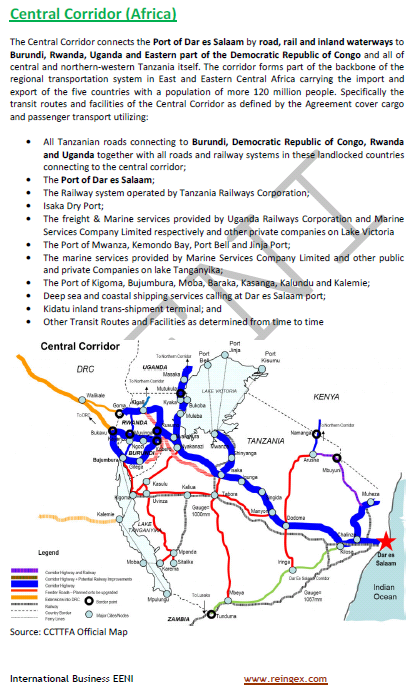
- World Trade Organization (WTO)
- Agreement on Trade in Services (GATS)
- Agreement on Sanitary Measures
- Agreement on Technical Barriers to Trade
- Agreement on Preshipment Inspection
- Agreement on Safeguards
- Trade Facilitation Agreement
- World Customs Organization (WCO)
- Kyoto Convention
- Single African Air Transport Market (SAATM / IATA)
- BIC (Containers)
- Chicago Convention (ICAO)
- IMO - not a member
- Istanbul Convention - not a member
- Customs Convention on Containers - not a member
- Economic Commission for Africa
- African Union
- AU Convention on Preventing and Combating Corruption
- AUDA-NEPAD
- Africa Agriculture Development Programme
- African Development Bank
- Africa-South America Summit
- China-Africa Cooperation
- Africa-India Cooperation
- Africa-BRICS
- Africa-Turkey Partnership
- Arab Bank for Africa (BADEA)
- Africa-Korea Partnership
- Africa-Japan Cooperation
- World Bank
- World Trade Organization (WTO)
- International Monetary Fund
- United Nations
- Rwanda is the most densely populated nation in Africa
- Few natural resources, small industry
- The Genocide (1994) shocked the economy of Rwanda and his population
- Capital of Rwanda: Kigali (1 Million people): one of the African safest cities
- The largest Rwandan cities are Kigali, Butare and Gisenyi
- Rwanda is landlocked country
- The official languages of Rwanda: Kinyarwanda, French, English, and Kiswahili
- Independence of Rwanda: 1962 (Belgium)
- Rwandan population: 12 million people
- Area of Rwanda: 26,338 km²
- Borders or the Republic of Rwanda: Uganda, Burundi, the Democratic Republic of the Congo, and Tanzania
More information about Rwanda (EENI African Business Portal).
Religions in Rwanda.
- African Traditional Religions
- Christianity:
- Catholicism (4.7 million)
- Protestants (4 million, 43% of Rwandan population)
Rwanda belongs to the Central African Economic Area and the East African Economic Area.
- Rwandan Agriculture sector: 90% of the labour force
- Services sector in Rwanda: 45% of GDP
- Rwandan Industry: 15% of GDP
- The most Rwandan dynamic sector are construction and property (real estate)
- Trade with the East African Community (EAC) countries: 35% of total exports
- Currency of Rwanda: Rwandan Franc (RWF)
- The favorable terms of International Trade, Foreign Direct Investment and aid inflows have aided and stimulated the Rwandan economy considerably over the last decade
- The substantial growth was from an increase in cereal products production (maize and wheat)

Foreign Trade of Rwanda
Exports of Rwanda continue to remain small compared to the average of Central Africa and mainly stand for the two largest cash crops, tea, and coffee and, recently, mineral products.
(c) EENI Global Business School (1995-2025)
Top of this page
