Business in Guinea-Bissau, Cashew, Nuts




 WhatsApp
Economy and Foreign Trade of Guinea-Bissau, Logistics, Bafatá, Gabú
The Republic of Guinea-Bissau is one of the ten poorest countries in the World.
Economic growth in Guinea-Bissau (Africa) picked up slightly to 3.6% thanks to higher international prices of cashew nut, sustained private housing construction, and major infrastructure projects.
- High traffic of arms and drugs
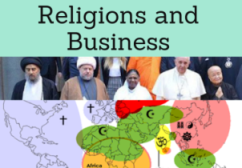
Religions and Global Business -
Religious diversity
- Introduction to the Republic of Guinea-Bissau (West Africa)
- Bissau-Guinean Economy
- International Trade of Guinea-Bissau
- Business and Investment Opportunities in Guinea-Bissau
- Agro-processing industries
- Fisheries
- Mining
- Tourism
- Energy
- Transport and Logistics
- Guinea-Bissau Expansion Corporation
- Access to the Bissau-Guinean Market
- Business Plan for Guinea-Bissau

The purposes of the subject “Foreign Trade, Logistics and Business in Guinea-Bissau” are:
- To analyze the Bissau-Guinean Economy, Logistics and Global Trade
- To conduct research on business opportunities in Guinea-Bissau
- To explore the Bissau-Guinean trade relations with the student's country
- To learn about Bissau-Guinean Trade Agreements
- To develop a business plan for the Bissau-Guinean Market

The Subject “Foreign Trade, Logistics and Business in Guinea-Bissau” is included within the curriculum of the following academic programs at EENI Global Business School:
Doctorate in African Business.

Master in Business in Africa, Transport and Logistics in Africa.

Languages:  or
or  Guinée Bissau
  Guinée-Bissau
  Guinea-Bissau.
Credits of the Subject “Doing Business in Guinea-Bissau”: 1

International Trade, Logistics and Business in Guinea-Bissau
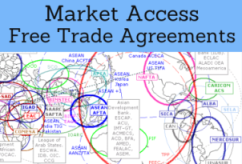
Bissau-Guinean Preferential Access and Trade Agreements:
- Guinea-Bissau and the West African Economic Area
- Economic Community of West African States (ECOWAS)
- West African Economic and Monetary Union (WAEMU)
- Community of Sahel-Saharan States (CEN-SAD)
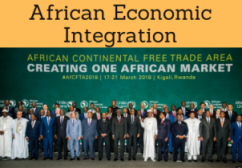
- African Continental Free Trade Area
- Guinea-Bissau - United States
- Guinea-Bissau - EU:
- Africa-EU Partnership
- Generalized System of Preferences (EU GSP)
- Harmonization of Business Law in Africa (OHADA)
- Arab Bank for Africa (BADEA)
- World Trade Organization (WTO)
- Agreement on Trade in Services (GATS)
- Agreement on Sanitary Measures
- Agreement on Technical Barriers to Trade
- Agreement on Preshipment Inspection
- Agreement on Safeguards
- Trade Facilitation Agreement
- Rotterdam Rules
- Is not a member of WCO
- Kyoto Convention
- Economic Commission for Africa
- African Union
- Africa Agriculture Development Programme
- AU Convention on Combating Corruption
- AUDA-NEPAD
- African Development Bank
- Africa-Asia Partnership
- Africa-Korea Partnership
- Afro-Arab Cooperation
- Arab Bank for Africa (BADEA)
- Organization of Islamic Cooperation (OIC)
- Islamic Development Bank
- Community of Portuguese Speaking Countries
- United Nations
- World Bank
- World Trade Organization (WTO)
- International Monetary Fund
The Republic of Guinea-Bissau
- Bissau-Guinean Population: 1.5 million people
- The official language of Guinea-Bissau is Portuguese (only 14% speak Portuguese) and Creole
- Capital of Guinea-Bissau: Bissau (400,000)
- Bissau-Guinean largest cities: Bissau, Bafatá, Gabú, Bissorã, Bolama
- Borders of Guinea-Bissau: Senegal and Guinea
- Total area of Guinea-Bissau: 36,120 km²
- Independence of Guinea-Bissau from Portugal: 1973
More information about Guinea-Bissau (EENI African Business Portal).
Main religions in Guinea-Bissau:
- African Traditional Religions
- Christianity
- Islam (50% of the Bissau-Guinean population, 0.7 million)


Guinea-Bissau belongs to the West African Economic Area.
Economy of Guinea-Bissau:
- Guinea-Bissau is one of the ten world's poorest countries
- Bissau-Guinean agriculture: 12% of total area of the Republic of Guinea-Bissau (38.4% is pasture, Forests 38.1%)
- The Republic of Guinea-Bissau makes most of its turnover with cashew nuts exports
- Main harvests in Guinea-Bissau: bananas, little mango flavor
- Guinea-Bissau has many natural resources, whose reserves are scarcely exploited (phosphates, bauxite, and petroleum)
- Military coup in 2012
(c) EENI Global Business School (1995-2025)
Top of this page
