
Business in Zimbabwe, Harare, Gold, Copper





 WhatsApp
Zimbabwe: landlocked country, mining, Bulawayo. Zimbabwean Foreign Trade, Logistics

Zimbabwe: a landlocked country with huge mineral resources (copper, nickel, gold).
- Top Zimbabwean export products: platinum, cotton, tobacco, gold, ferroalloys, and clothing


- Introduction to the Republic of Zimbabwe (Southern Africa)
- Doing Business in Harare and Bulawayo
- Zimbabwean Economy
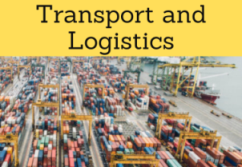
- Transport and Logistics
- Foreign Trade of Zimbabwe
- Customs: Zimbabwe Revenue Authority
- Business and Investment Opportunities in Zimbabwe
- Agriculture
- Manufacturing
- Mining
- Tourism
- Energy
- Water and Sanitation
- Information and Communication Technology
- Finance and insurance
- Services
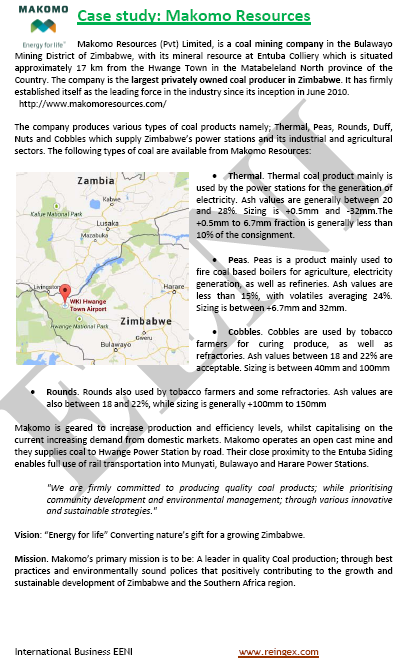
- Case Study: Makomo Resources
- Access to the Zimbabwean Market
- Business Plan for Zimbabwe

The educational aims of the Subject “Foreign Trade, Logistics and Business in Zimbabwe” are:
- To analyze the Zimbabwean Economy, Logistics and Global Trade
- To conduct research on business opportunities in Zimbabwe
- To explore the Zimbabwean trade relations with the student's country
- To learn about Zimbabwean Trade Agreements
- To examine the profile of Zimbabwean Businesspeople
- To develop a business plan for Zimbabwean Market

The Subject “Foreign Trade, Logistics and Business in Zimbabwe” is included within the curriculum of the following academic programs at EENI Global Business School:
Doctorate in African Business.

Master in Business in Africa, International Business, Foreign Trade.
Masters adapted to  Zimbabwean students.
Languages:  or
or  Zimbabwe
  Zimbabue
  Zimbabue.
- Subject Credits “Doing Business in Zimbabwe”: 1

International Trade, Logistics and Business in Zimbabwe
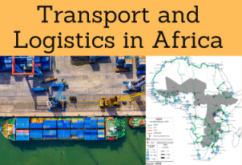
- Nearest Ports to Zimbabwe
- Port of Durban (South Africa). Distance (Port of Durban-Harare): 1.674 kilometers
- Port of Maputo (Mozambique)
- Access to the Port of Lobito (Angola)
- Port of Walvis Bay (Namibia). Via Trans-Caprivi Corridor Livingstone
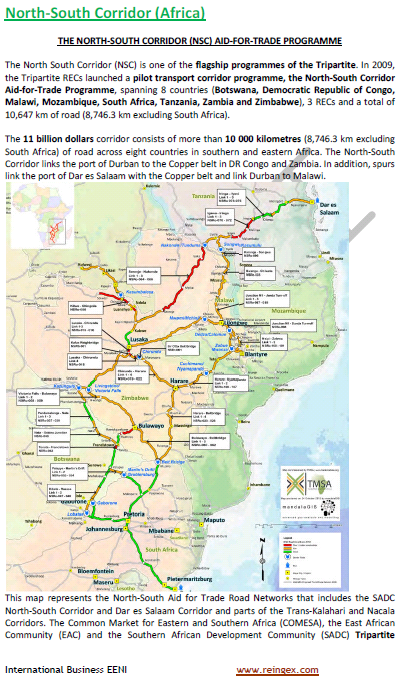
- Trans-African Corridors:
Trade Agreements and preferential access of Zimbabwe
- Zimbabwe and the Southern African Economic Area
- Common Market for Eastern and Southern Africa (COMESA)
- Southern African Development Community (SADC)
- European Union-SADC Agreement
- COMESA-EAC-SADC Agreement
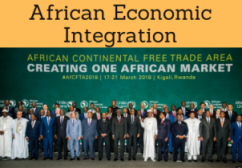
- African Continental Free Trade Area
- Zimbabwe is not eligible for the AGOA
- Africa-EU Partnership
- Namibia-Zimbabwe Agreement
- Free Trade Agreement EU-Eastern and Southern African States (Madagascar, Mauritius, Seychelles, Zimbabwe)
- Bilateral Trade Agreements with China, India, Canada, Malawi, and Japan
- UK-Mauritius-Seychelles-Zimbabwe Agreement
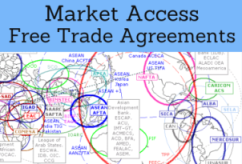
- Global System of Trade Preferences
- International Conference on the Great Lakes Region (ICGLR) - Guest Member
- World Trade Organization (WTO)
- Agreement on Sanitary and Phytosanitary Measures
- Agreement on Trade in Services (GATS)
- Agreement on Technical Barriers to Trade
- Agreement on Preshipment Inspection
- Agreement on Safeguards
- Trade Facilitation Agreement
- World Customs Organization (WCO)
- Kyoto Convention
- BIC (Containers)
- Chicago Convention (ICAO)
- International Maritime Organization (IMO)
- Convention for Safe Containers
- Istanbul Convention
- Customs Convention on Containers - not a member
- Single African Air Transport Market (SAATM / IATA)
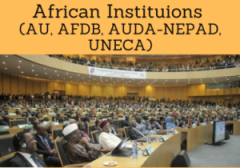
- Economic Commission for Africa
- African Union
- AU Convention on Combating Corruption
- AUDA-NEPAD
- African Development Bank
- Africa-Asia Partnership
- Africa-Turkey Partnership
- Africa-South America Summit
- China-Africa Cooperation
- Africa-India Cooperation
- Africa-BRICS (Brazil, Russia, India, China, South Africa)
- World Bank
- World Trade Organization (WTO)
- International Monetary Fund
- United Nations
- Borders of the Republic of Zimbabwe: Zambia, Mozambique, South Africa, and Botswana
- Zimbabwean Population: 16.1 million people
- Zimbabwean Area: 390,580 km²
- Official language of Zimbabwe: English
- Local Languages of Zimbabwe: Shona and Ndebele
- Capital of Zimbabwe: Harare
- Main cities of Zimbabwe: Bulawayo, Mutare-Masvingo, and Gweru
- Independence of Zimbabwe from the United Kingdom: 1965
More information about Zimbabwe (EENI African Business Portal).
Religions in Zimbabwe:
- African Traditional Religions
- Christianity (75% of Zimbabweans)
Zimbabwe belongs to the Southern African Economic Area.
International Trade and Business in Zimbabwe: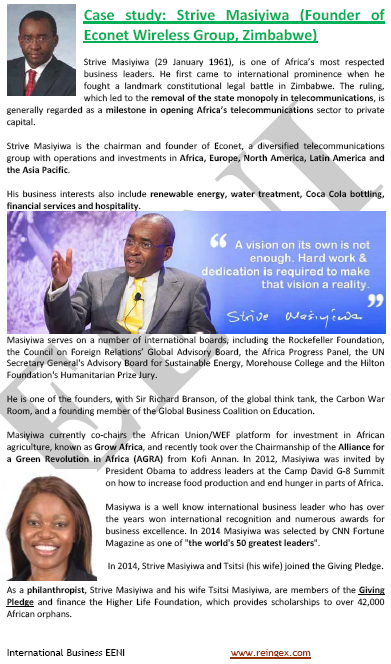
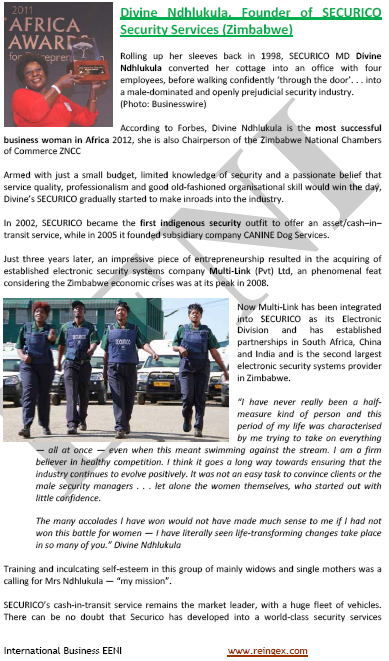
Economic Profile of Zimbabwe:
- Zimbabwean Currency: Dollar and ZAR (Rand)
- Top Zimbabwean imports products: machinery, transport equipment, manufactured goods, chemicals, fuels, and food products
- Largest export markets of Zimbabwe: The Democratic Republic of the Congo, South Africa, Botswana, and China
- Main import countries of Zimbabwe: South Africa and China
- Zimbabwean Natural resources: Coal, chromium, asbestos, gold, nickel, platinum, and diamonds
- Main Zimbabwean economic sector: mining industry (copper, nickel, gold)
(c) EENI Global Business School (1995-2025)
Top of this page
