
Africa: Next Emerging Continent




 WhatsApp
Why do business in Africa? Deep African Socio-economic transformation. African Middle Class
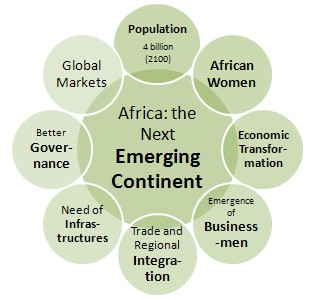
Some reasons for doing business in Africa and trust in the African potential:
- African Population
- New Role of African women
- Deep African Socio-economic Transformation
- Emergence of African Businessperson
- Trade and Regional Integration in Africa
- Need for Infrastructures
- Better Governance in Africa
- Africa and global market

Higher education related to Africa:
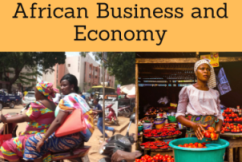
Master in Business in Africa, Transport and Logistics in Africa.

Doctorate in African Business.

Languages:  or
or  Afrique: prochain continent émergent
 África próximo continente emergente
  África: próximo continente emergente.

1- African Population.
“The future of humanity is ever more African” (UNICEF).
- African population:
- 2015: 1.1 billion people
- 2030: 1.6 billion people
- 2100: 4 billion people (1 billion in Nigeria)
- In thirty-five years, 25% of the world's population will be African
- Demographic dividend
- Emerging middle-class in Africa: 350 million people (34% of the African population). 1,100 million in 2040 (42% of the African population)
- Urbanization in Africa: 353 million people. In 2040, the half of Africans will live in a city
- Young African population: 60% (world's largest labour market)
Moreover, we cannot forget that...
Africa is the cradle of humanity.
Sample: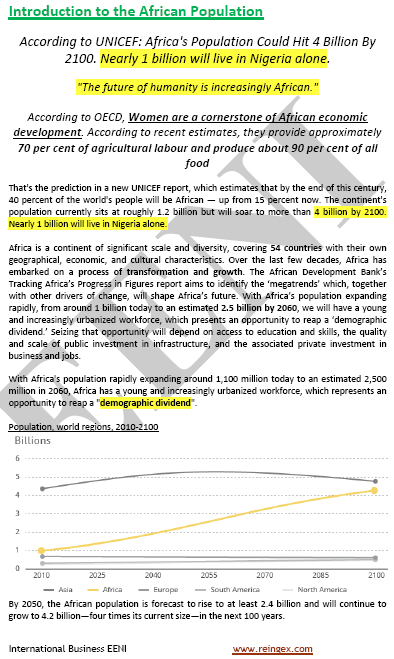
2- New Role of African Women
519 million Women: the fundamental pillar of African Economic development.
- African Women: 70% of agriculture labour in Africa
- Produces 90% of all African food
- Nkosazana Dlamini-Zuma - Former Chairperson of the African Union Commission
- Ellen Johnson-Sirleaf (Former President of Liberia)
3- African Economy: Deep African Socio-economic Transformation.
African economic growth: 5% in the last decade.
- The largest African Economy: Nigeria, followed by South Africa, Egypt, Algeria, Angola, Morocco, Sudan, Kenya, Ethiopia, Libya
- Africa has twenty global frontier markets (50% of the total of the World)
- The African Frontier Markets are Nigeria, Kenya, Angola, Ghana, Ethiopia, Morocco, Tanzania, Algeria, Ivory Coast, Zambia, and Uganda
- South Africa is a member of the BRICS Countries
- Top African economic sectors: Agriculture (25% of GDP) and services
- African manufacturing sector: 10% of Africa’s GDP
- Mineral resources
- Commodities prices
- African demand increment
- Boom of e-commerce. Information and communication technologies: 7% of Africa’s GDP. African mobile revolution (650 million mobile users)
- Agenda 2063: “the future we want for Africa” (the African Union)
Nigeria is the first world's frontier market.
4- African Businessman.
Emergence of African Businessman.
- Alhaji Aliko Dangote (the richest men in Africa, Nigeria)
- Isabel dos Santos (the richest women in Africa, Angola)
- Onsi Sawiris, Mike Adenuga, Mohamed Mansour, Issad Rebrab, Folorunsho Alakija, Othman Benjelloun, Patrice Motsepe, Aziz Akhannouch, Miloud Chaabi, Theophilus Danjuma, Tony Elumelu
5- Intra-African Trade and Regional Integration in Africa.
Towards the African Continental Free Trade Area.
Intra-African Trade and African Economic Integration.
- Low intra-African trade flows (10 - 13%)
- Near 80% of African exports are exported out of Africa
- Action Plan for Boosting Intra-African Trade (objective: 25% of intra-African trade)
- Cost to transport a container from the Port of Durban (ZA) to Lusaka: 8,000 dollars (1,800 dollars from Durban to Japan)
- Africa foodstuff imports: 39 billion dollars annually
- Regional Economic Communities (REC): Trade and Market Integration, obstacle reduction to Intra-African trade, Sectoral Harmonization Policies, Macroeconomics Policy Convergence, Financial and Monetary Integration
- COMESA-EAC-SADC Agreement
- Harmonization of Business Law in Africa (OHADA)
- African Continental Free Trade Area (AfCFTA): fifty-four countries, 1 billion people, combined GDP: 1.2 trillion dollars
6- Infrastructures in Africa.
Programme for Infrastructure Development in Africa (PIDA).
The need for infrastructures in Africa.
- Energy. 600 million of African lives without access to electricity
- Transport. 18 billion dollars in annual investment
- African Corridors Development
- Information and Communication Technologies
- Transboundary Water Resources
7- Governance in Africa.
Better business environment in Africa.
A better governance in Africa.
- More democratic governments
- African Peer Review Mechanism
- Peaceful elections
- Less corruption
- Better business environment
- Improvement in the Easy of Doing Business rank of WB. Mauritius is the African Country with the highest rank followed by South Africa, Rwanda, Ghana
- Tax revenues increment
- Fewer African conflicts (“Silencing the Guns” - African Union)
8- Africa and global market.
Africa: 3% of global trade.
- African share of global manufacturing production: 1.5%
- Emergence of partnership with the BRICS (Brazil, India, China, South Africa)
- Trade between China and Africa: 200 billion dollars
- Trade with India: 90 billion dollars
- Key players: The United States, China, India, the BRICS Countries, the Arab countries, South Korea, Japan, Turkey
Sample: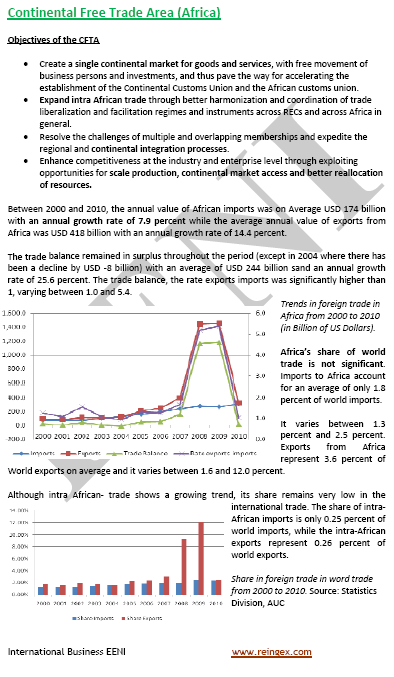
(c) EENI Global Business School (1995-2025)
Top of this page
