
African Integration. Economic Communities




 WhatsApp
Module: African Common Market. Continental Free Trade Area (8 ECTS,  )
)
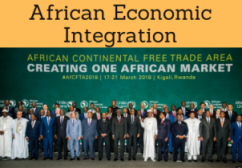
The main objective of the course is to understand the irreversible African Integration process whose final goal is the creation of the “African Continental Free Trade Area.”
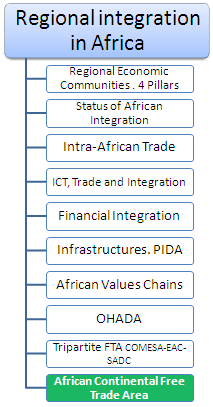
- Introduction to Regional Economic Integration in Africa
- Regional Economic Communities (REC)
- Status of Regional Economic Integration in Africa
- Action Plan for Boosting Intra-African Trade
- ICT for Trade and Integration in Africa
- Regional financial integration in Africa
- Infrastructures in Africa
- Programme for Infrastructure Development in Africa (PIDA)
- African Value Chains
- Harmonization of Business Law in Africa (OHADA)
- COMESA-EAC-SADC Tripartite
- African Continental Free Trade Area (AfCFTA)
Regional Economic Integration in Africa:


- Credits :
8

- Duration: six weeks It is recommended to dedicate about twelve hours of study per week following a flexible schedule. It is possible to reduce the duration dedicating more hours a week
- Download the syllabus (PDF)
Languages:
- Also available in For improving international communication skills, student has free access to the learning materials in these languages (free multilingual training).
 Intégration régionale en Afrique
  Integración regional en África
  Integração Regional na África
This Online Training belongs to the following Higher Education Programs offered by EENI:
Doctorate in African Business.

Master in Business in Africa, Transport and Logistics in Africa.


The specific objectives of the course are the following:
- To understand the fundamental role of the African Union, the UNECA, the African Development Bank and the Regional economic communities and the function overlapping (“Spaghetti Bowl”) in the African Integration process
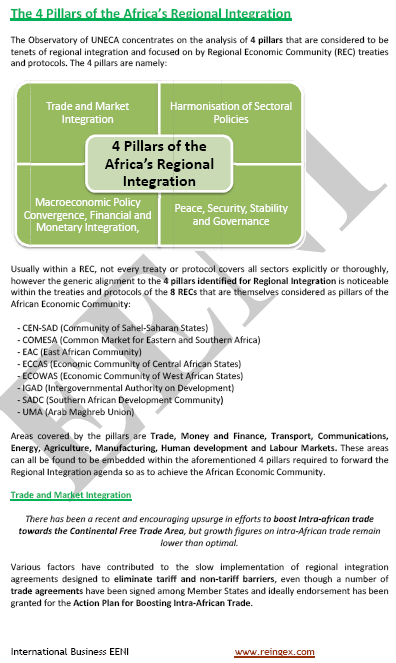
- To understand the four pillars of African Regional Integration
- To understand the African Economic Community, the African Customs Union and the future “African Common Market”
- To learn about strengths and weakness of the African Integration
- To learn about Status of Regional Economic Integration in Africa
- To identify the obstacles to Intra-African trade
- To be familiar with the Action Plan for Boosting Intra-African Trade (to reach 25% of intra-African trade)
- To learn about the advantages of Information and communication technologies (ICT) applied to inter-African Trade
- To understand African Financial system integration and the role of Cross-border banking
- To understand the fundamental role of infrastructures (one of the drivers of African Economic growth) and the ICT (“African Mobile Revolution”) in African Integration process
- To be familiar with the PIDA (Programme for Infrastructure Development in Africa)
- To evaluate trading costs in Africa
- To know how African enterprises can take advantage of African Value Chains
- To learn about two good examples of African Integration: OHADA (Organization for the Harmonization of Business Law in Africa) and Tripartite Agreement (COMESA-EAC-SADC)
- To learn about paths towards the African Continental Free Trade Area (AfCFTA), the benefits for Africa, and the potential scenarios to achieve it
Course intended for all those wishing to understand the path towards the African Continental Free Trade Area and the socio-economic implications for Africa.

The Subject 1- Introduction to the Regional Economic Integration in Africa. Syllabus:
This subject consists of four parts:
1- Introduction to African Economic Integration.
- History of the Regional Integration Process in the African Continent
- Abuja Treaty
- Towards an African Economic Community (AEC)
- Treaties and Protocols on Regional Integration
2- Regional Economic Communities (RECs) In Africa (Summary).
- Community of Sahel-Saharan States (CEN-SAD)
- Common Market for Eastern and Southern Africa (COMESA)
- EAC (East African Community)
- ECCAS (Economic Community of Central African States)
- Economic Community of West African States (ECOWAS)
- IGAD (Intergovernmental Authority on Development)
- Southern African Development Community (SADC)
- UMA (Arab Maghreb Union)
- COMESA-EAC-SADC Tripartite Agreement
3- Other African Economic Groups (Summary).
- Southern African Customs Union (SACU)
- MRU (Mano River Union)
- IOC (Indian Ocean Commission)
- West African Economic and Monetary Union (WAEMU)
- WAMZ (West African Monetary Zone)
- ICGLR (Conference on the Great Lakes)
- Central African Economic and Monetary Community (CEMAC)
4- The Four Pillars of Regional Economic Integration in Africa.
- Trade and Market Integration
- Sectoral Harmonization Policies
- Macroeconomic Policy Convergence, Financial, and Monetary Integration
- Peace, Security, Stability, and Governance
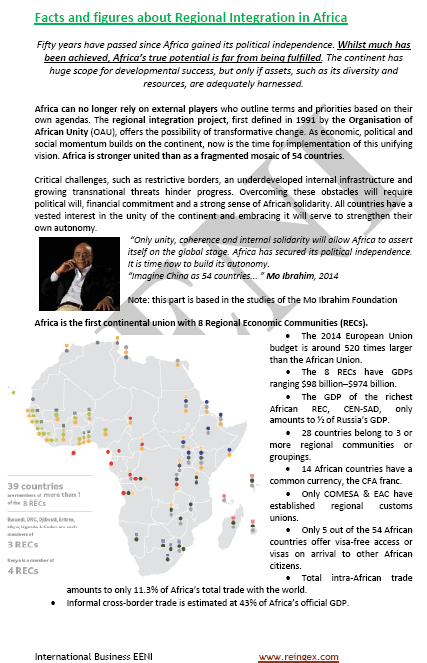
- Facts and figures about Regional Economic Integration in Africa
The Subject 2- Status of Regional Economic Integration in Africa. Syllabus:
- Assessing Regional Economic Integration in Africa (ARIA) report (Economic Commission for Africa, African Development Bank, Africa Union)
- Developments in the major areas across the REC (Regional Economic Communities)
- Free movement of people and right of establishment
- Macroeconomics policy convergence
- Physical integration in Africa
- Developments at inter-REC and continental levels
- Mainstreaming regional integration
- Harmonizing Rules of Origin across Africa
- Trade Facilitation Measures and Programs
- Market Access and Services
- Trans-African Transport Corridors initiatives
- Best Practices in African Regional Economic Integration
The Regional Economic Communities are the main customers of the Economic Commission for Africa at the sub-regional level. The commission and its Sub-Regional Office works in close collaboration with the main Regional Economic Communities to harmonize the membership, reinforce policy and build technical capacity to pursue Regional Economic Integration in Africa.
There are multiple regional trading blocs in Africa, known as Regional Economic Communities, many of which have overlapping memberships.
The ultimate goal of the Economic Commission for Africa is to create an African Common Market. An area where the Regional Economic Communities have been observed to be more active in trade and market integration.
On average, all the Regional Economic Communities and the intra-intergovernmental Organizations registered positive growth in exports to the community members, with the Central African Economic and Monetary Community (CEMAC), the Common Market for Eastern and Southern Africa and the CENSAD showing an average increase of 40% or more.
The West African Economic and Monetary Union, the Intergovernmental Authority on Development, the Southern African Development Community, the Economic Community of West African States, the Arab Maghreb Union and OIC registered growth in exports to the community in the range of 20-40%.
Sample: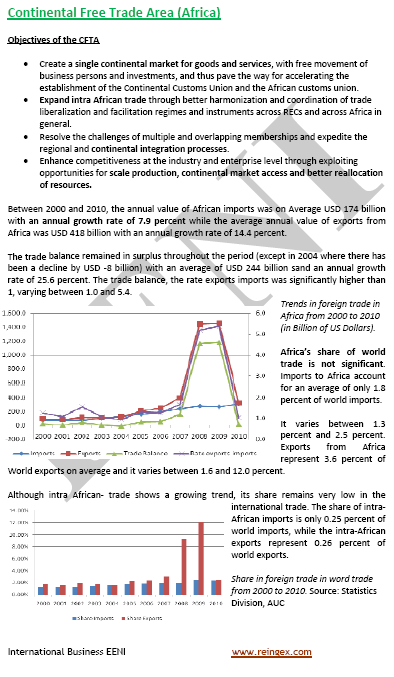
The Constitutive Act of the African Union makes it clear that the main goal of the African Union is to set up an African Economic Community and assigns to the Regional Economic Communities the primary responsibility. An intermediate stage in this effort is the transition of the Regional Economic Communities into a Customs Union.
A continuous evaluation of integration efficiency in Africa is fundamental to gain a deeper understanding of the strengths and weakness of African Integration efforts. It is from this perspective that the African Union Commission and the Economic Commission for Africa publish the report on Assessing Regional Economic Integration in Africa (ARIA).
The cost of Doing Business in Africa is usually high, due in part to infrastructure gaps, the duplicative border customs procedures and the uncomfortable paper requisites. Foreign Trade paperless remains a distant objective.
Free movement of people and right of establishment has advanced in some Regional Economic Communities but remain a key objective in many other African sub-regions.
African exports remain heavily concentrated in a few primary commodities, especially fuels and mining products. Of the top twenty exported products by Africa, the vast majority are fuels, fuel products, and mineral products. A few are basic agricultural commodities (sugar, cotton, cocoa, and coffee), and a slight number are manufactured goods.
International Transport is critical to the attainment of the Millennium Development Goals (United Nations) and the objectives of the Regional Economic Integration in Africa.
It is of particular importance important to intensify African competitiveness in the regional and Global Markets by reducing the cost of doing business in Africa, exacerbated by deficiencies in the transport infrastructure.
(c) EENI Global Business School (1995-2025)
Top of this page
