Business in Mali, Bamako, Mining, Gold



 WhatsApp
Mali: third African gold producer. Malian Economy and Foreign Trade
Mali: The third gold producer in Africa.
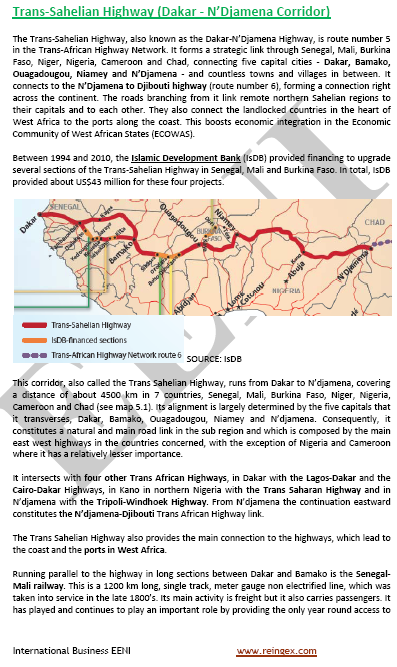
Bamako (Mali) - Dakar (Senegal) Rail transport: 1,248 km
Ahmadou Hampaté Bá (Malian Historian): “In Africa, when an old man dies; it is a library burning”
- Introduction to the Republic of Mali (West Africa)
- Malian Economy
- International Trade of Mali
- Business and Investment Opportunities in Mali:
- Agribusiness
- Livestock
- Malian Mining sector
- Renewable Energy
- Tourism
- Case Study: Desert Gold Ventures (Canada) in Mali
- Investment Promotion Agency of Mali
- Access to the Malian Market
- Business Plan for Mali

The educational aims of the Subject “Foreign Trade, Logistics and Business in Mali” are:
- To analyze the Malian Economy, Logistics and Global Trade
- To conduct research on business opportunities in Mali
- To explore the Malian trade relations with the student's country
- To learn about Malian Trade Agreements
- To develop a business plan for the Malian Market

The Subject “Foreign Trade, Logistics and Business in Mali” is included within the curriculum of the following academic programs at EENI Global Business School:
Doctorate in African Business.

Master in Business in Africa, International Business.
 or
or 


- Subject Credits “Doing Business in Mali”: 1

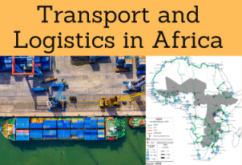
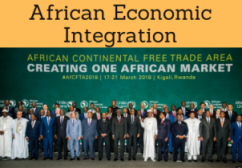
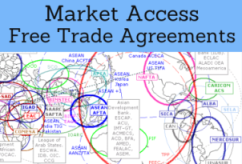
Malian Trade Agreements and Preferential Access:
- Mali and the West African Economic Area
- Mali withdrew from the Economic Community of West African States (ECOWAS) in 2021
- West African Economic and Monetary Union (WAEMU)
- Community of Sahel-Saharan States (CEN-SAD)
- African Continental Free Trade Area
- The United States-Mali
- Mali is the beneficiary of the AGOA
- US-UEMOA Agreement
- European Union-Mali
- Africa-EU Partnership
- European Union-Generalized System of Preferences (GSP)
- Islamic Trade Preferential System
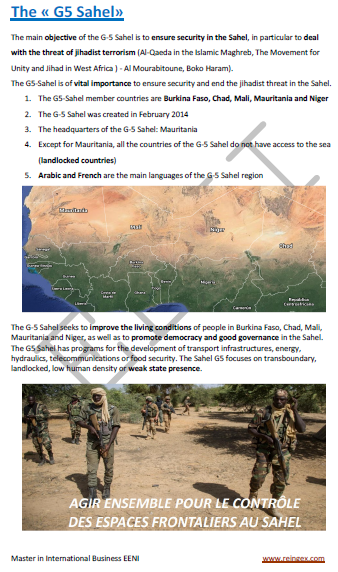
- G5-Sahel
- Organization for the Development of the Senegal River
- Niger Basin Authority
- Harmonization of Business Law in Africa (OHADA)
- Arab Bank for Africa (BADEA)
- World Trade Organization (WTO)
- Agreement on Trade in Services (GATS)
- Agreement on Sanitary Measures
- Agreement on Technical Barriers to Trade
- Agreement on Preshipment Inspection
- Agreement on Safeguards
- Trade Facilitation Agreement
- World Customs Organization (WCO)
- Kyoto Convention
- BIC
- Chicago Convention (ICAO)
- International Maritime Organization (IMO)
- Convention for Safe Containers
- Istanbul Convention
- Rotterdam Rules
- Customs Convention on Containers - not a member
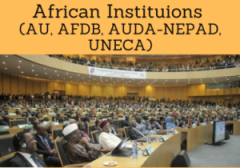
- Economic Commission for Africa
- African Union
- AU Convention on Preventing and Combating Corruption
- AUDA-NEPAD
- Africa Agriculture Development Programme
- African Development Bank
- Africa-Asia Partnership
- Africa-Korea Partnership
- Africa-BRICS
- Africa-Turkey Partnership
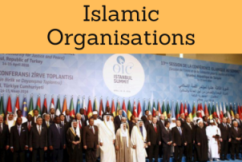
- Afro-Arab Cooperation
- Arab Bank for Africa (BADEA)
- Islamic Development Bank
- Organization of Islamic Cooperation (OIC)
- United Nations
- World Bank
- World Trade Organization (WTO)
- International Monetary Fund
The Republic of Mali (landlocked country) is the largest country in West Africa after Niger.
- Mali shares borders with Mauritania, Algeria, Niger, Burkina Faso, Ivory Coast, Guinea, and Senegal
- Malian Population: 18 million people (50% women)
- Malian Area: 1,241,238 km²
- Bamako is the capital of the Republic of Mali (1.8 million people)
- The largest Malian cities are Bamako, Gao, Kayes, Kidal, Koulikoro, Mopti, Ségou, Sikasso, and Timbuktu
- Official language of Mali: French
- 50% of Malian speak Bambara
- Independence of Mali: 1960 (France)
Sample: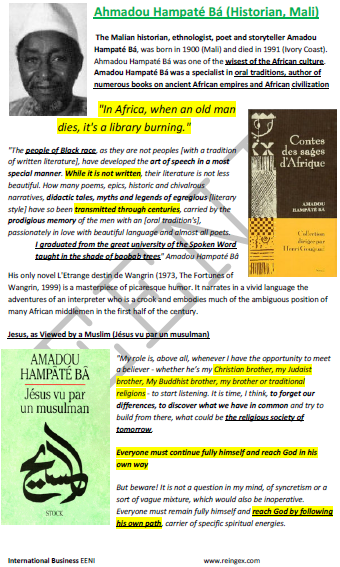
More information about Mali (EENI African Business Portal).
Main religions in Mali:
- Islam (94% of the Malian population)
- African Traditional Religions
Mali belongs to the West African Economic Area.
Malian Economy:
- Main Malian economic activity are agriculture and livestock (44% of Malian GDP; 80% of the working population)
- Mali is the third largest gold producer in Africa (75% of total exports)
- Malian Cotton: 15% of total exports
- Strong liberalization policy
- Political instability risks in North of Mali: Tuareg rebels (National Movement for the Liberation of Azawad) and Islamist armed groups
- Malian currency: CFA Franc
Alphadi, “The Prince of the Desert.” Child of Tuareg, Seidnaly Sidhamed alias ALPHADI was born in 1957 in Timbuktu (Mali), they parents were traders. In Niger; he lives surrounded by his eight brothers and sisters. Very early; he enjoys disguise her sisters and mother and spends hours in front of Hindus films to observe the make-up of the actresses. It is already very sensitive to anything that might improve the female beauty. However, in a Muslim country, fashion is a sector banned to boys. Alphadi flies to success. There is not a corner in the World where he had to organize a parade: Niamey, Abidjan, Paris, Brussels, New York, Washington, Quebec, and Tokyo.
(c) EENI Global Business School (1995-2025)
Top of this page
