Business in Burkina Faso, Ouagadougou, Cotton



 WhatsApp
Burkinabe Economy, Gold. Foreign Trade of Burkina Faso, Logistics
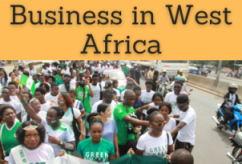
Burkina Faso: one of the regional economies that have implemented more reforms.
The Republic of Burkina Faso established the development strategy for the future years to opening to regional and global markets. Burkina wishes “to become a development centre in West Africa.”
Top Burkinabe exports are cotton and gold (68%)
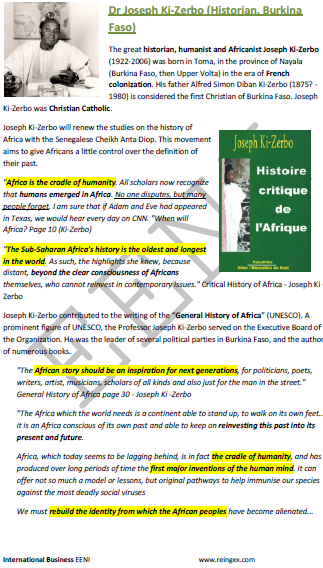
Joseph Ki-Zerbo: Africa, the cradle of humanity has a history and gave birth to History
- Introduction to the Republic of Burkina Faso (West Africa): the country of upright men
- Burkinabe economy
- Case Study:
- International Arts and Crafts Fair (Ouagadougou)
- Minata Kone (businesswoman)
- International Trade of Burkina Faso
- Business Opportunities in Burkina Faso
- Agriculture
- Mining
- Industry
- Tourism
- Services sector
- Real Estate and infrastructures
- Transport and Logistics
- Access to the Burkinabe market
- Business Plan for Burkina Faso
Master in International Business in Burkina Faso
The educational aims of the Subject “Foreign Trade, Logistics and Business in Burkina Faso” are:
- To analyze the Burkinabe Economy, Logistics and Global Trade
- To conduct research on business opportunities in Burkina Faso
- To explore the Burkinabe trade relations with the student's country
- To learn about Burkinabe Trade Agreements
- To develop a business plan for the Burkinabe market

The Subject “Foreign Trade, Logistics and Business in Burkina Faso” is included within the curriculum of the following academic programs at EENI Global Business School:
Master in Business in Africa, International Business, Foreign Trade.
Doctorate in African Business.
Languages:  or
or  Burkina Faso
  Burkina
  Burkina Faso.
- Subject Credits “Doing Business in Burkina Faso”: 1

International Trade, Logistics and Business in Burkina Faso
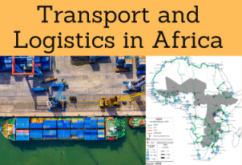
Transport and Logistics in Burkina Faso
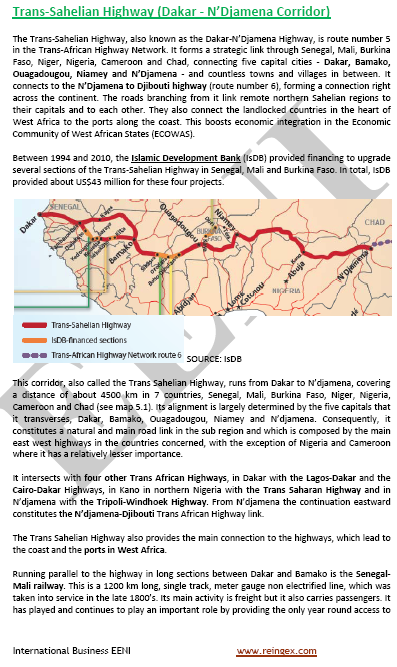
- Trans-African Corridors
- Nearest ports
- Port of Abidjan (Ivory Coast)
- Port of Lomé (Togo)
- Port of Cotonou (Benin)
- Port of Tema (1,000 kilometers)
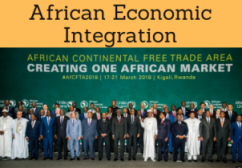
Trade Agreements and Preferential Access of Burkina Faso
- Burkina Faso and the West African Economic Area
- Community of Sahel-Saharan States (CEN-SAD)
- African Continental Free Trade Area
- Burkina Faso withdrew from the Economic Community of West African States (ECOWAS) in 2021.
- West African Economic and Monetary Union (WAEMU)
- Burkina Faso-EU Trade Relations
- AGOA
- Niger Basin Authority
- Harmonization of Business Law in Africa (OHADA)
- G5-Sahel
- Arab Bank for Africa (BADEA)
- Global System of Trade Preferences among Developing Countries (GSTP) - accession process
- World Trade Organization (WTO)
- Agreement on Trade in Services (GATS)
- Agreement on Sanitary Measures
- Agreement on Technical Barriers to Trade
- Agreement on Preshipment Inspection
- Agreement on Safeguards
- Trade Facilitation Agreement
- World Customs Organization (WCO)
- Kyoto Convention
- Hamburg Rules (Sea)
- Economic Commission for Africa
- African Union
- AU Convention on Combating Corruption
- AUDA-NEPAD
- Africa Agriculture Development Programme
- African Development Bank
- China-Africa Cooperation
- Africa-India Cooperation
- Africa-BRICS
- Africa-Japan Cooperation
- Africa-South America Summit
- Afro-Arab Cooperation
- Organization of Islamic Cooperation (OIC)
- IsDB
- United Nations
- World Bank
- World Trade Organization (WTO)
- International Monetary Fund
- Burkina Faso (West Africa) shares borders with Mali, Niger, Benin, Togo, Ghana, and Ivory Coast
- Area of Burkina Faso: 274,200 km²
- Burkinabe Population: 16 million people
- Burkina Faso is one of the poorest countries
- The official language of Burkina Faso is French
- Local languages: Moore, Fulfulde, Dioula
- Independence of Burkina Faso: 1960 (from France)
- Burkina is a landlocked African Country
- Capital of Burkina Faso: Ouagadougou (1.5 million)
- Largest cities: Bobo-Dioulasso, Banfora, Dédougou, Tenkodogo, Koudougou, Kaya, Fada N'Gourma, Ouahigouya, Manga, Dori, and Gaoua
- The Historian Joseph Ki-Zerbo was born in Burkina Faso
Religions in Burkina Faso:
- Islam (65% of the Burkinabe population, 8 million)
- 30% of the Burkinabe are Christians (with Catholic majorities)
- African Traditional Religions

More information about Burkina Faso (EENI African Business Portal).
Burkina Faso belongs to the West African Economic Area.
Economic Profile of Burkina Faso:
- Burkinabe Currency: West African CFA Franc
- Agriculture: 90% of the Burkinabe population
- Main cash crop in Burkina Faso: cotton
- Main commodities exported by Burkina Faso are cotton, nuts, gold, cattle, goats, sheep, sesame seeds, fruits, and vegetables
- Composition of the Burkinabe GDP: agriculture 35%, industry 23%, services 42%
- Main sectors of the Burkinabe economy are agriculture, trade and mining
- Regional Trade with other ECOWAS and WAEMU countries is very low, limited to agricultural products
- Positive liberalization of the Burkinabe economy
- Burkina is open to foreign investors
- Events:
- International Arts and Crafts Fair (SIAO)
- Pan-African Film and Television Festival of Ouagadougou
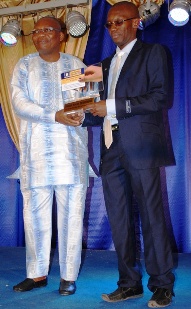
Ouandaogo Abdoul Karim (Student of the Master in International Business, University of Ouagadougou & EENI) winner of a WAEMU regional award.
National Trade Office ONAC. One of the main tasks of the ONAC is to promote International Trade between Burkina Faso and the rest of the World.
Group Soyaf (Burkina). Created in 1982 by Mr Salif Yameogo (Managing Director), the Group Soyaf has become one of the biggest holding enterprises with international standards in West Africa and more specifically in Burkina Faso. In this new millennium, the Group Soyaf drew Burkina Faso several large multinationals whose Telecel International Group in the area of communication and the Framlington Group, a Group of investors.
TELECEL (Burkina). Founded in 1987 by Miko Rwayitaré and owned by 80% to Orascom Telecom (Egypt) since 2000, Telecel International is a multinational Group based in South Africa and Geneva. With its years of experience in Africa, Telecel has developed a single expertise in the study of projects, the establishment and operation of cellular networks in the African continent. In all its activities, Telecel International combines national private investors in the shareholding of its associated enterprises.
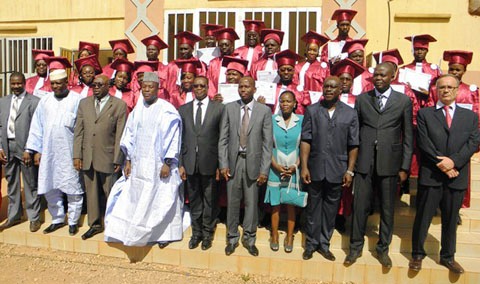
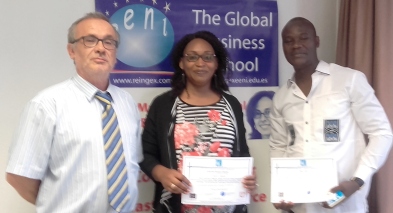
Two Burkinabe students receiving the Diploma of Master of Science in International Business with Pedro Nonell (EENI President):
(c) EENI Global Business School (1995-2025)
Top of this page
