Business in Singapore, Port, ASEAN

Singapore: second most competitive economy in the World. Singaporean Foreign Trade
- Introduction to Singapore (Southeast Asia, ASEAN)
- Singaporean Economy
- Advantages of Singapore
- Key Singaporean industry sectors
- International Trade of Singapore
- Port of Singapore
- Investment in Singapore
- Setting up a company in Singapore
- Case Study:
- Hyflux
- Temasek
- Made in Singapore
- Access to the Singaporean Market
- Business Plan for Singapore
The objectives of the subject “International Trade and Business in Singapore” are the following:
- To analyze the Singaporean Economy and Global Trade
- To know the business opportunities in Singapore
- To understand the role of Singapore as a gateway to the Southeast Asian markets (ASEAN)
- To explore the Singaporean trade relations with the country of the student
- To know the Singaporean Trade Agreements
- To examine the profile of the Singaporean Companies
- To develop a business plan for the Singaporean Market
The Subject “Business in Singapore” belongs to the following Online Programs taught by EENI Global Business School:
Masters: International Business, Foreign Trade.
Course: Taoism, Confucianism & Business.
Languages:  (or
(or  Singapur
  Singapour).
- Credits of the subject “Doing Business in Singapore”: 3

- Duration: three weeks
Masters adapted to  Singaporean Students.
International Trade and Business in Singapore.
Singapore is the second most competitive economy in the World and the most competitive small economy in the World.
- Port of Singapore
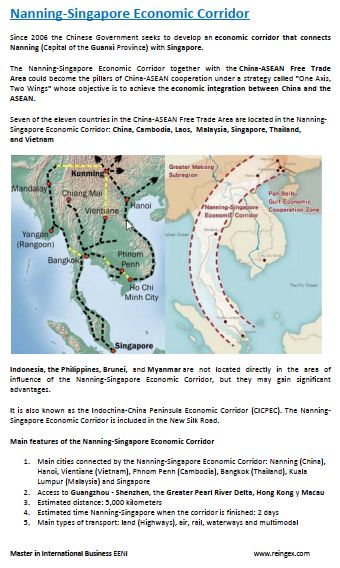
- Nanning-Singapore Corridor
- Asia-Africa Corridor
- Access to the East-West Economic Corridor (Myanmar-Thailand-Laos-Vietnam)
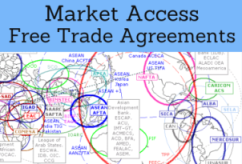
Singaporean Free Trade Agreements and Market Access:
- Singapore and the Buddhist Economic Area
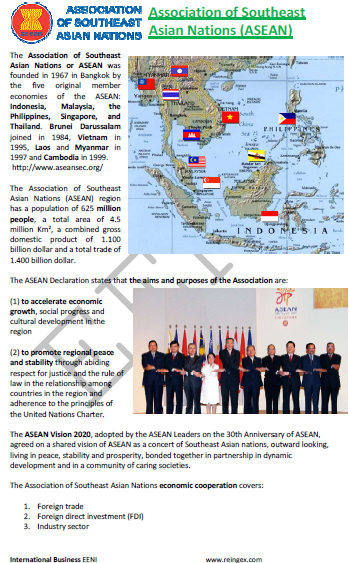
- ASEAN
- ASEAN Economic Community
- ASEAN Free-Trade Area
- Singaporean Free Trade Agreements (as an ASEAN member): Australia-New Zealand, Canada, China, Hong Kong, India, the EU, Japan, Korea, Russia, and Pakistan
- APEC
- Indian-Ocean Rim Association
- Agreement for Trans-Pacific Partnership
- Regional Comprehensive Economic Association
- India-Singapore Agreement
- China-Singapore FTA
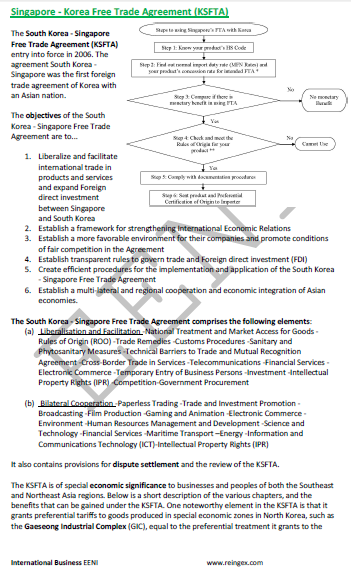
- Singapore-South Korea Agreement
- Singapore-Australia Agreement
- Singapore-Japan Agreement
- U.S.-Singapore Agreement
- Singapore-New Zealand Agreement
- Singapore-EU Agreement
- Singapore-EFTA
- Jordan-Singapore Agreement
- Singapore-Peru Agreement
- Singapore-Panama Agreement
- Turkey-Singapore Agreement
- UK-Singapore Free Trade and Economic Integration Agreement
- Costa Rica-Singapore Agreement
- Taiwan-Singapore Agreement
- GCC-Singapore Agreement
- Global System of Trade Preferences
Business in Singapore:
- WTO
- Agreement on Sanitary and Phytosanitary Measures
- GATS
- Agreement on Technical Barriers to Trade
- Agreement on Preshipment Inspection
- Agreement on Safeguards
- Trade Facilitation Agreement
- WCO
- Hamburg Rules (Sea)
- IRU
- ICS
- BIC (Containers)
- Chicago Convention (ICAO)
- IMO
- Istanbul Convention - not a member
- Customs Convention on Containers - not a member
- Asian Development Bank
- Colombo Plan
- Africa-Asia Strategic Partnership
- Boao Forum for Asia
- Asia Cooperation Dialogue
- ESCAP
- Asia-Middle East Dialogue
- FEALAC
- UN
- WB
- WTO
- IMF
- PEEC
- Capital of the Republic of Singapore: Singapore City
- Singaporean Population: 5.5 million people
- Singaporean Area: 719.1 km²
- There are four official languages in Singapore: English, Malay, Mandarin, and Tamil
- 74% of the Singaporean population are Chinese, 13% are Malays and 9% Indians
- Type of Government of Singapore: Unitary Parliamentary Constitutional Republic
- Singaporean Independence: 1963 (UK)
- Near countries to Singapore: Cambodia, Malaysia, Indonesia, Brunei, Thailand
Religions in Singapore:
- Buddhism (33%)
- Christianity (18%)
- Islam (15%)
- Taoism (11%)
- Hinduism (5%)
- Singapore has a significant Confucianism influence on his culture
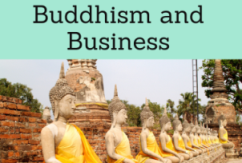
Singapore belongs to the Buddhist Civilization / Sinic Civilization
Singaporean Economy:
- Singapore consistently scores at the top levels in global and regional rankings. These range from political risk to workforce productivity, from quality of life to forecasts for making profits
- Singapore is the second most competitive economy (World Competitiveness Yearbook), the seventh most competitive economy (Global Competitiveness), and the ninth in the Business Competitiveness Index
- The economy of Singapore is the second freest economy in the World (Heritage Foundation)
- Singapore is a world leader in all the ten fields of economic freedom
- More than 26,000 international firms are established in Singapore
- Currency: Singapore Dollar (SGD)
- Singaporean GDP by sector
- Services: 75%
- Industry: 25%
International Trade of Singapore
- Top exports of Singapore: electronics, chemicals, and services
- Top trade partners of Singapore: France, Germany, the UK, Indonesia, Malaysia, Thailand, Japan, Hong Kong, South Korea, Taiwan, China, Saudi Arabia, the U.S., and Australia
Singapore has in force several Free Trade Agreements.
Singapore has the most extensive Free Trade Agreement network in Asia. Trade Agreements have been signed with the U.S., Japan, Australia, New Zealand, the EFTA, Jordan, China, Chile, South Korea, India, and Panama.
Singapore Free Trade Agreements (Concluded/Signed)
- Costa Rica
- Gulf Cooperation Council
Singapore Free Trade Agreements (actual/Negotiations)
- Canada
- Mexico
- Pakistan
- Ukraine.
Sample of the Subject: