
Modules - Master in International Transport





 WhatsApp
Detailed content. Online Master / Doctorate in Global Transport, Logistics
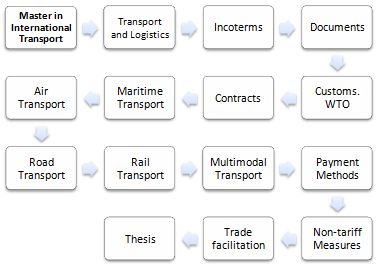
Detailed content of the Modules and subjects of the:
Master in International Transport.
Doctorate in Global Transportation & Logistics.

ECTS = European Credit Transfer and Accumulation System

Subjects of the Professional Master/Doctorate in Global Transport
Introduction to International Transport and Logistics (5 ECTS).
- Introduction to International Logistics and International Trade
- International transport chain
- Authorized Economic Operator
- Selecting a mode of International Transport
- Costs and insurance of International Transport
- Transport Documents related to International Trade
- Export Packaging
Containers and international transport.
- Customs Convention on Containers
- International Convention for Safe Containers
- Convention Relating to Temporary Admission
International Federation of Freight Forwarders Associations (FIATA).
- Negotiable Combined Transport Bill of Lading (FBL)
- Electronic FIATA Bill of Lading
- FIATA Multimodal Waybill FWB
- Forwarders Certificate of Receipt (FIATA FCR)
- Forwarders Certificate of Transport (FCT)
- Warehouse Receipt
The educational aims of the Subject “Introduction to International Transport and Logistics” are:
- To have a global vision of logistics and international transport applied to International Trade
- To understand the functioning of global transport chain
- To learn about different techniques of export packaging and the importance of containers
- To understand the basic concepts related to documents, costs and insurance of International Transport
- To analyze the main FIATA documents
Incoterms (2 ECTS)
- Introduction to Incoterms
- What are Incoterms® 2020?
- Key changes to Incoterms® 2020
- The Review of Incoterms® FCA (Free Carrier)
- The change from DAT (Delivered at Terminal) to DPU (Delivered at Place Unloaded)
- Different levels of insurance coverage under CIF and CIP
- Associated costs for each Incoterm (article A9 / B9)
- Analysis of Incoterms® 2020
- Incoterms® 2020 and international transport
- Incoterms® 2020 for sea and inland waterway transport: FAS (Free Alongside Ship) - FOB (Free On Board) - CFR (Cost and Freight) - CIF (Cost, Insurance & Freight)
- Incoterms® 2020 for any mode of transport: EXW (Ex Works) - FCA (Free Carrier) - CPT (Carriage Paid To) - CIP (Carriage and Insurance Paid to) - DAP (Delivered At Place) - DPU (Delivered at Place Unloaded) - DDP (Delivered Duty Paid)
- How are they used?
- Criteria for selection of Incoterms® 2020
The educational aims of the Subject “Incoterms® 2020” are the following:
- To understand the importance of Incoterms® 2020 in Foreign Trade
- To know which Incoterms® 2020 are the most suitable for the different types of International Transport
- To know how to calculate export prices based on Incoterms® 2020
- The risk, cost and necessary procedures according to the selected Incoterm
Foreign Trade Documents (1 ECTS).
- The role of documents in international transport and International Trade
- International transport documents
- Commercial documents (proforma, invoice, packing list...)
- Origin documents
- Other Foreign Trade Documents
The educational aims of the Subject “Foreign Trade Documents” are the following:
- To learn about function of the main documents used in imports and exports
- To know how to fill them out properly
- To know how to perform the check-list of Foreign Trade Documents
Customs. World Trade Organization (WTO) (4 ECTS).
- Customs in Foreign Trade
- Customs classification
- Customs regime
- The role of customs agent
- Customs clearance
- Inspection of the products at customs
- Origin of products
- Market Access database (EU)
- Harmonized System (HS)
- Rules of Origin
- Agreement on Rules of Origin of WTO
- Trade Facilitation
- Customs Procedures
- SAFE Package
- Kyoto Convention (Containers)
Customs and the World Trade Organization (WTO).
- The World Trade Organization and Customs
- Rules for Customs Valuation of products
- Customs Valuation Methods:
- Transaction value
- Identical or similar goods
- Deductive or computed method
- Fall-back
- Rules of Origin
- Import licenses
- WTO Agreements on Technical Barriers to Trade (TBT), Sanitary and Phytosanitary Measures (MSF), Pre-shipment Inspection
The educational aims of the Subject “Customs” are the following:
- To understand customs procedures in Foreign Trade, the different commercial regimes and methods of product classification
- To learn about the fundamental concepts related to customs: customs clearance, customs valuation, non-tariff barriers and obstacles, pre-shipment inspection, origin of goods, Harmonized System, customs processes...
- To learn about process of importing a product and customs regimes
- To understand the functions of WCO and WTO in relation to customs
International Contracts (3 ECTS).
- International Contracts in Foreign Trade
- Risks associated to International Trade
- Risk minimization instruments
- Guarantees in Foreign Trade
- United Nations Convention on Contracts for the International Sale of Goods (1980)
- Convention on the Limitation Period in international Sale of Goods
- Vienna Convention
- Hague Conference on Private International Law
- Common clauses of an international sales contract
- Anti-corruption clause of the ICC
- International arbitration
- International contracts with Distributors, importers, agents...
- Organization for the Harmonization of Business Law in Africa (OHADA)
- Religion and international contracts
UN Commission on International Trade Law (UNCITRAL).
- The role of the UN Commission on International Trade Law (UNCITRAL) in Foreign Trade and international transport
- Legislative texts of the Commission for International Trade Law: conventions, model laws and legislative guides
- UNCITRAL Model Law on International Commercial Arbitration
- UNCITRAL Model Law on International Commercial Conciliation
- United Nations Convention on the Carriage of Goods by Sea (Hamburg Rules)
- United Nations Convention on the Liability of Operators of Transport Terminals in International Trade
The educational aims of the Subject “International Contracts” are the following:
- To learn about the fundamentals and functions of contracts in Foreign Trade
- To understand how to implement the main clauses of an international sales contract
- To know how to minimise the risks through the clauses of a contract
- To explore the main international Organizations, conventions, clauses and laws related to International Contracts
- To understand the functioning of an international arbitration process
Maritime Transport (5 ECTS)
- Introduction to Maritime Transport
- Analysis of International Maritime Trade
- BIC (Containers)
- Chicago Convention (ICAO)
- International Maritime Organization
- International Chamber of Shipping
- Regular lines and charters
- Freight and Maritime Transport Costs. Insurance
- Maritime Transport Agents
- Maritime Transport Documentation.
- Bill of Lading (B/L)
- Electronic FIATA Bill of Lading (eFBL Bill of Lading)
- Main ports of the world
- Asia-Africa Logistics Corridor
- Legislation related to International Maritime Transport
The educational aims of the Subject “International Maritime Transport” are the following:
- To understand the importance of Maritime Transport in International Trade
- To understand the operation of Maritime Transport
- To learn about key players of Maritime Transport of goods
- To understand the role of main institutions related to Maritime Transport (International Maritime Organization, International Chamber of Shipping)
- To learn about key concepts related to Marine Transport of goods (freight, safety, stowage, risks, insurances...)
- To examine the different concepts related to insurance and main clauses of Maritime Transport
- To analyze the documents related to Maritime Transport (Bill of Lading) and how to fill them out
- To study the main rules and conventions of maritime cargo transport (Rotterdam, Hamburg, FAL Rules)
Air Transport (4 ECTS)
- Introduction to Air Cargo Transport
- International Civil Aviation Organization (ICAO). Chicago Convention
- Convention for the Unification of Certain Rules for International Carriage by Air
- IATA
- Insurance and costs of the International Air Transport
- Loading devices for Air Transport
- AWB Document (Air Waybill). e-AWB
- The global air transport market
- World's largest airports
The educational aims of the Subject “International Air Transport” are the following:
- To understand the importance of Air Transport in International Trade
- To learn about the role of the International Civil Aviation Organization (ICAO) and the International Air Transport Association (IATA)
- To understand the global air cargo supply chain
- To analyze Documentary flow and documents related to Air Cargo Transport (Air Waybill, e-AWB) and how to fill them out
- To study the main Conventions related to International Air Transport
- To know global situation of International Air Transport
International Road Transport (10 ECTS)
- Introduction to Road Transport
- International Road Transport Union
- Safe Load Securing for Road Transport
- Convention on the Contract on the International Carriage of Goods by Road
- Consignment Note (CMR)
- TIR Convention
- TIR Carnet
- Costs and insurance of Road Transport
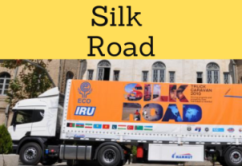
- Almaty-Bishkek Logistics Corridor
- Bangladesh-Myanmar Logistics Corridor
- China-Russia Logistics Corridor
- China-Pakistan Logistics Corridor
- China-Central-West Asia Logistics Corridor
- India-Afghanistan Logistics Corridor
- Europe-Caucasus-Asia Logistics Corridor
- Corridor of the Ashgabat Agreement
- Trans-Siberian Railway (Russia, North Korea)
- North-South Corridor (India-Russia)
- Afghanistan-Turkey Logistics Corridor
- Trans-Caspian Logistics Corridor
- East-West Corridor (Myanmar-Vietnam)
- Kyrgyzstan-Iran Logistics Corridor
- Islamabad-Tehran-Istanbul Rail and Road Logistics Corridor
- Nanning-Singapore Logistics Corridor
Trans-European Transport Corridors.
- Atlantic Logistics Corridor
- Baltic-Adriatic Logistics Corridor
- North Sea-Baltic Logistics Corridor
- North Sea-Mediterranean Logistics Corridor
- Mediterranean Transport Corridor
- Eastern Europe-Eastern Mediterranean Transport Corridor
- Scandinavian-Mediterranean Transport Corridor
- Rhine-Alpine Transport Corridor
- Rhine-Danube Transport Corridor
- Strasbourg-Danube Transport Corridor
- Pan-European Transport Corridor II
- Pan-European Transport Corridor IX
The educational aims of the Subject “International Road Transport” are the following:
- To understand the importance of Road Freight transport in International Trade
- To understand the role of International Road Transport Union (IRU)
- To know how stow safely a load to be transported by a lorry
- To learn about key players and the market of International Road freight transport
- To learn the key concepts related to International Transport by road (cost, insurances, risks...)
- To study the main Conventions (CMR, TIR) of International Road Transport of goods
- To analyze the documents related to Road Transport (Consignment Note, e-CMR) and how to fill them out
Rail freight transport (5 ECTS)
- Introduction to the Rail Transport
- International Rail Transport Committee(CIT)
- International Union of Railways
- Intergovernmental Organization for International Carriage by Rail. COTIF Convention (Rail)
- Organization for Cooperation between Railways (OSJD)
- Costs and insurance of Rail Transport
- Rail Transport Document: Consignment Note
- Economy and railway operations
- CIM, CIT Rail Rules
- Rail transport in Africa
Eurasian Rail Corridors:
- Introduction to the Eurasian rail cargo transport
- Trade volume distribution between the Northern and Southern routes
Combined Transport in Europe
- Rail/Road combined transport in Europe
- General framework and key elements of Combined Transport in Europe
- The European rail/road combined transport market
The educational aims of the Subject “International Rail Transport” are the following:
- To understand the importance of Rail Transport in International Trade
- To analyze the pillars of international rail Transport Law
- To understand the role of international rail Transport Committee and the Intergovernmental Organization for International Carriage by Rail (OTIF)
- To learn about key players and concepts of Rail Freight transport
- To analyze the documents related to Rail Transport (CIM Consignment Note) and how to fill them out
- To study the main Conventions related to Rail Transport of goods (COTIF Convention, CIM, OSJD)
Multimodal / Combined Transport (5 ECTS)
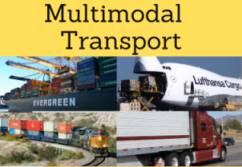
- Introduction to Multimodal / Combined Transport
- Intermodal Transport Chain
- Multimodal Transport Operator
- Intermodal Loading Units (ILU)
- Road-Rail Combined Transport
- United Nations Convention on International Multimodal Transport of Goods (Geneva, 1980)
- United Nations Convention on Contracts for the International Carriage of Goods Wholly or Partly by Sea (Rotterdam Rules)
- Combined Transport Bill of Lading (CTBL) of FIATA
- Insurance and costs of Multimodal Transport
The educational aims of the Subject “Multimodal / Combined Transport” are the following:
- To understand the importance of Multimodal Transport in International Trade
- To learn the key concepts related to Multimodal Transport (Intermodal Transport Units, Multimodal Transport Operator...)
- To learn about role of FIATA
- To analyze Multimodal / Combined Transport Chain and the key players
- To study the main Conventions related to Multimodal/Combined Transport
- To learn about features of Road-Rail Combined Transport
- To analyze the documents related to Multimodal/Combined Transport of goods (Combined Transport Bill of Lading)
International Payment Methods. Documentary Credits (4 ECTS)
- Introduction to the International Payment Methods
- Documentary Collections
- The importance of Documentary Credits in Foreign Trade
- Letter of credit
- Types, modalities and variants of Documentary Credits
- Analysis of the contents of a letter of credit
- Analysis of Documentary Credits
- UCP 600
- E-UCP
- United Nations Conventions related to the International Payment Methods
- United Nations Convention on Independent Guarantees and Stand-by Letters of Credit
- United Nations Convention on International Bills of Exchange and International Promissory Notes
- United Nations Convention on Transfer of Credits in International Trade
- UNCITRAL Model Law on International Credit Transfers
The educational aims of the Subject “Documentary Credits and International Payment Methods” are:
- To analyze the different Payment Methods used in International Trade
- To understand the fundamental role of Documentary Credits in International Trade as well as their operation and modalities
- To know how to manage a Foreign Trade operation through a documentary credit
Non-tariff Measures (4 ECTS)
- Introduction to Non-tariff Measures in Foreign Trade
- Technical Barriers to Trade
- Pre-shipment Inspection
- Sanitary and Phytosanitary Measures
- Contingent trade-protective measures (Anti-dumping Measures, Safeguards)
- Non-automatic Import licensing, quotas and prohibitions
- Price control measures, including charges and additional taxes
- Other non-tariff measures (financial, investment, distribution, public procurement, rules of origin, exports...)
The educational aims of the Subject “Non-tariff Measures” are the following:
- To know how to identify and distinguish non-tariff measures (technical and non-technical) in Foreign Trade
- To evaluate the possible impact they may have on Foreign Trade
- To know how to act before a non-tariff measure implemented by a government
- To familiarise the student with the use of the “International Classification Manual of Non-Tariff Measures” of UNCTAD
Trade Facilitation (2 ECTS)
- Introduction to Foreign Trade Facilitation programs
- Trade Facilitation Agreement
- Convention Harmonization of Frontier Controls of Goods
- Convention Harmonization of Frontier Controls of Goods
- Global System of Trade Preferences
- Trade Negotiations Among Developing Countries
- Potential gains of Trade Facilitation
- The pillars of Trade Facilitation (transparency, simplification, harmonization, standardization)
- The global supply chain and Trade Facilitation
- Buy-Ship-Pay Model (CEFACT / ONU)
- Main Domains of Trade Facilitation (purchases, transport, customs, payments)
- Trade Facilitation and international transport
The educational aims of the Subject “Trade Facilitation” are the following:
- To understand the fundamentals of Trade Facilitation programs
- To learn WTO Agreement on Trade Facilitation
- To analyze the impact of Trade Facilitation programs in the global supply chain
- Introduction to AI in Global Business
- AI Technologies and Tools for International Business
- AI and Global Trade
- AI in Global Strategy and Decision-Making
- AI in Global Supply Chain Management
- AI in International Marketing and Customer Insights
- AI and Cross-Cultural Management
- AI in Global Finance and Risk Management
- Ethical and Regulatory Considerations in Global AI
- Global Ethics
- AI for Sustainability in International Business
- Future Trends in AI & International Business
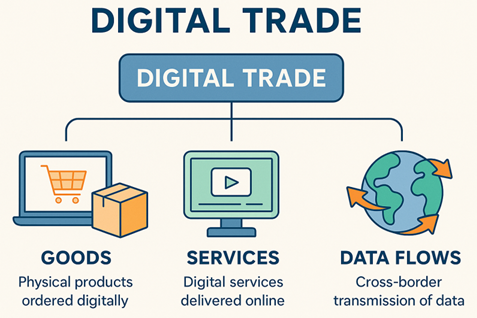
Digital Trade and Cross-Border E-Commerce
 Master en Transport International
  Master en Transporte internacional
  Mestrado em Transporte Internacional.
(c) EENI Global Business School (1995-2025)
Top of this page
