
Central Eurasian Economic Area, Iran





 WhatsApp
Islamic Civilization: Central Eurasian Economic Area, Turkey, Pakistan (Module)
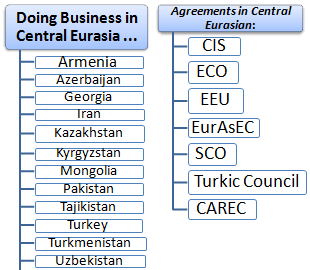
The Central Eurasian Economic Area consists of eleven countries: Afghanistan, Azerbaijan, Albania, Iran, Kazakhstan, Kyrgyzstan, Pakistan, Tajikistan, Turkmenistan, Turkey, and Uzbekistan.
Furthermore, Bangladesh and the Maldives are included because of their growing economic integration in the region.
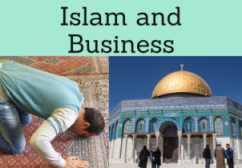
- Islam is the main religion in the Central Eurasian Economic Area
- There are Orthodox Christian minorities
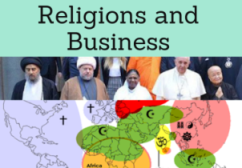
Religions and Global Business -
Religious diversity
- Introduction to the Central Eurasian Economic Area as a part of Islamic Civilization
- Islam as the unifying factor of the Central Eurasian Economic Area
- Economic Profile of the Central Eurasian Countries
- Businesspeople of the Central Eurasian Economic Area
- Interactions of the Central Eurasian Economic Area with other economic areas
- Economic Institutions related to Central Eurasian Economic Area
The goals of the Module “Central Eurasian Economic Area” are the following:
- To define the economic characteristics of the Economic Area of Eurasia Central
- To understand the influence of Islam on the Central Eurasian Economic Area
- To learn about economic profile of the countries of Central Eurasia
- To understand the economic integration process in the Central Eurasian Economic Area
- To analyze the main Businesspeople in Central Eurasia
- To explore the economic relationships with others economic areas of different civilizations
- To analyze the economic institutions related to Central Eurasian Economic Area

Module “Central Eurasian Economic Area” is included within the curriculum of the following academic programs at EENI Global Business School:
Doctorate: Ethics, Religions & Business, World Trade.

Master: Religions & International Business, International Business.

Masters adapted to Eurasian Students:  Azerbaijan,
 Turkey,
 Kazakhstan,
 Kyrgyzstan,
 Tajikistan,
 Turkmenistan, and
  Uzbekistan.
Download the Syllabus of the Module “Central Eurasian Economic Area” (PDF).
Languages of study: or
or  Espace économique de l’Eurasie centrale
  Espacio Eurasia
  Eurásia.
- Credits of the Module “Central Eurasian Economic Area”: 2

- This economic area covers European and Asian Countries
- The largest economies are Turkey, Iran, and Pakistan. These three countries are trying to be the Central State
- All Central Eurasian Countries were former colonies (Soviet Union, UK)
- Pakistan was a part of India until the partition (1947)
The main Businesspeople in the Central Eurasian Economic Area are Muhammad Yunus, Mian Muhammad Mansha, Salman F Rahman, Dewan Yousuf Farooqui, Muhammad Abdul Mannan.
- The case of Iran:
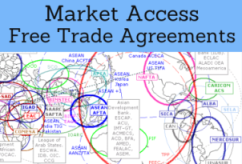
Integration in the Islamic Economic Area of Central Eurasia.
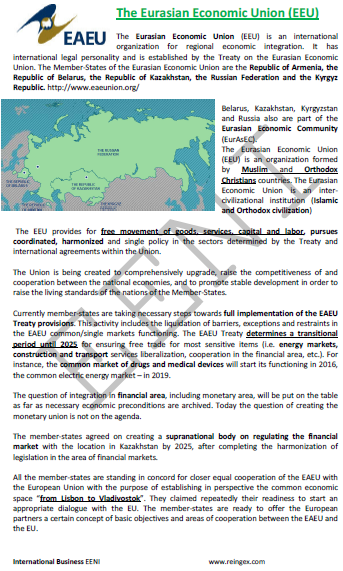
- Kazakhstan and Kyrgyzstan belong to the Eurasian Economic Union (with Armenia, Belarus, and Russia). The EEU has a Trade Agreement with Azerbaijan
- Afghanistan, Azerbaijan, Iran, Kazakhstan, Kyrgyzstan, Pakistan, Tajikistan, Turkey, Turkmenistan, and Uzbekistan are part of the Economic Cooperation Organization (ECO)
- Azerbaijan, Kazakhstan, Kyrgyzstan, Tajikistan, Turkmenistan, and Uzbekistan are members of the Commonwealth of Independent States (with Armenia, Russia, Belarus, Moldova, and Ukraine)
- Kazakhstan, Kyrgyzstan, Tajikistan, and Uzbekistan are members of the Shanghai Cooperation Organization (with Russia and China)
- Bangladesh, Iran, the Maldives, and Pakistan are members of the Asian Clearing Union (with Bhutan, India, Myanmar, Nepal, and Sri Lanka)
- Afghanistan, Bangladesh, the Maldives, and Pakistan are members of the South Asian Association for Regional Cooperation (with Bhutan, India, Nepal, and Sri Lanka. Iran is an observer country) and SAARC Preferential Trade Arrangement (SAPTA)
- Afghanistan, Azerbaijan, Kazakhstan, Kyrgyzstan, Pakistan, Tajikistan, Turkmenistan, and Uzbekistan are members of the Central Asia Cooperation (CAREC) (with China and Mongolia)
- Bangladesh and the Maldives are members of the South Asia Economic Cooperation (SASEC) (with Bhutan, India, Nepal, and Sri Lanka)
- Azerbaijan, Kazakhstan, Kyrgyzstan, and Turkey are part of the Turkic Council
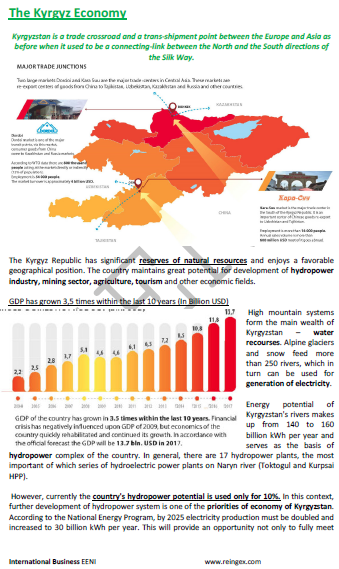
- Afghanistan, Kyrgyzstan, Pakistan, and Tajikistan belongs to Regional Electricity Market Central Asia - South Asia
- Pakistan has trade agreements with Iran and Bangladesh and has signed an Agreement on Economic Cooperation with Kyrgyzstan
- Kyrgyzstan has trade agreements with Kazakhstan and Uzbekistan
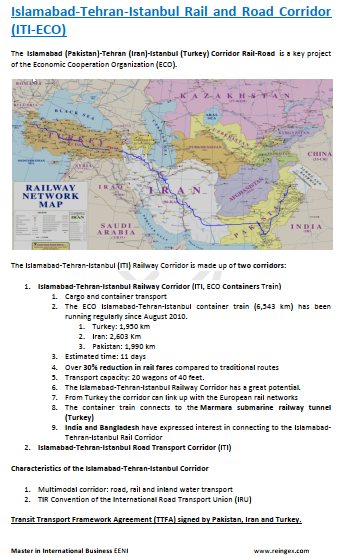
All Eurasian Muslim Countries are part of the Trade Preferential System (OIC-TPS).
- Eurasian countries that have signed the Framework Agreement + PRETAS + Rules of Origin are Bangladesh, Pakistan, and Turkey
- Only Iran has signed the Framework Agreement + PRETAS
- The Maldives has signed only the Framework Agreement of the Trade Preferential System
- Afghanistan, Azerbaijan, Kazakhstan, Kyrgyzstan, Tajikistan, Turkmenistan, and Uzbekistan do not yet benefit from OIC Trade Preferential System
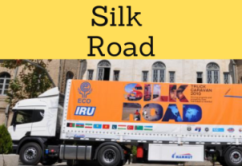
- Almaty-Bishkek Logistics Corridor
- Bangladesh-Myanmar Logistics Corridor
- China-Pakistan Logistics Corridor
- China-Central-West Asia Logistics Corridor
- Europe-Caucasus-Asia Logistics Corridor
Trade Agreements and economic Institutions covering all the Islamic Economic Areas.
- Trade Agreements and Economic Institutions
- No country in the region is a member of the Arab League, and therefore, they are not members of the Greater Arab Free Trade Area (GAFTA)
- Turkey belongs to the Euro-Mediterranean Partnership
- Bangladesh and Iran are members of the Indian-Ocean Rim Association (with others African and Asian Countries)
- Trade Agreements between Muslim Countries:
Economic Organizations related to Central Eurasian Economic Area.
All Countries with Muslim majorities of Central Eurasia are members of:
- Organization of Islamic Cooperation and therefore its affiliated institutions
- Islamic Centre for Development of Trade
- Committee for Economic and Commercial Cooperation
- Islamic Chamber of Commerce
- Statistical, Economic and Social Research and Training Centre
- Islamic Development Bank
- Asian Development Bank
- Economic Commission for Asia (ESCAP)
- Colombo Plan
- Africa-Asia Strategic Partnership
- Bangladesh, Iran, Kazakhstan, Kyrgyzstan, Pakistan, Tajikistan, Turkmenistan, and Uzbekistan are members of the Boao Forum for Asia (BOAO)
- Afghanistan, Bangladesh, Iran, Iraq, Kazakhstan, Kyrgyzstan, the Maldives, Pakistan, Tajikistan, Turkmenistan, and Uzbekistan are members of the Asia-Middle East Dialogue (AMED)
- Bangladesh, Iran, Kazakhstan, Pakistan, Tajikistan, and Uzbekistan are members of the Asia Cooperation Dialogue (ACD)
- Organization for Cooperation between Railways (OSJD)
All Countries in the region are beneficiaries of the Arab Development Funds.
Interactions of the Central Eurasian Islamic Economic Area with Western Civilization.
- With the European
Economic Area
- European Union
- Turkey has a Customs Union with the European Union
- Afghanistan and Bangladesh are members of the Generalized System of Preferences. Pakistan and Turkmenistan are beneficiaries of the SGP+
- Armenia is a member of the relations European Union-South Caucasus and the European Neighborhood Policy
- Azerbaijan, Bangladesh, and Pakistan are beneficiaries of the European Investment Bank
- Armenia, Azerbaijan are partners of the Eastern Partnership of the European Union
- Azerbaijan, Kazakhstan, Kyrgyzstan, Tajikistan, Turkey, Turkmenistan, and Uzbekistan are members of the Economic Commission for Europe (UNECE)
- Turkey has a Trade Agreement with EFTA
- European Union
- With the American Economic Area
- Hispanic American
- Pakistan has a draft free trade agreement with MERCOSUR
- Iran has a Trade Agreement with Venezuela
- Turkey has a trade agreement with Chile
- Hispanic American
Interactions of the Central Eurasian Islamic Economic Area with African Civilization.
- All Countries of Central Eurasia are part of the Africa-Turkey Partnership
- Asia-Africa Logistics Corridor
- Pakistan has a Preferential Trade Area with Mauritius
Interactions of the Central Eurasian Islamic Economic Area with Hindu Civilization.
- India has a Free Trade Agreements with Pakistan and the Maldives
- Bangladesh has an agreement with Nepal
Interactions of the Central Eurasian Islamic Economic Area with Orthodox Civilization.
- Iran has a Trade Agreement with Armenia
- Azerbaijan:
- Has Trade Agreements with Georgia, Russia, and Ukraine
- It is a member of the Free Trade Agreement with Georgia, Ukraine, and Moldova
- It is a member of the Organization for Democracy and Economic Development (GUAM) (Georgia, Moldova, and Ukraine. Turkey is an observer country)
- Azerbaijan and Turkey are members of the Black Sea Cooperation (Albania, Armenia, Bulgaria, Georgia, Greece, Moldova, Romania, Russia, and Ukraine) and the Black Sea Synergy (Armenia, Georgia, Moldova, Russia, and Ukraine)
- Kyrgyzstan has trade agreements with Armenia, Moldova, Russia, and Ukraine
- Tajikistan has Trade Agreements with Armenia and Ukraine
- Turkmenistan has Trade Agreements with Armenia, Georgia, and Ukraine
- Turkey has Trade Agreements with Macedonia, Bosnia and Herzegovina, and Georgia
Interactions of the Central Eurasian Islamic Economic Area with Buddhist Civilization.
- Pakistan has a Trade Agreement with Sri Lanka
- Bangladesh has an agreement with Sri Lanka
Interactions of the Central Eurasian Islamic Economic Area with Sinic Civilization.
- Pakistan has a Trade Agreement with China
Inter-civilization Agreements of the Central Eurasian Economic Area.
- Pakistan has an agreement with ASEAN
- Bangladesh is a member of:
- SAARC (India, Myanmar, Sri Lanka, Thailand, Bhutan, and Nepal)
- Asia-Pacific Trade Agreement (China, India, South Korea, Laos, Sri Lanka, and Mongolia)
- Azerbaijan, Kazakhstan, Kyrgyzstan, Mongolia, Tajikistan, Turkmenistan, and Uzbekistan are members of the Organization for Security and Cooperation in Europe (OSCE)
- Turkey has a Trade Agreement with Israel
(c) EENI Global Business School (1995-2025)
Top of this page
