Orthodox Economic Area (Civilization, Russia)


 WhatsApp
Economic Integration, Orthodox Civilization. Trade Agreements (Module)
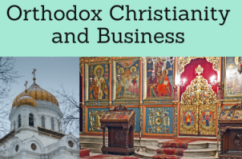
Russia is undoubtedly the Central State of Orthodox Civilization; Russia is also a BRICS country (Brazil, Russia, India, China, and South Africa) and a permanent member of the UN Security Council.
Nowadays not a large economic integration project integrates all Countries of Orthodox Civilization although several Free Trade Agreements between these countries have been established. Perhaps in the next decades, we will observe the emergence of a massive integration project of Orthodox Economies.
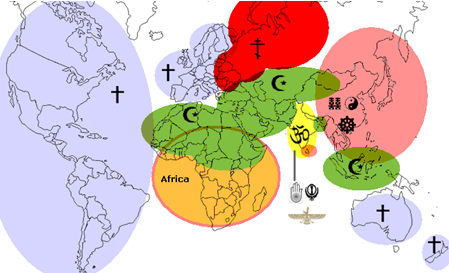
Religious diversity and geopolitical tensions
- Introduction to Orthodox Civilization
- Influence of Orthodoxy Religion
- Economic Profile of Orthodox Countries
- Russia as the Central State of Orthodox Civilization
- Orthodox Economic Area. Economic Profile of Orthodox Countries
- Economic Integration of Orthodox Civilization (Economic Organizations, Trade Agreements)
- Interactions of Orthodox Civilization with other civilizations
- Economic Institutions and trade agreements related to Orthodox Civilization
The goals of the module “Orthodox Economic Area” are the following:
- To identify the characteristics of Orthodox Economic Area
- To analyze the role of Russia as the Central State of Orthodox Civilization
- To analyze the influence of Orthodoxy on the Orthodox Economic Area
- To learn about economic profile of Orthodox Countries
- To analyze the profile of Orthodox Businesspeople
- To understand the economic integration process of Orthodox Civilization
- To explore the economic relations of Orthodox Civilization with other civilizations (Western, Sinic, Hindu, Islamic, Buddhist, African)
- To analyze the main Economic Organizations related to Orthodox Economic Area

Module “Orthodox Economic Area” is included within the curriculum of the following academic programs at EENI Global Business School:
Doctorate: Ethics, Religions & Business, World Trade.

Masters: International Business.
Why study “Orthodoxy and Business”?.
Languages: 
 Civilizacion Ortodoxa
  Civilization Orthodoxe
  Civilizaçao Ortodoxa.
- Credits of the module “Orthodox Economic Area”: 2

- Download the syllabus “Orthodox Economic Area” (PDF)
1- Introduction to Orthodoxy and Orthodox Civilization.
- Orthodoxy (Christianity)
- Foundations of Orthodoxy
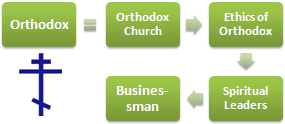
- The Orthodox Christian Church. Patriarch of Constantinople
- The Russian Orthodox Church
- Hierarchy in the Orthodox society
- Influence of Orthodoxy ethics on business
- The case of Leo Tolstoy
2- Russia and Orthodox Civilization.
- Russia as the Central State of Orthodox Civilization
- Influence of Russia in the Central Eurasian region
- Introduction to the Russian Federation
- Russian Ports
- Russian Businesspeople
3- Orthodox Economic Area. Economic Profile of Orthodox Countries.
- Introduction to the Economic Area of Orthodox Civilization
- Countries with Orthodox majorities: Armenia, Belarus, Bulgaria (*), Cyprus (*), Georgia, Greece (*), Moldova, Montenegro, Macedonia, Romania (*), Serbia, and Ukraine
- Economic Profile of Orthodox Countries
Notes:
- (*) Orthodox nations with Orthodox majorities of EU (Bulgaria, Cyprus, Greece, and Romania) are not discussed in this subject, but they are included, from the economic integration, in the study of the European Economic Area of Western Civilization because of its membership to the European Union
- Orthodoxy is an important religion in Kazakhstan, Latvia, Bosnia and Herzegovina (30% Orthodox), Albania, Kyrgyzstan, and Estonia, but these countries are not included in this subject
- The countries of the Coptic area of Orthodox Civilization such Egypt (African/Islamic Civilization) and Ethiopia (African Civilization) are not included
4- Economic Integration of Orthodox Civilization.
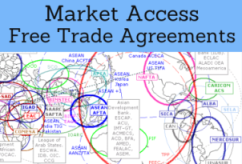
There are eighteen Free Trade Agreements (FTA) between the countries of Orthodox Civilization considered in this analysis.
- Armenia has Trade Agreements with Belarus, Georgia, Moldova, Russia, and Ukraine
- Belarus has Trade Agreements with Armenia, Russia, and Ukraine
- Georgia has Trade Agreements with Armenia, Russia, and Ukraine
- Moldova has Trade Agreements with Armenia, Russia, and Ukraine
- Montenegro has a Trade Agreement with Ukraine
- Macedonia has a Trade Agreement with Ukraine
- Russia has Trade Agreements with Armenia, Belarus, Georgia, Moldova, Serbia, and Ukraine
- Serbia has Trade Agreements with Russia, Ukraine
- Ukraine has Trade Agreements with Armenia, Belarus, Georgia, Macedonia, Moldova, Montenegro, Russia, and Serbia
- China-Russia Logistics Corridor
- North-South Corridor (India-Russia)
- Silk Road
- Almaty-Bishkek Logistics Corridor
- China-Central-West Asia Logistics Corridor
- Europe-Caucasus-Asia Logistics Corridor
- Afghanistan-Turkey Logistics Corridor
- Trans-Caspian Logistics Corridor
- Corridor of the Ashgabat Agreement
- Trans-Siberian Railway (Russia, North Korea)
- Pan-European Transport Corridor IX (Finland-Greece)
- Pan-European Transport Corridor II (Russia-Germany)
Sample: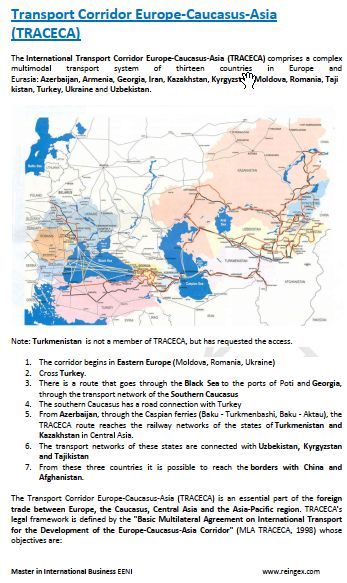
5- Interactions of Orthodox Civilization with other civilizations.
- with Islamic Civilization:
- Albania, Macedonia, Moldova, Montenegro, and Serbia are members of the Central European Free Trade Agreement (CEFTA) with Kosovo and Bosnia and Herzegovina
- Armenia, Belarus, and Russia belong to the Eurasian Economic Union (with Kazakhstan and Kyrgyzstan)
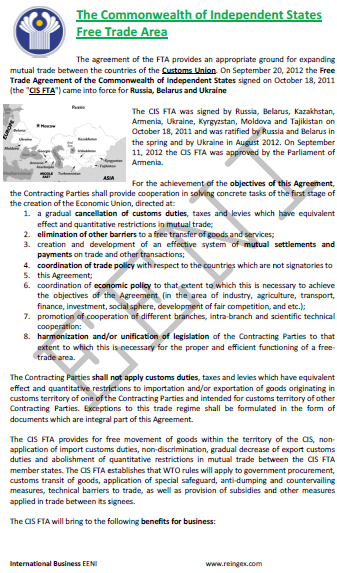
- Russia, Belarus, Ukraine, Armenia, and Moldova belongs to the Commonwealth of Independent States (with Azerbaijan, Kazakhstan, Kyrgyzstan, Tajikistan, Turkmenistan, and Uzbekistan)
- Armenia has Trade Agreements with Kazakhstan, Tajikistan, and Kyrgyzstan
- Russia has a Trade Agreement with Azerbaijan and Kyrgyzstan
- Georgia has a Trade Agreement with Azerbaijan, Turkey, Kazakhstan, Turkmenistan, and Uzbekistan
- Free Trade Agreement between Georgia, Ukraine, Azerbaijan, and Moldova
- Free Trade Agreement between Russia, Belarus, and Kazakhstan
- Moldova has a Trade Agreement with Kyrgyzstan
- Montenegro has a Trade Agreement with Turkey
- Ukraine has trade agreements with Kyrgyzstan, Tajikistan, Kazakhstan, Turkmenistan, and Uzbekistan
- Georgia, Moldova, and Ukraine are part of the Organization for Democracy and Economic Development (GUAM) (with Azerbaijan)
- With Western Civilization
- With the European economic area (non-Orthodox):
- European Union
- European Union-Russia
- Armenia, Georgia, Moldova, Russia, and Ukraine belongs to the Black Sea Synergy
- Moldova, Montenegro, Serbia, Ukraine, and Georgia has a Trade Agreement with the European Union
- Armenia and Georgia are part of the European Union-South Caucasus (with Azerbaijan) and are beneficiaries of the Generalized System of Preferences (EU GSP) of the European Union
- Macedonia, Montenegro, and Serbia are part of the relations European Union-Western Balkans
- Armenia, Belarus, Georgia, Moldova, and Ukraine are included in the European Neighborhood Policy
- EFTA has trade agreements with Georgia, Macedonia, Montenegro, Serbia, and Ukraine
- European Union
- With the American economic area
- North American Economic Area: no agreements in force
- Hispanic American Economic Area. Relationships between the Andean Community and Russia. There is not a free trade agreement between the two regions
- The Caribbean. No Orthodox country has Trade Agreements with the Caribbean Countries
- With the Oceania economic area : Russia has a Trade Agreement with New Zealand
- With the European economic area (non-Orthodox):
- With African Civilization: Africa-BRICS Countries (Russia is a BRICS Country)
- With Hindu Civilization: no agreements in force
- With Buddhist Civilization. Russia has a Customs Union with Vietnam
- Inter-civilization Agreements
- Russia is a member of:
- APEC
- Shanghai Cooperation Organization (with Kazakhstan, China, Kyrgyzstan, Tajikistan, and Uzbekistan)
- Council of the Baltic Sea States (Belarus and Ukraine are observers)
- ASEAN-Russia Business Forum
- Armenia, Georgia, Moldova, Russia, Serbia, and Ukraine are members of the Black Sea Cooperation (with Albania, Azerbaijan, Bulgaria, Greece, Romania, and Turkey; Belarus has status of Observer)
- Belarus, Macedonia, Moldova, Montenegro, Serbia, and Ukraine belongs to the Commonwealth of Independent States
- Armenia, Belarus, Georgia, Macedonia, Moldova, Montenegro, Russia, Serbia, and Ukraine belongs to the Organization for Security and Cooperation in Europe (OSCE)
- Russia is a member of:
* This subject only explores major Trade Agreements related to Orthodox Civilization.
6- Economic Organizations related to Orthodox Civilization.
- Asia-Europe Meeting
- Economic Commission for Europe (UNECE)
- Council of the Baltic Sea States
- European Investment Bank
- Armenia is a member of the Asian Development Bank
- Armenia, Georgia, and Russia are members of the Economic and Social Commission for Asia (ESCAP)
- Moldova, Montenegro and Serbia belong to the Regional Cooperation Council (RCC)
- Montenegro and Serbia are members of the Adriatic-Ionian Initiative
- United Nations
- International Monetary Fund
- Organization for Cooperation between Railways (OSJD)
- World Trade Organization (WTO)
Between 200 and 300 million people in the World is Orthodox, the second Christian family after Catholicism and before Protestantism.
Since 1741 to 1917, the Russian colonial empire it stretched from the Baltic Sea to Alaska, from Poland to part of Turkey controlling the majority of Orthodox Civilization and Central Asia. Russia, as head of Orthodox Civilization, dominated vast areas of the Western and Islamic Civilization and even a Buddhist country like Mongolia.
After the revolution of 1917, it was founded in 1922 the Soviet Union formed by Russia, the Soviet Federal Socialist Republic of Transcaucasia, the Ukrainian Soviet Socialist Republic, and Byelorussian Soviet Socialist Republic, later the Republics of Central Asia, Georgia, Armenia, and Azerbaijan were added. After completion of the Second World War, the USSR also would control Poland, East Germany, Hungary, Romania, Czechoslovakia, the Balkans, and the Baltic Republics leading to the beginning of the Cold War.
The collapse of the USSR in 1991 would lead to the independence of these countries. Since then, Russia tries to maintain the leadership in the region. However, in recent years, Russia has had military clashes with Georgia or Ukraine. In addition, we must take into account the “great game of the petrol and gas” that develops in the Central Eurasian region.
Russia and the Orthodox Countries are focusing their international economic relations mainly on two areas:
- Europe, in particular with the European Union
- The Central Asian Republics
Surely, Orthodox Civilization is one of civilizations less integrated with other civilizations.
(c) EENI Global Business School (1995-2025)
Top of this page
