
Business in Armenia. Armenian Market






 WhatsApp
Foreign Trade of Armenia, Logistics. Economic Profile. Yerevan
Armenia: food products (alcoholic beverages, chemical and metallurgy industry)
Agriculture is principally based on animal husbandry and plant growing

- Introduction to the Republic of Armenia (Europe)
- Armenian Economy
- Economic Profile of the Armenian regions (Marzes)
- International Trade of Armenia
- European Union-Armenia trade relations
- Investment in Armenia
- Doing Business in Yerevan
- Business Opportunities in Armenia
- Transport and Logistics
- Access to the Armenian Market
- Business Plan for Armenia
The educational aims of the Subject “Foreign Trade, Logistics and Business in Armenia” are:
- To analyze the Armenian Economy, Logistics and Global Trade
- To conduct research on business opportunities in Armenia
- To explore the Armenian trade relations with the student's country
- To learn about Armenian Trade Agreements
- To develop a business plan for the Armenian Market


The Subject “Foreign Trade, Logistics and Business in Armenia” is included within the curriculum of the following academic programs at EENI Global Business School:

Masters: International Business, Foreign Trade.

 Armenian Students Վարպետ միջազգային բիզնես
Languages:  or
or  Armenia
  Arménia
  Armenie.
- Subject Credits “Doing Business in Armenia”: 1

International Trade, Logistics and Business in Armenia
- North-South Corridor (India-Russia)
- Europe-Caucasus-Asia Logistics Corridor
- Access to the Afghanistan-Turkey Corridor (Lapis Lazuli)
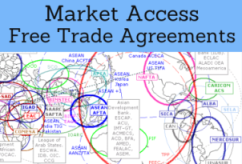
Preferential Access and Trade Agreements of Armenia
- Armenia and the Orthodox Economic Area
- Commonwealth of Independent States - Free Trade Area (CISFTA)
- Eurasian Economic Union
- The EU:
- Armenia is a beneficiary of the GSP
- EU Eastern Partnership
- European Neighborhood Policy
- European Union-South Caucasus
- Black Sea Synergy
- Black Sea Cooperation
- Armenia-Turkmenistan Agreement
- Armenia-Moldova Agreement
- Armenia-Kazakhstan Agreement
- Armenia-Ukraine Agreement
- Kyrgyzstan-Armenia Agreement
- Georgia-Armenia Agreement
- Eurasian Economic Union (EAEU)-Vietnam Agreement
- Russia-Armenia Agreement
- Iran-Armenia Agreement
- Tajikistan-Armenia Agreement
- SCO (Dialogue Partner)
Armenia was an observer country at the Eurasian Economic Community (EurAsEC).
- World Trade Organization (WTO)
- Agreement on Trade in Services (GATS)
- Agreement on Sanitary Measures
- Agreement on Technical Barriers to Trade
- Agreement on Preshipment Inspection
- Agreement on Safeguards
- Trade Facilitation Agreement
- World Customs Organization (WCO)
- Kyoto Convention
- COTIF Convention
- BIC (Containers)
- Chicago Convention (ICAO)
- International Maritime Organization
- Istanbul Convention - not a member
- Customs Convention on Containers
- Rotterdam Rules
- Convention Harmonization of Frontier Controls of Goods
- International Road Transport Union (IRU)
- TIR Convention
- Guidelines on Safe Load Securing for Road Transport
- CIM / CIT Rules

Euro-Asian Organizations:
- Organization for Security and Cooperation in Europe (OSCE)
- Asian Development Bank
- Economic Commission for Asia (ESCAP)
- Economic Commission for Europe (UNECE)
- European Investment Bank
- Arab League - Observer State
Global Economic Organizations of Armenia
- United Nations
- World Bank
- International Monetary Fund
The Republic of Armenia is situated in the Southern Caucasus at the crossroads of Europe and Central Asia.
- Yerevan is the capital of the Republic of Armenia
- The neighboring countries of Armenia are Georgia, Azerbaijan, Iran, Nakhijevan (Azerbaijan), and Turkey
- The population of Armenia is 3.2 million people (annual growth rate of 1.4%)
- Armenian area: 29,743 km²
- Ethnically, Armenia is a homogeneous nation with 96% of Armenians
- Armenian is the official language
- Russian is the second language
- Independence of Armenia: 1991 (Soviet Union)
Main religion in Armenia: Orthodoxy Christianity (Armenian Apostolic Church).
Armenia belongs to the Orthodox Economic Area.
Armenian Economy.
- The Republic of Armenia ranks in 36th place in economic freedom (Heritage Foundation)
- Trade Relations between Armenia and EU, including Foreign Trade and economic cooperation, are regulated by the Partnership and Cooperation Agreement (European Neighborhood Policy - Black Sea Synergy)
- Foreign Direct Investment and International Trade policies of the Republic of Armenia are considered to be the most open in the Commonwealth of Independent States (CIS)
- Foreign enterprises in Armenia are encouraged to invest and are entitled by law to same treatment as local companies
- The Republic of Armenia is exploring its economic relations with Iran
- The Armenian Development Agency was founded in 1998 by the Government of the Republic of Armenia to facilitate Foreign Direct Investments and promote the exports
Trade Agreements and preferential access of Armenia
The Republic of Armenia, Albania, Azerbaijan, Bulgaria, Georgia, Greece, Moldova, Romania, Russia, Serbia, Turkey, and Ukraine, are members of the Organization of the Black Sea Economic Cooperation. Armenia is also a member of the Commonwealth of Independent States (CIS).
The Republic of Armenia has free trade regimes with Belarus, Georgia, Moldova, Kazakhstan, Russia, Ukraine, Uzbekistan, Tajikistan, and the Kyrgyz Republic.
Armenia has a Most-favoured-Nation Trade Regime with Argentina, Bulgaria, Canada, China, Cyprus, the EU, Iran, India, Hungary, Lebanon, Poland, Romania, Syria, Switzerland, Vietnam, and the United States.
(c) EENI Global Business School (1995-2025)
Top of this page
