
Business in Cyprus, Nicosia, merchant marine





 WhatsApp
Cypriot Economy and Foreign Trade, Logistics. Business in Nicosia (Cyprus)

The fleet of vessels registered in Cyprus represents the fourth largest in the world
Cypriot services sector is one of the pillars of the economy of the Republic of Cyprus
- Introduction to the Republic of Cyprus (EU)
- Economy of Cyprus: The world's fourth largest ocean fleet
- Doing Business in Nicosia
- Cypriot International Trade
- Transport and Logistics
- Investment in Cyprus
- Access to the Cypriot Market
- Business Plan for Cyprus

The educational aims of the Subject “Foreign Trade, Logistics and Business in Cyprus” are:
- To analyze the Cypriot Economy, Logistics and Foreign Trade
- To conduct research on business opportunities in the Cypriot Market
- To research the trade relations of Cyprus with the student's country
- To know Trade Agreements of Cyprus as a member of the European Union
- To develop a business plan for the Cypriot Market

The Subject “Foreign Trade, Logistics and Business in Cyprus” is included within the curriculum of the following academic programs at EENI Global Business School:

Masters: International Business, Foreign Trade.
 Masters adapted to Cypriot Students.
Languages:  +
+  Chipre
  Chypre
  Chipre.
- Subject Credits “Doing Business in Cyprus”: 1

International Trade, Logistics and Business in Cyprus
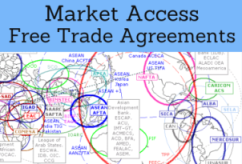
Preferential Access and Trade Agreements of Cyprus:
- Cyprus and the Orthodox Economic Area / European Economic Area
- European Union
- As a member of EU, Cyprus is a beneficiary of EU Trade Agreements
- European Single Market
- The European Union Services Directive
- European Digital Single Market
- European Customs Union

- World Trade Organization (WTO)
- Agreement on Trade in Services (GATS)
- Agreement on the Application of Sanitary Measures
- Agreement on Technical Barriers to Trade
- Agreement on Preshipment Inspection
- Agreement on Safeguards
- Trade Facilitation Agreement
- World Customs Organization (WCO)
- Kyoto Convention
- Convention Harmonization of Frontier Controls of Goods
- BIC
- Chicago Convention (ICAO)
- International Maritime Organization (IMO)
- Convention for Safe Containers
- Istanbul Convention
- International Road Transport Union (IRU)
- TIR Convention
- Guidelines on Safe Load Securing for Road Transport
- International Chamber of Shipping
- Customs Convention on Containers - not a member
- International Chamber of Commerce

- European Union
- European Bank for Reconstruction and Development (EBRD)
- European Central Bank
- European Investment Bank
- European Union-CELAC Summit
- Economic Commission for Europe (UNECE)
- Organization for Security and Cooperation in Europe (OSCE)
- Group of States of the European Council Convention against Corruption
- United Nations
- World Trade Organization (WTO)
- World Bank
- International Monetary Fund
- Asia-Europe Meeting
- Capital of Cyprus: Nicosia
- Cypriot Official Languages: Turkish and Greek
- Area of Cyprus: 9,251 km²
- Cypriot Population: 1.14 million people
- Type of Government: Presidential Republic
- Nearest countries (by sea): Turkey, Syria and Greece
- Independence of Cyprus: 1960 (UK)
- Northern Cyprus was occupied by Turkey (1974) creating the Turkish Republic of Northern Cyprus (only recognized by Turkey)
Religion in Cyprus: Orthodoxy (Christianity)
- Cyprus belongs to the Orthodox Economic Area (European Economic Area)
Economy of Cyprus.
- Cypriot Industrial sector employs 25% of the population
- Cypriot Currency: Euro (2008)
- Cyprus joined the EU in 2004
- 2012: rescue by the EU (17,500 million Euros)
- In 2013 a “corralito” was imposed in Cyprus
Cypriot Foreign Trade.
- Main Cypriot Exports: citrus, cement, potatoes, medicines, dresses
- Top trading partners of Cyprus are Greece, Germany, the UK, Italy
(c) EENI Global Business School (1995-2025)
Top of this page
