
Business in Greece. Investments in the Balkans






 WhatsApp
Greek Foreign Trade. Merchant Marine, Logistics. Business in Athens (Greece)

Greek merchant marine is the largest in the world (4.5% of Greek GDP, 15% of global cargo capacity)
Other important Greek sectors are industrial production, foods, textiles, chemical products, mining and petroleum
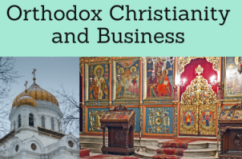
- Introduction to the Hellenic Republic (EU)
- Economy of Greece: The largest merchant marine in the world
- Doing Business in Athens
- Greek International Trade
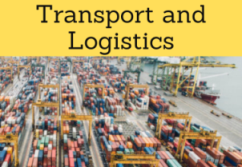
- Transport and Logistics
- Investment in Greece
- Access to the Greek Market
- Business Plan for Greece
Sample: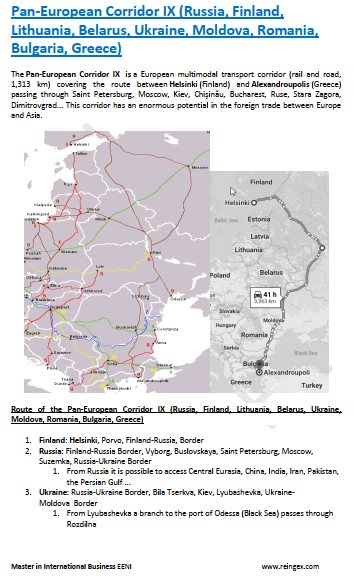

The educational aims of the Subject “Foreign Trade, Logistics and Business in Greece” are:
- To analyze the Greek Economy, Logistics and Foreign Trade
- To conduct research on business opportunities in the Greek Market
- To research the trade relations of Greece with the student's country
- To learn about Greek free trade agreements as a member of the European Union
- To develop a business plan for the Greek Market

The Subject “Foreign Trade, Logistics and Business in Greece” is included within the curriculum of the following academic programs at EENI Global Business School:

Masters: International Business, Foreign Trade.
Languages:  +
+  Grecia
  Grece
Grece  Grécia.
- Subject Credits “Doing Business in Greece”: 1

International Trade, Logistics and Business in Greece

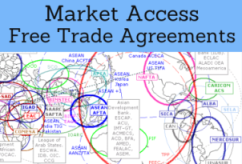
Greek Preferential Access and Trade Agreements:
- Greece and the European Economic Area / Orthodox Economic Area
- European Union
- As a member of EU, Greece is a beneficiary of EU Trade Agreements
- European Single Market
- The European Union Services Directive
- European Digital Single Market
- Economic and Monetary Union
- European Customs Union
- Adriatic-Ionian Initiative
- Black Sea Economic Cooperation
- Regional Cooperation Council

- World Trade Organization (WTO)
- Agreement on Trade in Services (GATS)
- Agreement on Sanitary and Phytosanitary Measures
- Agreement on Technical Barriers to Trade
- Agreement on Preshipment Inspection
- Agreement on Safeguards
- Trade Facilitation Agreement
- World Customs Organization (WCO)
- Kyoto Convention
- Convention on the Harmonization of Frontier Controls of Goods
- Rotterdam Rules
- CMR Convention
- COTIF Convention
- BIC
- Chicago Convention (ICAO)
- International Maritime Organization (IMO)
- Convention for Safe Containers
- Istanbul Convention
- International Road Transport Union (IRU)
- TIR Convention
- International Chamber of Commerce
- International Chamber of Shipping
- CIM / CIT Rules

European Trade and Economic Organizations of Greece
- The European Union
- Organization for Security and Cooperation in Europe (OSCE)
- Economic Commission for Europe (UNECE)

- United Nations
- OECD
- OECD anti-corruption measures
- World Bank
- World Trade Organization (WTO)
- International Monetary Fund
- Asia-Europe Meeting
The Hellenic Republic (Europe).
- Capital of Greece: Athens
- Other important cities: Thessaloniki, Piraeus, Patras, Heraklion and Lárisa
- Official Language of Greece: Greek
- Area of Greece: 131,957 km²
- Greek Population: 11 million people
- Type of Government: Parliamentary Republic
- Borders of Greece: Albania, Macedonia, Bulgaria and Turkey
Religion in Greece: Orthodoxy (Christianity)
Greece belongs to the Orthodox Economic Area (European Economic Area).
- Greece became independent from the Ottoman Empire (Turkey) in 1830
- Greece, through the Roman empire, was the chrysalis of Western Civilization
Economy of Greece.
- Greece is an advanced high-income Economy (WB)
- The Hellenic Republic has suffered a deep economic crisis since 2008, although everything seems to indicate that slowly begins to overcome its crisis
- Currency of Greece: Euro
- Greece is a member of EU since 1981
- Greece receives about 15.5 million tourists a year
- Headquarters of the European Centre for the Development of Vocational Training (Cedefop): Thessaloniki
Greek Foreign Trade.
- Greece is the main actor in the Balkans, with strong investments in Albania, Bulgaria, Romania and Serbia. Many of these Investments are made into the banking sector
- Top Greek exports are petroleum, aluminum, electrical equipment, pharmaceutical products, plastics, vegetables, fruits
- Top Greek exports destinations are Italy, Germany, Turkey, Cyprus, Bulgaria
- Main Greek imports are petroleum, electrical equipment, pharmaceutical products, machinery
- Top suppliers of Greece: Germany, Italy, Iraq, China
- As a member of EU, Greece is a beneficiary of EU trade agreements with South Africa, Mexico, MERCOSUR, Chile, Colombia...
(c) EENI Global Business School (1995-2025)
Top of this page
