Religious diversity and geopolitical tensions






 WhatsApp
Religion: influences politics and international relations
Religions and Global Business -
Religious diversity
Religious diversity is a key factor in geopolitical dynamics, as religious beliefs influence collective identities, state policies, and international relations. This diversity can be both a source of cultural enrichment and a source of tension and conflict, depending on how it is managed.
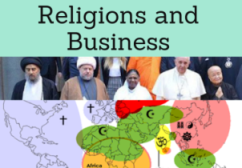
Furthermore, this religious diversity largely defines global economic spaces.
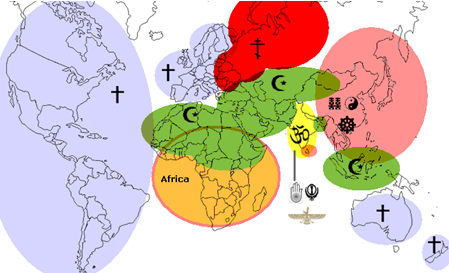
- Economic Area of African Civilization
- Hindu Economic Area (India)
- Economic Area of Sinic Civilization (China)
- Buddhist Economic Area

- Islamic Economic Area

- Economic Area of Western Civilization

- Economic Area of Orthodox Civilization

Religious divisions increase business risks:
- In India, tensions between Hindus and Muslims are affecting retail; Walmart faced protests in 2022 for sourcing from Muslim-owned suppliers in certain regions.
- In the Middle East, the dynamic between Sunnis and Shiites affects alliances and investments, especially in Saudi Arabia and Iran.

Religious diversity is a complex phenomenon that can enrich societies but also generate geopolitical tensions when it intersects with interests related to power, resources, or national identities. Interfaith dialogue, education, and inclusive public policies are essential to transforming these tensions into opportunities for cooperation and peace. However, states must avoid imposing normative models that ignore cultural and religious specificities, as this can exacerbate conflicts rather than resolve them.


The subject «Religious diversity and geopolitical tensions» is included within the curriculum of the following academic programs at EENI Global Business School:
Masters: Religions & Business, Master: International Business

Doctorate: Ethics, Religions & Business, World Trade

Languages:  or
or  Religión y riesgos geopolíticos
  Diversité religieuse et tensions géopolitiques
  Religions.
(c) EENI Global Business School (1995-2025)
Top of this page
