
Digital Trade and Cross-Border E-Commerce






 WhatsApp
Rise of digital trade as a transformative force in global commerce
This subject examines the rise of digital trade as a transformative force in global commerce. It explores how digital platforms, data flows, artificial intelligence, and digital infrastructure shape international trade dynamics. Students will analyze global digital trade policies, assess strategies for digital market entry, and understand how firms can leverage digital technologies for competitive advantage in foreign markets.
Syllabous
1- Introduction to Digital Trade
- Digital Globalization and the shift from physical to virtual trade
- Case Study: Amazon's Global Marketplace
- Case Study: Shopify and the Role of Data Flows in Virtual Trade
- Key actors of Digital Trade: platforms, SMEs, governments, fintech
- Fintech (financial technology) innovations
2- Infrastructure and Enablers of Digital Trade
- Blockchain technology in digital trade
- Case study: Smart Contract Examples in Digital Trade
- Role of cloud Computing, broadband, digital ID, and payment systems
- The Internet of Things (IoT)
- Case Study: Singapore’s Smart Traffic Management System (IoT)
- Digital Trade and Trust Infrastructure: cybersecurity, authentication,
encryption
- Case Study: TradeTrust – Singapore’s Digital Trade Infrastructure
3- Cross-Border E-Commerce
- Cross-border
Logistics for e-commerce
- Case Study: The Case of SHEIN – Dominating Global Fast Fashion via Cross-Border E-Commerce
- Key Cross-Border E-Commerce Platforms
- Case Study: Logitech’s Cross-Border Expansion into Latin America via Mercado Libre
- Marketplaces vs. direct-to-consumer exports
- Case Study: Allbirds – Sustainable Footwear Goes Global DTC
- Case Study: Tony’s Chocolonely – Ethical Chocolate, Direct to the World
- Fulfillment, Last-Mile Delivery, and Customs Automation
- Case Study: Global E-Commerce Company Optimizes Supply Chain with Automation and AI
4- Digital Global Trade Policies and Agreements
- Digital Trade in Key Trade Agreements and Frameworks
- EU Digital Market Rules
- Key Issues on Digital Trade: Data Flows, Privacy, Cybersecurity, and Digital Taxes
5- Digital Trade, Data Governance and Localization
- Digital Trade and Personal Data Protection (GDPR, CCPA)
- Case Study: Microsoft’s Approach to GDPR and CCPA Compliance
- Data Localization and Sovereignty Debates (China, India)
- Cross-border data flows and digital competitiveness
- Case Study: Cross-Border Data Flows and Digital Competitiveness (EU vs. US)
6- Digital Trade Finance and Payments
- Case Study: Digital Trade Finance with the Marco Polo Network
- Fintech Solutions in Trade (Blockchain, Defi, Digital Currencies)
- Case Study: Enhancing Global Trade Efficiency with Fintech Solutions
- Cross-Border Digital Payments and Foreign Exchange (FOREX)
- Case Study: Wise (formerly TransferWise) — Revolutionizing Cross-Border Digital Payments and FX
- Digital Trade Risks: Fraud, Regulatory Gaps, Cybersecurity
- Case Study: Digital Trade Risks in the Global E-Commerce Platform “ShopGlobal”
7- SMEs and Inclusive Digital Trade
- Digital tools for export readiness and market entry
- Case Study: Etsy – Empowering SMEs through Digital Trade
- Case Study: Jumia – Driving Inclusive Digital Trade for African SMEs
- Case Study: Export Readiness and Market Entry Using Digital Tools
- Case Study: Digital Tools for Export Readiness & Market Entry in Africa
- Gender, Youth, and Digital Trade Inclusivity
8- AI, Automation, and the Future of Digital Trade
- Case Studies related to AI, Automation, and the Future of Digital Trade: Maersk, Amazon and Dubai Customs
- Impact of AI and Machine Learning in
Trade Facilitation
- Case Study: Singapore Customs — AI-Driven Trade Facilitation and Risk Management
- Predictive Analytics for Market Forecasting
- Case Study: Predictive Analytics for Cross-Border E-Commerce Market Forecasting
- The Role of Digital Twins, Smart Contracts, and Internet of Things (Ioy)
in Global Commerce
- Case Study: Enhancing Global Supply Chain Efficiency at ElectroGlobal Inc.
9- Digital Trade: Case Studies and Country Profiles
- Comparative Study of Digital Trade Ecosystems (Singapore, Estonia, UAE, Brazil)
- Case Study: TikTok and Cross-Border Data Tensions
- Case Study: Shopify and Global SME Exports
Learning Objectives:
By the end of the subject, students will be able to:
- Define digital trade and distinguish it from traditional trade
- Analyze the enablers of digital trade: data, platforms, cloud, payments, and infrastructure
- Evaluate regulatory and policy frameworks affecting cross-border digital commerce
- Understand digital trade agreements and data localization rules
- Assess how digital business models disrupt global value chains
- Design strategies for entering or expanding in digital international markets


Course: AI for Global Business
AI Introduction, Technologies, Global Trade, Strategy, Supply Chain, Digital Trade, Marketing, Cross-Cultural, Finance, Ethical, Sustainability, Future Trends, Global Ethics

The Subject “Digital Trade and Cross-Border E-Commerce” is included within the curriculum of the following academic programs at EENI Global Business School:
Postgraduate Certificate in International Trade.

Masters: International Business, Foreign Trade, International Transport, Logistics in Africa, Business in Africa.

Doctorate: World Trade, Global Logistics, African Business, Global Ethics, Religions, and International Business

Languages:  or
or  Comercio digital
 Commerce numérique et électronique transfrontalier
 Comércio Digital.
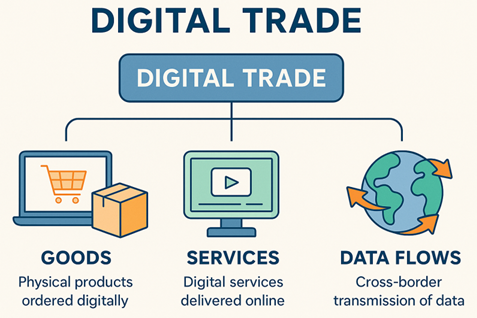
Digital trade refers to the exchange of goods, Services, and data across borders through digital platforms and technologies, primarily over the internet. It encompasses a wide range of activities, including e-commerce (online buying and selling), digital services (such as cloud computing, streaming, or software), cross-border data flows, and the use of digital tools to facilitate traditional trade.
Key Components of Digital Trade
- E-Commerce: Online retail (e.g., Amazon, Alibaba), business-to-business (B2B) platforms, and peer-to-peer marketplaces.
- Digital Services: Services delivered via digital means, such as online education, telemedicine, financial services, or digital media (e.g., Netflix, Spotify).
- Cross-Border Data Flows: The transfer of data across countries, critical for global supply chains, cloud computing, and digital platforms.
- Digital Infrastructure: Technologies like 5G, blockchain, AI, and IoT that enable efficient and secure digital transactions.
- Digital Payments: Systems like mobile apps (e.g., PayPal, Alipay) or cryptocurrencies that facilitate seamless transactions.
(c) EENI Global Business School (1995-2025)
Top of this page
