
AI and Cross-Cultural Management. Ethical challenges





 WhatsApp
Cross-cultural considerations in ethical AI (Artificial Intelligence)
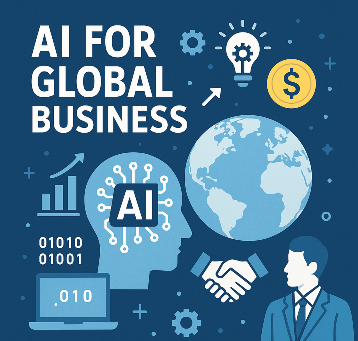
Course: AI for Global Business
AI Introduction, Technologies, Global Trade, Strategy, Supply Chain, Digital Trade, Marketing, Cross-Cultural, Finance, Ethical, Sustainability, Future Trends, Global Ethics
This subject explores the intersection of Artificial Intelligence (AI) and Intercultural Management. As businesses expand globally and AI technology advances, the need for culturally aware, data-driven management strategies becomes increasingly important.
This subject objectives to equip students with both theoretical and practical tools to effectively manage diverse teams, leverage AI in a global context, and understand how cultural nuances influence the adoption and application of AI technologies in different regions.
Syllabous
- Introduction to AI and Cross-Cultural Management
- Case Study: Coca-Cola and AI in Cross-Cultural Management
- Cross-cultural considerations in ethical AI
- Case Study: AI in Facial Recognition Technology
- AI in understanding cultural nuances (NLP for multilingual
communication)
- Case Study: AI-Powered Multilingual Customer Support for a Global e-commerce Company
- Managing global teams with AI tools (collaboration
platforms, performance analytics)
- Case Study: GlobalTech's AI-Driven Approach to Managing Global Teams
- Ethical challenges in cross-cultural AI deployment
- Case Study: The Deployment of Facial Recognition Technology in China
- Is AI regulation helping or hurting innovation?
- Case Study: The European Union’s AI Act
- Cultural influence of religion in global business

The Subject “AI and Cross-Cultural Management” is included within the curriculum of the following academic programs at EENI Global Business School:
Postgraduate Certificate in Global Marketing.

Masters: International Business, Foreign Trade, International Transport, Logistics in Africa, Business in Africa.

Doctorate: World Trade, Global Logistics, African Business, Global Ethics, Religions, and International Business

Languages:  or
or  IA y negociación intercultural
 L'IA et la gestion interculturelle
  IA e negociação intercultural.
1. Introduction to AI in Management:
- Understanding AI technologies (Machine Learning, Natural Language Processing, Automation, etc.)
- The role of AI in modern business decision-making
- Ethical considerations and challenges in the use of AI
2. Cross-Cultural Management Basics:
- Definition and importance of cross-cultural management
- Cultural dimensions (Hofstede's Cultural Dimensions, Trompenaars' Model, etc.)
- Communication styles and leadership across cultures
3. AI and Cultural intelligence:
- How AI tools can be used to enhance cultural intelligence (CQ)
- o Adapting AI systems to local cultural contexts
- Managing diverse teams with AI-powered tools
4. AI in Global Human Resource Management:
- Recruitment, talent management, and performance evaluations using AI
- Addressing cultural biases in AI algorithms
- AI’s role in fostering inclusivity in cross-cultural teams
5. AI and Decision Making in Cross-Cultural Contexts:
- Data-driven decision-making across diverse cultural landscapes
- Managing conflicts, negotiations, and partnerships using AI insights
- Case studies of successful cross-cultural management with AI tools
6. AI’s Impact on Global Strategy and Marketing:
- Personalization in global marketing through AI
- Customer relationship management in culturally diverse markets
- Leveraging AI for competitive advantage in International Business
7. Challenges and Future Directions:
- Overcoming resistance to AI adoption in culturally diverse teams
- The future of AI in global management practices
- Balancing AI efficiency with human touch in cross-cultural settings
(c) EENI Global Business School (1995-2025)
Top of this page
