
Religion and ethics: influence on business and marketing






 WhatsApp
Balancing religion with universal ethical principles
Religions and Global Business -
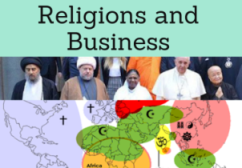
Religious diversity
Religions often provide ethical systems that guide human behavior, including financial decisions. These religious ethical principles often influence how individuals and communities approach finances, prioritizing justice, equity, and collective well-being over the selfish accumulation of wealth.

Examples:
- Christianity: Promotes charity, justice, and responsible stewardship of resources. Verses such as “You cannot serve both God and money” (Matthew 6:24) emphasize the priority of spiritual values over material wealth.
- Islam: Establishes strict ethical principles in finance, such as the prohibition of usury (riba), the Promotion of charity (zakat), and fairness in commercial contracts.
- Buddhism: Advocates material detachment and moderation, condemning greed and promoting generosity as a path to spiritual liberation.
- Hinduism: Values Dharma (ethical duty), which includes responsible management of wealth for personal and community well-being, avoiding excess.
Many religions provide ethical codes based on sacred texts, the teachings of spiritual figures, or traditions. For example:
- Christianity is guided by the Ten Commandments and the teachings of Jesus.
- Islam follows the Quran and Sunnah, which establish principles such as justice and compassion.
- Buddhism promotes the Noble Eightfold Path, which includes ethical actions such as nonviolence.
- Judaism emphasizes the Torah and mitzvot (commandments) to guide behavior.
- In Hinduism, the Bhagavad Gita is considered the synthesis of Vedanta philosophy.
Religions have shaped the ethical standards of many societies, even in secular contexts. For example, concepts such as the “golden rule” (treat others as you would like to be treated) appear in multiple religious and secular ethical traditions.
Principles of a model of global ethics:


The subject «Religion and ethics: influence on business and marketing» is included within the curriculum of the following academic programs at EENI Global Business School:
Masters: Religions & Business, Master: International Business

Doctorate: Ethics, Religions & Business, World Trade.

Languages:  or
or  Ética y religión
  Religion et cadres éthiques
  Religions.
(c) EENI Global Business School (1995-2025)
Top of this page
