
Buddhist Ethics. Four Noble Truths







 WhatsApp
Noble Eightfold Path of Buddhism. Buddhist golden rule (Dukkha)
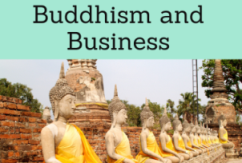
After his enlightenment, Buddha went to Benares (Varanasi), the holy city of Bharat (India), and in the so-called Deer Park on the outskirts of the city, gave his first sermon: The Four Noble Truths, which are the pillar of Buddhism and Buddhist Civilization.
“This is O monks, the noble truth of origin of suffering.
Ignorance, desire - attachment and the five poisons are those who produce new
rebirths, those inclined to seek pleasure and satisfaction here and there, discouraging not to get what we wanted. It is desire for existence, desire for non-existence”
Buddha.


Religions and Global Business -
Religious diversity
- Principles of Buddhist Ethics
- Four Noble Truths
- Noble Eightfold Path of Buddhism
- Buddhist Golden Rule
Sample - Four Noble Truths

The Subject “Principles of Buddhist Ethics” is included within the curriculum of the following academic programs at EENI Global Business School:
Doctorate: Global Ethics, Religions, and International Business, World Trade.

Masters: International Business, Religions and Business.

Why study “Buddhism and Business”?.
Languages:  or
or  Ética Budista
  Bouddhisme
  Budismo.
Mahayana and theravada, Buddhism in the World, Buddhist Economics.
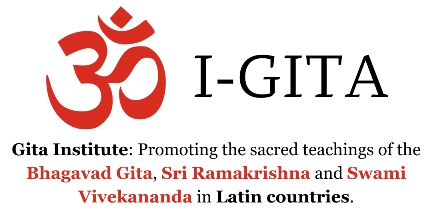
The Four Noble Truths are:
- Life is suffering (“Dukkha”)
- Cause of pain is desire (“tanha”)
- If we overcome the selfish desire; we will eliminate suffering
- The Noble Eightfold Path
In the West; it tends to misinterpret this first noble truth of Buddhism; it is understood as exclusively physical pain. However, suffering should be understood as something broader, as “the pain, which to some degree, encouraged all the finite existence” (Huston Smith).
Suffering may be a pain, sadness, imperfection, affliction, and superficiality. According to the English philosopher Alan Watts converted to Buddhism:
“Duhkha is the great disease of the World whose cure is obtained with the doctrine (Dharma) of Buddha.”
The more we stick to things, more problems may arise for us; it is a similar concept in Hinduism or Taoism.
Ignorance, hatred, longing, attachment are also causes of the pain.
The Fourth Truth, the Noble Eightfold Path, shows us the way to overcome the desire, eliminate suffering and finally reaching Nirvana.
Buddha offers us guidelines to develop a proper conduct, called the five precepts that make up the pillars of Buddhist Ethics.
- Do not kill “I take the precept to respect life.” Derived from the principle of Non-Violence (Ahimsa). Many Buddhists are vegetarians to respect Ahimsa
- Do not steal. “I take the precept of not taking what is not given to me.” Do not take what is not given me, implies Do not steal, not to disappoint, not cheat, not to do embezzlement
- Do not lie (Do not make false speech) “I take the precept of not speaking in a harmful manner”
- Do not indulge in sexual misconduct. “Refrain from inappropriate or harmful sexual behavior”
- Do not take intoxicants
Principles of Buddhist Ethics
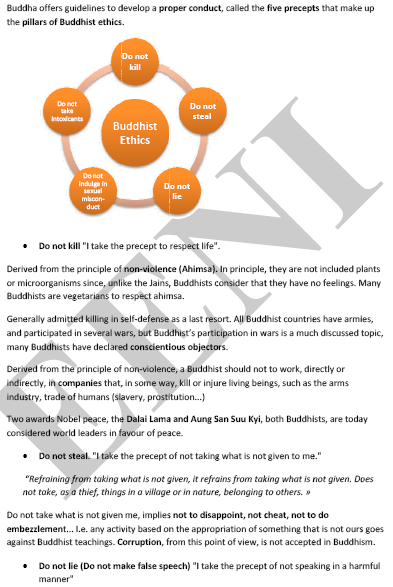
The previous five precepts are the basis of Buddhist ethics for the laypeople, and furthermore, these principles are shared by all the higher religions.
Buddhist version of the golden rule.
In Udana V (“The venerable Sona), in Chapter I” What one wants” we find the golden rule applied to Buddhism:
“This is the sum of duty: do not do to others what would cause pain if done to you”
Two awards Nobel peace, the Dalai Lama and Aung San Suu Kyi, both Buddhists, are today considered world leaders in favor for peace.

(c) EENI Global Business School (1995-2025)
Top of this page
