
Buddhist Economics, Shinichi Inoue







 WhatsApp
Principles of Buddhist Economics: capitalism and socialism

The life of Buddha is the pillar of Buddhist Economics principles. Siddhartha, Buddha, rejected the material comforts of the real life (he renounced to his reign); he noticed futility of asceticism after experiencing the denial of natural physical needs.
“Buddha drew a fine line between materialism and denial of the World, and this middle path or moderate perspective is essential to understanding of Buddhist Economics” Shinichi Inoue.
The Buddhist emphasis on simplicity drives demand for eco-friendly products. In Thailand, 60% of consumers prefer sustainable brands (Nielsen, 2024). Unilever's eco-friendly packaging in Thailand aligns with this trend, boosting sales by 12%.

Buddhist-inspired sustainability appeals to Generation Z, with 70% of respondents preferring eco-friendly brands in Buddhist-majority countries (Deloitte, 2024).
- Introduction to Buddhist Economics
- E. F. Schumacher, “Small is beautiful”
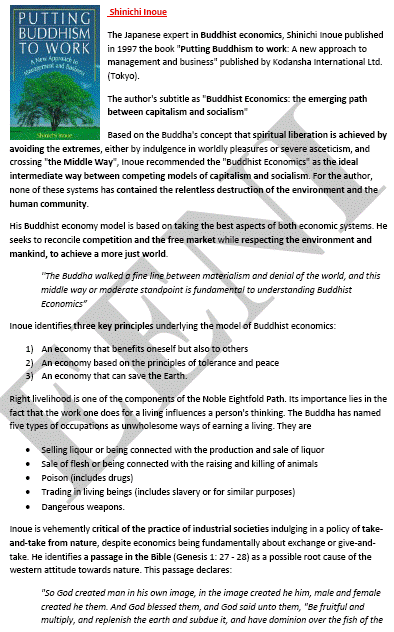
- Shinichi Inoue: “Buddhist Economics: The emerging way between capitalism and socialism”
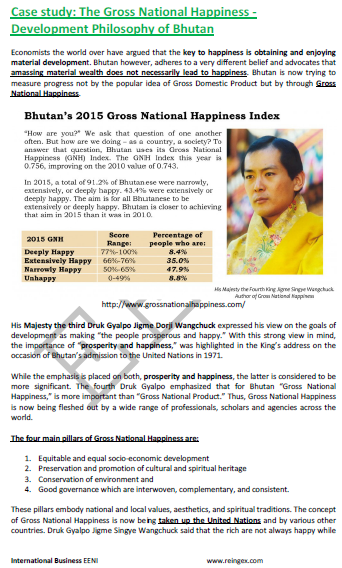
- Gross National Happiness Index
- Manifest for a Buddhist Economics
- Case Study: Unilever's eco-friendly packaging in Thailand
- Religion and ethical frameworks
Buddhist Economics

Religions and Global Business -
Religious diversity

The Subject “Principles of Buddhist Economics” is included within the curriculum of the following academic programs at EENI Global Business School:
Doctorate: Global Ethics, Religions, and International Business, World Trade.

Masters: International Business, Religions and International Business.

Languages:  or
or  Economía Budista
  Économie bouddhiste
  Budismo.

Principles of Buddhist Economics.
Vegetarian festivals like Vesak increase demand for plant-based foods in countries like Sri Lanka, where the meat substitute market grew by 15% in 2024 (Euromonitor).
Buddhism was able to transform the societies and economies in China, Singapore, South Korea, Vietnam, and Japan through the introduction of ethical concepts in the pursuit of profit.
The Japanese expert in Buddhist Economics, Shinichi Inoue published in 1997 the book “Putting Buddhism to work: A new approach to management and business” published by Kodansha International Ltd. (Tokyo). Inoue subtitles the book “Buddhist Economics: The emerging path between capitalism and socialism.”
Based on the concept of Buddha that spiritual liberation is achieved by avoiding extremes, either by indulgence in worldly pleasures or severe asceticism and crossing “the Middle Way,” Inoue recommended “Buddhist Economics” as the ideal middle way between the competing models of capitalism and socialism.
For the author, none of these systems has contained the relentless destruction of the environment and the human community.
His Buddhist economy model is based on taking the best aspects of both economic systems. He seeks to reconcile competition and the free market while respecting environment and humanity, to achieve a more just world.
Inoue identifies three fundamentals principles underlying the model of Buddhist Economics. An economy...
- ... That benefits oneself but also to others
- ... Based on the principles of tolerance and peace
- ... That can saves the Earth
The German economist E. F. Schumacher (1911-1977) wrote this influential book in 1973. Schumacher was an adviser to the UN, and on a trip to Burma developed the concept in his essay “Buddhist Economics,” which was later included in his book “Small is beautiful: a study of economics as if people mattered.”
The essay shows how people should seek the goodness not only for personal development but also for their community. This principle is common to all Asian religions.
As an alternative to the GDP, and based on the studies of Schumacher, in 1972 the King of Bhutan, Jigme Singye Wangchuk, created the Gross National Happiness Index to measure the Bhutanese economy, which according to the King, was based on Buddhist principles.
The true development of humanity is in the complementarity and mutual reinforcement of material and spiritual development” Jigme Singye Wangchuk
Buddhist principles of compassion drive Corporate Social Responsibility in Southeast Asia. In Myanmar, the telecommunications company Telenor supports educational initiatives, aligning itself with Buddhist values and gaining a 10% market share (2023).
Unilever, a global leader in consumer goods, has prioritized sustainability through its Unilever Sustainable Living Plan (USLP), with ambitious goals to reduce the environmental impact of its products. In Thailand, Unilever has implemented specific initiatives to address the problem of plastic waste, promoting eco-friendly packaging and a circular economy. These actions respond to the country's plastic pollution crisis, where only 500,000 of the more than 2 million tons of annual plastic waste are recycled, exacerbated by the increase in waste during the COVID-19 pandemic.

(c) EENI Global Business School (1995-2025)
Top of this page
