Islamic Economics, Sharia, Sunna, Zakat






 WhatsApp
Principles of Islamic Economics: Quran, Sharia, Sunna, Hadith
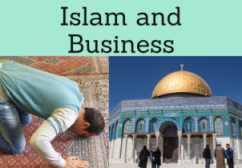
The principles of Islamic Economics are based on the Quran, Sharia, Sunnah, and Hadith (Muhammad's examples and words), like any other aspect of Islam (Islamic Civilization).
The challenges of advertising in Islamic countries revolve around the need to respect strict Religious and cultural norms, avoid stereotypes, and adapt to regulations that restrict content. Companies must navigate these restrictions sensitively to avoid controversy and meet local expectations, which often requires a more inclusive and nuanced approach.
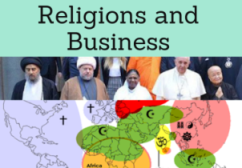
Religions and Global Business -
Religious diversity
- Principles of Islamic Economics
- Importance of the Zakat
- Islamic Banking
- Hawala
- Waqf Fund
- Islamic Economists
- M. Umer Chapra
- Kurshid Ahmad
- Muhammad Abdul Mannan
- Advertising in Islamic countries
- Case Study: Problematic Campaigns in Muslim Markets
- Case Study: Barbie in Hijab
- Case Study: Nike's Low-Key Active wear Line for Muslim Women
- Islamic Consumer Behaviour
- Halal Certificate
- 1.Case Study: Nestlé and Halal Certification in Muslim Markets
- Islamic Chamber of Commerce
- Arab Development Funds
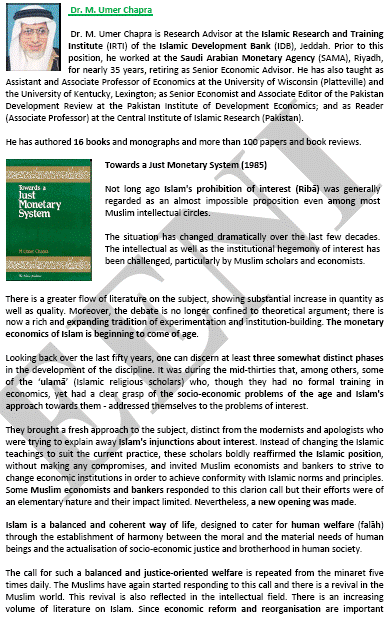
Sample - Islamic Economics (Islamic Development Bank)

The Subject “Islamic Economics” is included within the curriculum of the following academic programs at EENI Global Business School:
Master: Religions & International Business, Business in Africa, International Business.

Doctorate: Ethics, Religion & Business, World Trade.

Languages:  or
or  Economía Islámica
  Économie islamique
  Islão.
As we have seen, the concept of economic system in the West and Islamic Civilization is very different, while the first tends to a secularization of economy, in Islamic Countries religion should play a fundamental role.
Therefore, some scholars speak of an Islamic Economics (since the 60s), which seeks economic progress, but preserving morality and Islamic values, with its characteristics and differentiated in relation to capitalist economy of Western Countries or socialist economy.
Buddhism also developed the concept of a Buddhist Economics.
The central features of Islamic Economics are:
1- Rules of conduct and ethics derived from the Quran and Sunnah
2- Zakat tax as the basis of Islamic fiscal policy.
A good Muslim should pay annually 2.5% of his assets of his net wealth, to benefit the poorest brothers. This act is considered mandatory from a legal standpoint.
for agricultural products, precious metals, minerals, and livestock, the Zakat vary between 2.5 (1/40) and 20%, depending on type of goods.
3- Prohibition of interest (Riba).

Halal food (حلال in Arabic, meaning “permissible” or “lawful") refers to foods and eating practices that are permitted under Islamic law. It is a central concept in the Muslim diet and encompasses everything from the selection of ingredients to the method of preparation and slaughter of animals. For many Muslims, Halal is not just a diet, but a way of living with spiritual, ethical, and health awareness.
Hijab Barbie was launched by Mattel in 2017 as part of its “Shero” line, which celebrates inspiring women. This doll is inspired by Ibtihaj Muhammad, an American fencer and Olympic medalist who competes wearing a hijab. The initiative sought to promote inclusivity and reflect cultural diversity, responding to the growing demand for representation of Muslim women in global products.
France is known for its principle of “laïcité”, a model of secularism that promotes religious neutrality in public spaces. This principle has sparked debates about religious dress, especially the hijab (an Islamic veil that covers the hair and neck), worn by some Muslim women as an expression of faith, identity, or modesty. France has a significant Muslim population (approximately 8–10% of the population, according to recent estimates), making the issue relevant.
In March 2017, Nike, the world's leading sportswear company, announced the Nike Pro Hijab, a high-performance headscarf aimed at Muslim Women Athletes (MWAs), with a particular focus on Middle Eastern athletes. This product, officially launched in December 2017 and available in the Spring 2018 collection, was designed to address the limitations of traditional Hijabs in sports, such as lack of breathability, weight, and the risk of shifting during intense activities.
(c) EENI Global Business School (1995-2025)
Top of this page
