
Zoroastrianism, Business, Ethics, Cyrus Poonawalla








 WhatsApp
Zoroastrian Ethics: Good thoughts, words, deeds. Parsee Businesspeople, Cyrus Poonawalla (India)

“Good Thoughts, Words, and Deeds.”
Zoroastrianism, one of the world's oldest religions (founded by Zarathustra around the 6th century BC in Persia), may seem distant from today's business world. However, its ethical and philosophical principles can shed light on relevant business issues in a global and intercultural context.
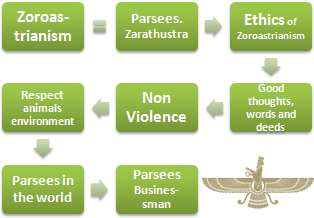
What do they share the owners of the TATA conglomerate, with the famous music conductor Zubin Mehta, with the top model Nauheed Cyrusi, with Freddy Mercuri, with Ardeshir Darabshaw Shroff (author of the Bombay Plan), with the owner of the largest brewery of Pakistan, with the prominent Indian family Wadia, PhD Poonawalla or with the Godrej Group?
The common factor in all of them is their religion: Zoroastrianism, the religion of Zarathustra, the great reformer. Parsees have played a major role in the creation of modern India.
The Subject “Zoroastrianism, Ethics and Business” consists of two parts:
1- Introduction to Zoroastrianism
- Introduction to Zoroastrianism
- Zarathustra
- Ethical Principles of Zoroastrianism
- Non-Violence
- Respect for Animals and Environment
- The 3H (Good thoughts, words, and deeds) and Business Strategy
- Parsees in the World
- Influence of Zoroastrianism on the Hindu Economic Area
2- Zoroastrian Businesspeople.
- Adi Godrej
- Cyrus S. Poonawalla, Director of the Serum Institute of India
- Wadia Family
- Tata Group, Zoroastrian Business Connection in India (Bharat)
Zoroastrianism, Ethics and Business

Religions and Global Business -
Religious diversity
The educational aims of the Subject “Zoroastrianism, Ethics and Business” are the following:
- To understand the fundamentals of Zoroastrianism
- To learn about ethical principles of Parsees
- To learn about the influence of Zoroastrianism on business
- To analyze cases of “Zoroastrian” enterprises and Businesspeople
- To understand the influence of Zoroastrianism on Hindu Civilization

The Subject “Zoroastrianism, Ethics and Business” is included within the curriculum of the following academic programs at EENI Global Business School:
Doctorate: Global Ethics, Religions, and International Business.

Masters: International Business, Religions and International Business.

Why study “Zoroastrianism and Business”?.
Languages:  or
or  Zoroastrismo
  Zoroastrisme.
- Subject Credits “Indian Religions - Zoroastrianism”: 4

- Duration: 4 weeks
- Download the syllabus: “Indian Religions” (PDF)

Zoroastrianism, Ethics and Business.
Although Zoroastrianism is a minority religion today (mainly in India – among the Parsis – and Iran), its cultural legacy influenced ancient legal, ethical, and administrative systems, which are reflected in business practices of transparency and fairness.
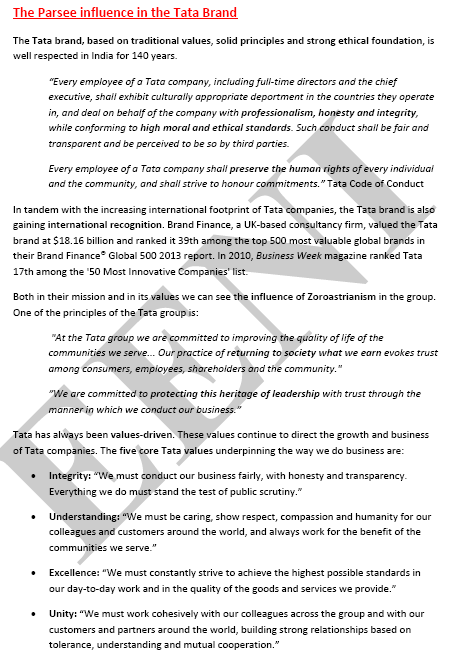
Parsi communities, in particular, have had a major impact on business in India, creating business dynasties (e.g., the Tata) recognized worldwide for their commitment to philanthropy and business ethics.
Today we can consider that the Gatha, part of the sacred books of the Avesta, is surely the first ethical treaty of Humanity.
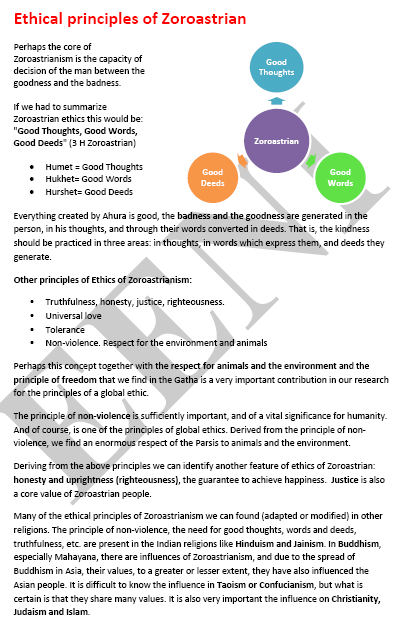
If we summarized the Zoroastrian ethics this would be:
“Good Thoughts, Good Words, Good Deeds” (3 H Zoroastrian).
Everything created by Ahura is good, badness and goodness are generated in the human being, in his thoughts, and through their words converted in deeds. That is, kindness should be practiced in three areas: in thoughts, in words which express them, and deeds they generate.
Perhaps this concept, together with the respect for animals and environment and the principle of freedom that we find in the Gatha is a crucial contribution to our research for principles of a global ethic.
“Goodness and Badness, twin spirits, at the beginning of the universe
They are in thought, in deeds and words,
The wise men will choose goodness and fools will be diverted. The ignorant will choose the worst attitude
Oh, Ahura! I want to be part of You. Among those who renew and make thrive the world” Gatha 3,30
Ethical Principles of Zoroastrianism
- Good thoughts, good words, and good deeds
- Truthfulness, honesty, justice, and righteousness
- Universal love
- Tolerance
- Non-Violence (Ahimsa). Respect for environment and animals
The principle of non-violence is large enough, and a vital significance for humanity. Moreover, is one of global ethics principles. Derived from the principle of Non-Violence; we will find an enormous respect of Parsees to animals and environment.


Arising from the above principles, we can identify another feature of Zoroastrian ethics: honesty and uprightness (righteousness), guarantee to achieve the happiness. Justice is also a core value of Zoroastrian people.
Perhaps the core of Zoroastrianism is the capacity of decision of man between goodness and badness.
Many of the ethical principles of Zoroastrianism can be found (adapted or modified) in other religions. The principle of Non-Violence, need for good thoughts, words, and deeds or truthfulness are present in ndian religions like Hinduism and Jainism. In Buddhism, especially Mahayana, there are influences of Zoroastrianism.
It is hard to know the influence of Taoism or Confucianism, but what is certain is that they share many values. It is also crucial the influence on Christianity, Judaism, and Islam.
Zoroastrianism/Parsees.
- Prophet: Zarathustra (568 BCE)
- Country of Origin: Persia (Iran)
- Holy book: Avesta. Gatha
- Zoroastrian Community: Parsees (India)
- Good: Ahura Mazda
- Followers: between 145,000 and 250,000
- Main cities: Gujarat and Mumbai (India). Parsees communities are also significant in Mumbai

Fundamental ethical principles applicable to business
Zoroastrianism in the global business context represents a bridge between ancient ethical tradition and modern practices of responsible leadership, sustainability, and corporate social responsibility. Although its direct impact today is minor, its principles remain relevant and are manifested in models of ethical governance and successful intercultural business.
- Humata, Hukhta, Huvarshta (good thoughts, good words, good deeds):
- They align with modern trends in corporate ethics, CSR (corporate social responsibility) and ESG (environment, society and governance).
- Duality between good and evil (Asha vs. Druj):
- Translated into the business context, it reflects the struggle between transparent and sustainable practices versus corruption, exploitation, and unfair practices.
- Free will and individual responsibility:
- Promotes the notion that every business decision has consequences, strengthening the concept of responsible leadership.
Some famous Parsees Businessman: Sir Dinshaw Maneckji Petit, Jehangir Hormusjee Ruttonjee, Ardeshir Darabshaw Shroff (co-author of the Bombay Plan of post-independence India, former Director of Tata), Byram Dinshawji Avari, Keki Dadiseth, or Minocher Bhandara.
Sacred Symbol of Zoroastrianism: Faravahar


(c) EENI Global Business School (1995-2025)
Top of this page
