
Why study Hinduism, Ethics and Business?









 WhatsApp
Business and Hinduism, Zoroastrianism, Jainism (Course / Master / Doctorate)
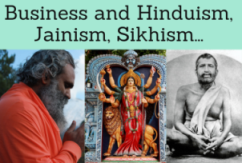
This online educational program is aimed at those executives and enterprises wishing to do business in Bharat (India) (a BRICS Country), a market where the influence of Hinduism (1,210 million Hindus, the third religion in the world) is fundamental, as well as in the countries of the Hindu Economic Area (Mauritius, Nepal, Bhutan...).
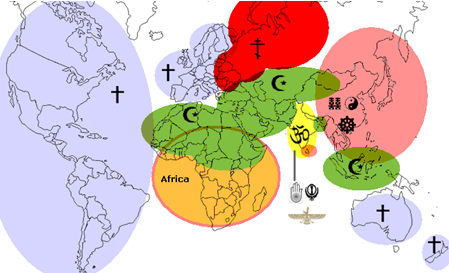
Religious diversity and geopolitical tensions
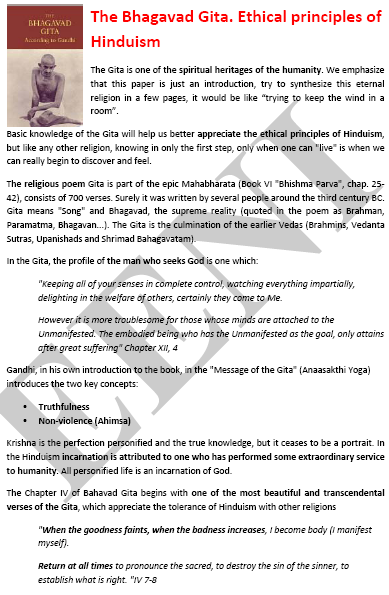
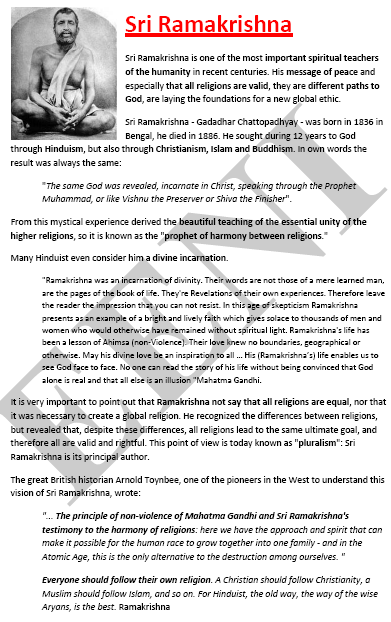
To better understand the pillars of Hinduism (Ahimsa, detachment, truthfulness...) one of the sacred texts of Hinduism will be analyzed: the Bhagavad Gita (according to the interpretation of Mahatma Gandhi) as well as the teachings of Sri Ramakrishna (the prophet of Harmony of Religions) and Swami Vivekananda.
All of them have contributed to the so-called ethical renewal of Hinduism, greatly influencing current Indian society and many of Indian entrepreneurs.
The Indian conglomerates (Aditiya Birla, Infosys, Reliance, Hinduja, TATA...) have become a key players in the Global Economy, being present in the five continents and controlling important enterprises in Europe, the United States, Asia and Africa.
Related Doctorate, Masters and Courses offered by EENI Global Business School:
Bhagavad Gita Courses, Realization of the Gita
Doctorate (DIB): Ethics, Religions & International Business, Asian Business
Masters (MIB): Religions & Business, International Business

Religions and Global Business -
Religious diversity

Why study the course “Indian Religions and Business: Hinduism, Zoroastrianism, Jainism and Sikhism”?
To better understand the business idiosyncrasies of these conglomerates, the course analyze the profile of more than twenty Indian businessmen and executives and the influence of each religion on its business strategy and corporate social responsibility policies.
Hindu Businesspeople (Hinduism)
- Kumar Birla: president of the Aditya Birla Group (the first multinational corporation in India)
- Senapathy Gopalakrishnan: co-president of Infosys (one of the largest technology enterprises in the world)
- Shri Mukesh Ambani: director of Reliance Industries (3% of Indian GDP) and the ninth richest person in the world
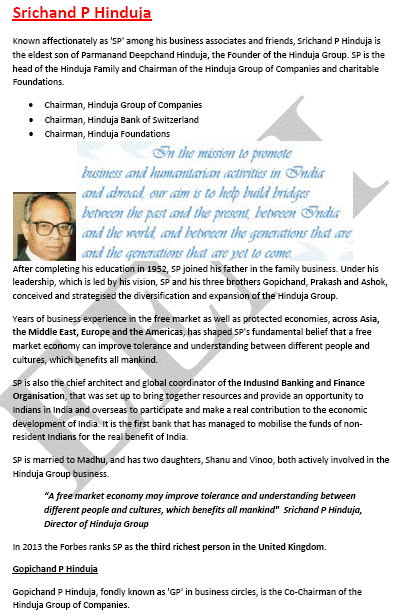
- Srichand P Hinduja: president of the Hinduja Group (one of the largest diversified groups in the world); the Hinduja group is characterized by the application of Vedic principles in its business strategy
- Kiran Mazumdar: founder of BIOCOM, the largest biotechnology company in India, she applies a policy of affordable prices for everyone for their anti-cancer drugs
But it is also necessary to know the influence of Zoroastrianism (the Tata Group controls Western brands such as Jaguar, Land Rover or the Korean Daewo), Jainism (the family Sahu Sain controls the largest Indian communication group), Sikhism (multinationals such as Rotchild or Mastercard have hired Sikh managers because of their rectitude) and Islam (Yusuf Khwaja Hamied is the founder of CIPLA, one of the largest generic pharmaceutical enterprises in the world) in India.
Therefore, the profiles of the following entrepreneurs are analyzed:
Zoroastrian (Parsees) Businessmen
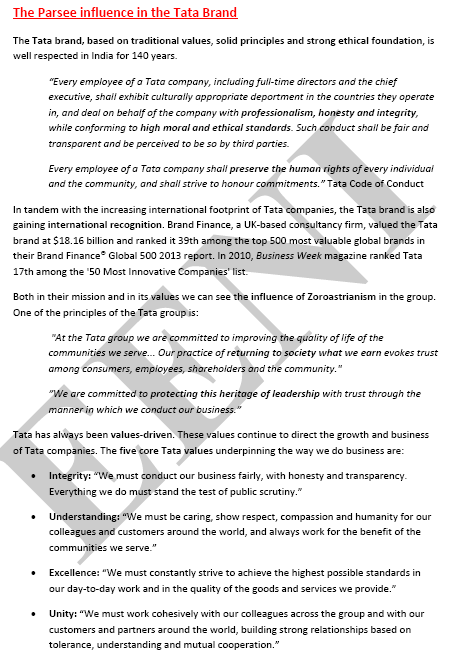
- TATA Group: one of the largest enterprises in the world (3.2% of Indian GDP, 450,000 workers worldwide)
- Cyrus S. Poonawalla: founder of one of the largest pharmaceutical enterprises in the world, his vision is “Health for all with vaccines at affordable prices”: half of the world's children are vaccinated with one of their vaccines
- Adi Godrej: president of the Godrej Group (one of the main Indian conglomerates) and one of the richest Indians (patrimony of 9 billion dollars)
- Musli Wadia: President of the Wadia Group, one of the oldest conglomerates in India (founded in 1736)
Jain Businessmen
- Sahu Jain: The Times Group, belonging to the Jain family Sahu Jain, is the largest communication company in India (Bharat)
- Ajit Gulabchand: President of one of the largest Indian construction enterprises (HCC Hindustan)
- Gautam Adani: President of the Adani Group, one of the largest Indian conglomerates
- Bhavarlal Jain: Founder of Jain Irrigation Systems and the Jain Charities Fund
- Other Jain entrepreneurs
Sikh Businessmen
- Ajaypal Singh Banga: CEO of MasterCard
- Hardeep Singh: founder of Tulip Telecom
- Malvinder and Shivinder Singh: Founders of Fortis Healthcare, one of the largest healthcare providers in Asia-Pacific
- Jogishwar Singh: the managing director of the Rothschild Group (Switzerland)
- Azim Premji: director of Wipro (a global information technology company), according to the Financial Times, he is one of twenty-five people who “have drastically changed the way we live, work or think”
- Yusuf Hamied: founder of CIPLA one of the largest generic pharmaceutical enterprises in the world. Dr Hamied is leading the global fight against AIDS, with a policy of affordable prices for all
Therefore, this course is also recommended for anyone who wants to do business with Indian enterprises from anywhere in the world or who wants to work in a company of Hindu origin.
Hindu Civilization defines the Hindu Economic Area, whose central state is India, but which extends to Asia and Africa.
For this reason, the main Economic Organizations operating within the Hindu economic area are also analyzed, such as the South Asian Association for Regional Cooperation, Bay of Bengal Initiative, Asian Clearing Union, SASEC or Asia-Pacific Trade Agreement.
As well as the Free Trade Agreements of India with Sri Lanka, ASEAN, Thailand, Singapore, Chile, MERCOSUR, Andean Community, South Korea, European Union, New Zealand, Mauritius, European Free Trade Association (EFTA), Indonesia, Gulf Cooperation Council (GCC), Canada, Australia, Southern Africa Customs Union...
The course is also aimed at all those who wish to do business in the markets of the Hindu Economic Area (Mauritius, Nepal, Bhutan, Bangladesh, Indonesia -Bali-).
In Africa, particularly in East Africa, the Hindu influence, in a clear competition with Chinese enterprises, is increasingly important, and it is therefore necessary to know the Framework Agreement for the Africa-India Cooperation.
Sample: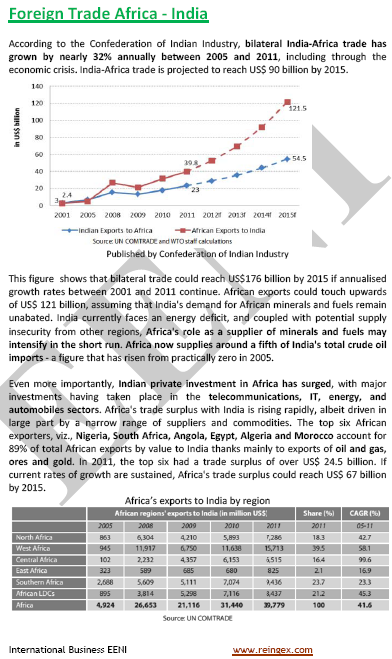


 Religiones de India
  Religions de l’Inde
  Religiões da Índia.
(c) EENI Global Business School (1995-2025)
Top of this page
