
Trade Agreements (Foreign Trade)







 WhatsApp
Treaties between countries designed to promote international trade
Trade agreements are formal treaties between countries or regions designed to promote international trade by reducing or eliminating barriers such as Tariffs, quotas, and import/export Restrictions. These agreements often include provisions for investment protection and Dispute Resolution. Their primary objectives are to stimulate economic growth, expand market access, and strengthen international cooperation.
Types of Trade Agreements
Unilateral Agreements:
A single country independently reduces or eliminates Technical Barriers to Trade without expecting reciprocal actions from other nations. These are rare and can put the implementing country at a competitive disadvantage if not strategically planned.
Bilateral Agreements:
Agreements between two parties—either individual countries or trade blocs—that mutually reduce trade barriers. An example is the U.S.–Japan Critical Minerals Agreement signed in 2023, which enhances supply chain cooperation and market access for key minerals.
Multilateral Agreements:
These involve multiple countries and are often regional in scope. Notable examples include:
- World Trade Organization (WTO)
- The United States–Mexico–Canada Agreement (USMCA), formerly NAFTA, which promotes trade integration across North America.
- The Eurasian Economic Union (EAEU), comprising Armenia, Belarus, Kazakhstan, Kyrgyzstan, and Russia, which facilitates economic cooperation and common policies among member states.
- COMESA-EAC-SADC Tripartite
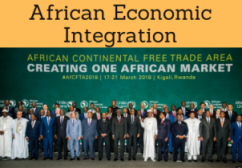
- African Continental Free Trade Area (AfCFTA)
- Trade Negotiations Among Developing Countries
- Global System of Trade Preferences

The Subject “Trade Agreements” is included within the curriculum of the following academic programs at EENI Global Business School:

Masters: International Business, Foreign Trade, International Transport.

Doctorate: Global Logistics, World Trade.

Course: Foreign Trade Management.
Course: Foreign Trade Assistant.

Languages:  or
or  Accords commerciaux
  Acuerdos comerciales
  Acordos comerciais.
(c) EENI Global Business School (1995-2025)
Top of this page
