
European Foreign Policy. External Relations






 WhatsApp
Enlargement and Neighborhood policies, European Union. Eastern Partnership
- Introduction to External Relations and trade Policy of the European Union
- European Union's Common Foreign and Security Policy (CFSP)
- Historical evolution of EU Foreign Policy
- Role of the European Parliament and the European External Action Service
- The European Union and the World Trade Organization (WTO)
- Enlargement and neighborhood policies of EU
- EU Enlargement
- European Neighborhood Policy
- Eastern Partnership. Agreements with Georgia, Moldova and Ukraine
- Western Balkans
- South Caucasus
- Black Sea Synergy
- Adriatic-Ionian Initiative
- European Economic Area (European Free Trade Association) and Switzerland
- Southern partners: Algeria, Egypt, Israel, Jordan, the Lebanon, Libya, Morocco, Palestine, Syria and Tunisia
- Customs Unions with Andorra, San Marino and Turkey
- Strategic partners of EU:
- United States
- Canada
- Japan: The EU is negotiating a free trade agreement and a strategic partnership agreement
- India
- China
- South Korea
- Relationships beyond the EU Neighborhood
- Russia
- Arab Countries: Agreements with the Gulf Cooperation Council (GCC), Iraq, Yemen
- Asia: Agreements with the ASEAN, Indonesia, Singapore,
Vietnam, Papua New Guinea, Fiji, Kazakhstan, Central Asia, New Zealand
- The European Union has not relations with Iran
- Latin America and the Caribbean (EU-CELAC): Agreements with the Andean Countries, the CARIFORUM, the MERCOSUR, Mexico, Central America and Chile
- Africa: Strategic Partnership with the European Union (Cotonou Agreement)
- Agreements with the CEDEAO, Cameroon, Ivory Coast, South Africa, Ghana, SADC, EAC
- Agadir Agreement
- The European Union Trade regimes applicable to Developing Countries
- Generalized System of Preferences (EU GSP)
- EU Agreements
- Introduction to the EU Foreign Trade
- EU's Development Policy.
- 2030 Agenda for Sustainable Development
- Financial instruments for the external action
- The European Union humanitarian aid
- Other regional institutions related to the EU
- Asia-Europe Meeting
- Central European Initiative
- Organization for Security and Cooperation in Europe (OSCE)
- Council of the Baltic Sea States
- Regional Cooperation Council
- SAARC(Observer)
- United Nations UNECE
Sample: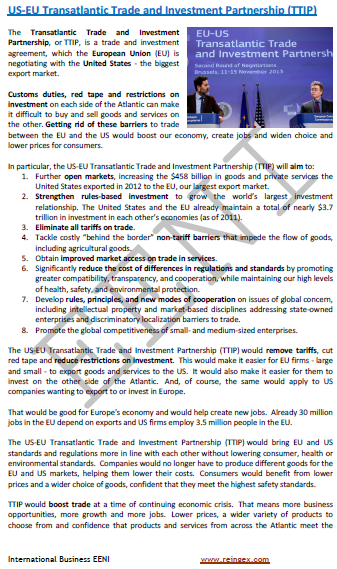

The educational aims of the Subject “European Foreign Policy” are the following:
- To learn about fundamentals of EU's Foreign Policy
- To analyze the EU enlargement and Neighborhood policies
- To understand the EU's relations with its strategic partners
- To analyze the EU's relations with other regions (Africa, America, Asia...)
- To understand the EU trade regimes applicable to Developing Countries and the Generalized System of Preferences (GSP)
- To analyze the EU economic agreements and Trade Agreements

The Subject “European Union Foreign Policy” is included within the curriculum of the following academic programs at EENI Global Business School:

Masters: International Business, Foreign Trade.

Languages:  or
or  Politica Exterior UE
  Politique extérieure de l’UE
  Política Externa da UE.
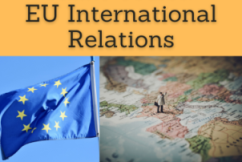
In 1993 the EU created the Foreign and Security Policy.
The European Parliament oversees the EU Foreign Policy through the European External Action Service.
The objectives of EU Foreign Policy are:
- Peace Preservation
- Strengthening international security
- Promoting international cooperation
- Fostering the rule of law, human rights and democracy
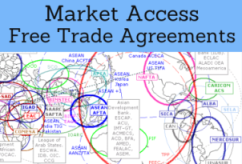
Since the crisis of 2008, the EU has promoted Free Trade Agreements and association agreements with third countries seeking, among other things, to reduce trade barriers faced by many European exporters.
(c) EENI Global Business School (1995-2025)
Top of this page
