India-Sri Lanka Economic Partnership Agreement


Sri Lanka-India Free Trade Agreement Duty-free market access
- Introduction to the Comprehensive Economic Partnership Agreement between India and Sri Lanka
- India-Sri Lanka Agreement
- Certificate of origin
- International Trade between India and Sri Lanka
- Asia-Africa Corridor

The Subject “India-Sri Lanka Comprehensive Economic Partnership Agreement” belongs to the following Online Programs taught by EENI Global Business School:
Course: Hinduism and Business.
Bhagavad Gita Courses: Karma Yoga, Bhakti Yoga, Jnana Yoga, Dhyana Yoga, Realization of the Gita
Masters: International Business, Foreign Trade.

 Master and Doctorate in International Business for the Indian and
  Sri Lankan Students.
 or
or 


India-Sri Lanka Economic Partnership Agreement.
The India-Sri Lanka Free Trade Agreement entry into force in 2000.
Sample - India-Sri Lanka Comprehensive Economic Partnership Agreement (FTA)
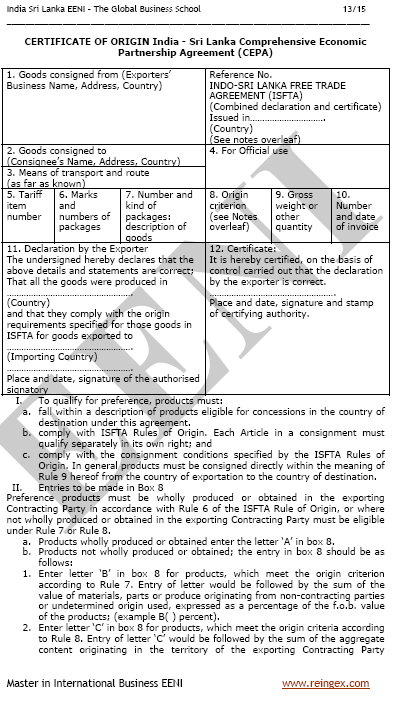
- The India-Sri Lanka Comprehensive Economic Partnership Agreement provides a duty-free market access for India and Sri Lanka
- India has agreed to permit limited quantities of tea and garments imports from Sri Lanka
- The tea Quota will be 15 million kilogram annually and garments 8 million pieces
International trade between India and Sri Lanka
Sri Lanka is the largest trade partner of India in the South Asian Association for Regional Cooperation region.
- The bilateral trade between India and Sri Lanka has grown four times in the last nine years
- Top Indian exports to Sri Lanka are petroleum, international transport equipment, cotton, yarn fabrics, sugar, drugs pharmaceuticals, and fine chemicals
- Top Sri Lankan exports to India are spices, electrical, machinery, transport equipment, pulp and waste, natural rubber, and paperboard

The India-Sri Lanka Economic Partnership Agreement belongs to:
(c) EENI Global Business School (1995-2024)
We do not use cookies
Top of this page