Confucian Ethics. Golden Rule. Zhang Ruimin





 WhatsApp
Golden Rule of Confucianism: Do not do unto others what you do not want others to do unto you
Taoism, Confucianism & Business
“Self-control and insistence on rites are what will result in Benevolence (Ren). Benevolence comes from yourself, not from others.” Analects Book XII-1
The concept of guanxi (networks of relationships based on trust and reciprocity) is central to Confucianism and Asian business. Companies often prioritize long-term relationships with partners, suppliers, and customers, rather than purely economic transactions.
On a global level, Western companies operating in Asia must adapt to this dynamic, investing time in building trust before closing deals. For example, business dinners or gestures of courtesy are essential for establishing guanxi.
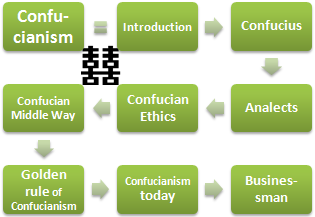
- Ethical Principles of Confucianism
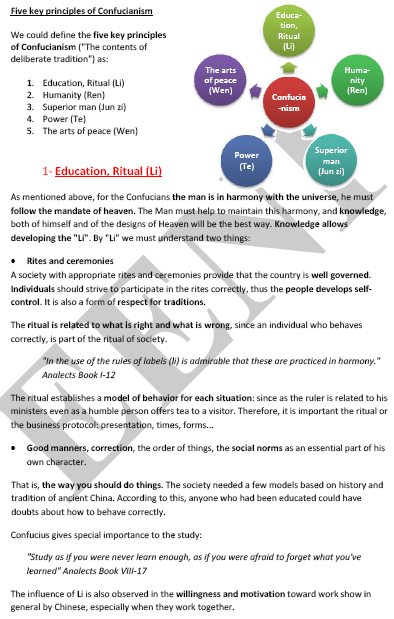
- Five fundamental principles of Confucianism: Education - Ritual (Li), Humanity (Ren), Superior man (Jun Zi), Power (Te), arts of Peace (Wen)
- Confucian Middle Way
- The Man morally superior
- Right words
- Golden Rule of Confucianism
Sample - Confucian Ethics

Religions and Global Business -
Religious diversity

The Subject “Principles of Confucian Ethics” is included within the curriculum of the following academic programs at EENI Global Business School:
Masters: International Business, Religions and Business.

Doctorate: Global Ethics, Religions, and International Business, World Trade.

Languages:  or
or  Ética Confuciana
  Éthique confucéenne.

Confucius fought against the concept of a feudal society, seeking a way to structure the society so that positions of responsibility were occupied by the “superior moral man.” A revolutionary idea, both in his and our times.
In Confucianism, both man and society in which he lives are a small part of the universe. The universe is immersed in a order, in a harmony. Any attempt to break this harmony creates troubles, at this point coincide with Taoism. Somehow, this concept creates a sense of predestination.

The “Golden Rule” of Confucianism
Perhaps the following sentence of Confucius is already known to the reader:
“Do not do unto others what you do not want others to do unto you.”
We can found this “golden rule” in virtually all the higher religions in the World. Moreover, is the cornerstone of Confucian Ethics. In the Analects is cited three times:
Zigong said: “What I do not want to be done to me, I do not want to do to others.”
Confucius said, “You have not yet reached this perfection.” Analects Book V-11
In XV-23 is repeated in a similar way.
“Confucius “The Benevolence is not to do to others what you would not want to be done to yourself” Analects XII-1”
The five fundamental principles of Confucianism - (“The contents of deliberate tradition”):
1. Education, Ritual (Li).
Confucianism values continuous learning and self-improvement, which translates into a corporate culture that invests in employee training and skill development.
- At the global level, companies such as South Korean (e.g. Samsung) or Japanese (e.g. Toyota) reflect this principle by implementing intensive training programs and promoting continuous improvement (kaizen).
“Study as if you never learned enough as if you were afraid to forget what you have learned.” Analects.
2. Humanity (Ren).
Confucianism advocates moral rectitude (ren) and ethical behavior, which influences corporate social responsibility (CSR). Companies inspired by this philosophy tend to prioritize the well-being of employees, the community, and the environment.
- In a global context, this aligns with growing demands for sustainability and business ethics, such as ESG (environmental, social, and governance) criteria.
- Through its Sustainable Living Plan, Unilever applies Yi by prioritizing ethical practices, such as sourcing 100% of its palm oil from sustainable sources, even at a higher cost. This approach reflects a commitment to the common good and sustainability, aligning with Ren by considering the impact on communities and the environment.
“Ren is to love others.” Analects Book XII-22

3. Superior Man (Jun zi).
“Superior man is centered on justice, vulgar in benefit.” Analects 4-16
4. Power (Te) “Te is the power by which men are governed.”
The right thing is not implanted in society or by force or by law, but by the influence of people admired and respected. If the leader is inept, society does not work.
5. Arts of Peace (Wen).
“Let the will be set on the path of duty. Let every attainment in what is good be firmly grasped. Let perfect virtue be accorded with. Let relaxation and enjoyment be found in polite arts” Analects VII-6
Confucianism promotes a clear hierarchical structure in relationships, which translates into business organizations with well-defined roles and respect for superiors. In Asian companies, this is reflected in centralized decision-making and the importance of loyalty to the leader or the company.
- In a global context, this approach can pose challenges in more egalitarian cultures (such as Western ones), where horizontal participation is valued. However, it also fosters stability and clarity in chains of command.
Alibaba, founded by Jack Ma, bases its success on building networks of trust (guanxi) through its platform, which connects buyers and sellers with rating systems that reinforce mutual trust. Its hierarchical structure, with charismatic leadership, reflects respect for Confucian authority. Furthermore, Alibaba fosters employee loyalty through a culture that values community and long-term commitment.
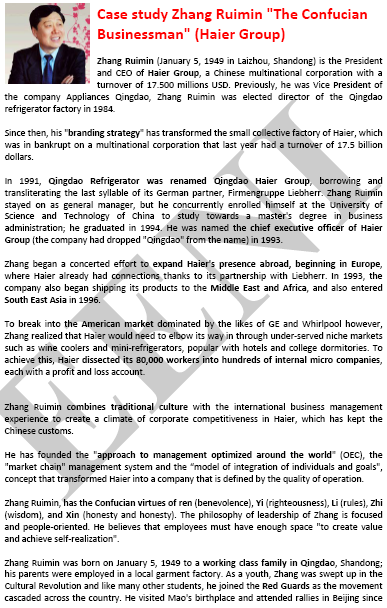
The General Director of Haier, Zhang Ruimin or the Director of Evergreen (Taiwan), Chang Yung-fa, are good examples of managers with Confucian values.
Huawei reflects Zhi through its focus on strategic innovation and R&D investment, which has allowed it to lead the telecommunications industry. Its commitment to reliability (Xin) is evident in building long-term relationships with partners and customers, while maintaining standards of quality and transparency
Confucian Dynamism
Chinese scientists and expert M. Bond (1987) have developed a new approach to the Intercultural Negotiation that includes traditional Asian values. The Confucian Dynamism means the extent to which a society shows a pragmatic future-orientation, compared to a conventional historical perspective view from a short-term perspective.
Confucianism has significantly influenced to Peter Drucker. He describes Confucian ethics as a guide to ethics of Organizations: “It is that has been more successful and longest running: Confucian ethics, the interdependence.”
(c) EENI Global Business School (1995-2025)
Top of this page
