
Business in Saint Lucia, Exports. Castries





 WhatsApp
Saint Lucian Foreign Trade, Business in Castries (Saint Lucia)
The banana-related industry is the main economic activity of Saint Vincent and the Grenadines
Other important crops are: cocoa, coconut, citrus
Emerging sectors: tourism and off-shore banking
85% of the population has an African origin

- Introduction to Saint Lucia
- Doing Business in Castries
- Saint Lucian Economy
- Saint Lucian Foreign Trade
- Transport and Logistics
- Business Opportunities in Saint Lucia
- Access to the Saint Lucian Market
- Business Plan for Saint Lucia

The educational aims of the Subject «Doing Business, Trade and Transport in Saint Lucia» are:
- To analyze the Saint Lucian Economy, Logistics and Global Trade
- To conduct research on business opportunities in Saint Lucia
- To research the trade relations of Saint Lucia with the student's country
- To know Trade Agreements of Saint Lucia
- To develop a business plan for the Saint Lucian Market

The Subject «Foreign Trade, Logistics and Business in Saint Lucia» is included within the curriculum of the following academic programs at EENI Global Business School:
Masters: International Business, Foreign Trade.

Languages:  (
( Santa Lucia
 Sainte-Lucie
  Santa Lucía).
International Trade, Logistics and Business in Saint Lucia
Preferential Access and Trade Agreements of Saint Lucia:
- Saint Lucia and the Caribbean Economic Area
- CARICOM
- CARICOM-Dominican Republic Agreement
- Costa Rica-CARICOM Agreement (Saint Lucia)
- CARIFORUM-EU Agreement
- Colombia-CARICOM Agreement (Saint Lucia)
- UK-CARIFORUM Free Trade and Economic Integration Agreement
- Caribbean Basin Initiative
- The United States-Caribbean Basin Trade Partnership Act (CBTPA)
- Caribbean-Canada Trade Agreement
- Association of Caribbean States
- Organization of Eastern Caribbean States
- World Trade Organization (WTO)
- Agreement on Trade in Services (GATS)
- Agreement on Sanitary Measures
- Agreement on Technical Barriers to Trade
- Agreement on Preshipment Inspection
- Agreement on Safeguards
- Trade Facilitation Agreement
- BIC (Containers)
- Chicago Convention (ICAO)
- International Maritime Organization (IMO)
- Is not a member of WCO
- Kyoto Convention

- Community of Latin American and Caribbean States (CELAC)
- European Union-CELAC Summit
- Organization of American States (OAS)
- Economic Commission for Latin America (ECLAC)
- United Nations
- Conference on Trade and Development (UNCTAD)
- International Trade Centre
- World Intellectual Property Organization (WIPO)
- World Bank
- World Trade Organization (WTO)
- International Monetary Fund
- International Organisation of La Francophonie (OIF)
- Commonwealth
- ...
- Saint Lucian Capital: Castries (33% of the population)
- Districts of Saint Lucia: Anse La Raye, Castries, Choiseul, Dauphin, Dennery, Gros Islet, Laborie, Micoud, Praslin, Soufrière and Vieux Fort
- Saint Lucia does not share land borders with any country
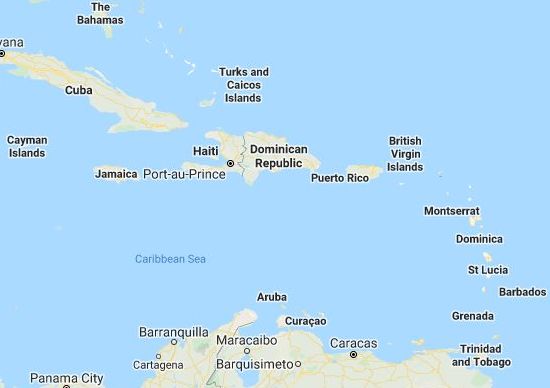
- Nearest countries to Saint Lucia by sea: Barbados, Saint Vincent and the Grenadines and Martinique
- Area of Saint Lucia: 616 km²
- Population of Saint Lucia: 179,000 inhabitants
- Saint Lucian Population density: 300 inhabitants / km²
- Official language of Saint Lucia: English (Saint Lucian Creole)
- Abolition of Slavery in Saint Lucia: 1834
- Climate of Saint Lucia: tropical
- Saint Lucia is a volcanic island
- 1502: discovery by the Spanish (Saint Lucia was a Christian martyr)
- Saint Lucia was colonized by both the British and the French
- 1814: definitive British colonization
- Government type: Parliamentary constitutional monarchy (Queen Elizabeth II, Commonwealth)
- Saint Lucia became independent from the United Kingdom in 1979
Main religion in Saint Lucia: Christianity (Catholicism).
Saint Lucia belongs to the Caribbean Economic Area.
Saint Lucian Economy.
- United Nations Classification: Small Island Developing State
- Saint Lucia's economy depends mainly on tourism and banana income
- Services represent 83% of GDP
- Currency Saint Lucian: East Caribbean dollar (XCD)
- Country code top-level domain of Saint Lucia:.lc
- Saint Lucia has 1.210 Kilometers of roads (847 km are paved)
- George F. L. Charles Airport (Castries)
- Hewanorra International Airport (south of Saint Lucia)
- Main seaport: Port of Castries
Saint Lucian Foreign Trade
- Main Exports of Saint Lucia are bananas, textiles, cocoa, vegetables, fruits, coconut oil
- Main export markets of Saint Lucia: the United States, the UK, France, Brazil
- Main imports of Saint Lucia are food, machinery, chemicals, fertilizers, minerals, transportation equipment and fuels
- Largest providers of Saint Lucia: Brazil, the United States, Trinidad and Tobago, the Netherlands, Venezuela, Finland, the UK, France
(c) EENI Global Business School (1995-2025)
Top of this page
