Business in Dominica, Exports. Roseau




 WhatsApp
Dominican Foreign Trade, Business in Roseau (Dominica)
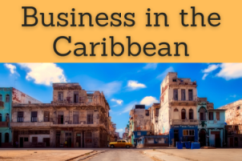
Dominica has positioned itself as an important regional off-shore centre: banking, enterprises, financing.
- Bank confidentiality secret
Significant banana industry
The majority of the population is of African origin (African Diaspora)

- Introduction to Dominica
- Doing Business in Roseau
- Dominican Economy
- Dominican Foreign Trade
- Transport and Logistics
- Business Opportunities in Dominica
- Access to the Dominican Market
- Business Plan for Dominica

The educational aims of the Subject «Doing Business, Trade and Transport in Dominica» are:
- To analyze the Dominican Economy, Logistics and Global Trade
- To conduct research on business opportunities in Dominica
- To research the trade relations of Dominica with the student's country
- To know Trade Agreements of Dominica
- To develop a business plan for the Dominican Market

The Subject «Foreign Trade, Logistics and Business in Dominica» is included within the curriculum of the following academic programs at EENI Global Business School:
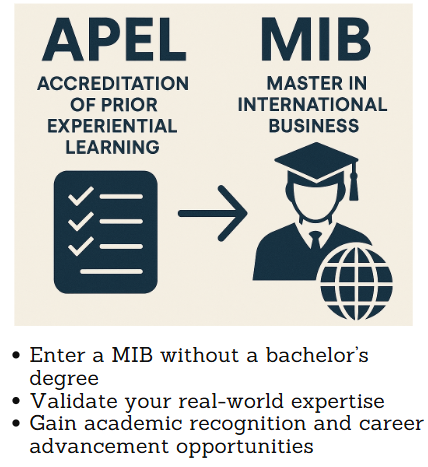
Masters: International Business, Foreign Trade.

Languages  (
( Dominica
 Dominique
  Dominica).
Masters and Doctorate in International Business adapted for the Caribbean students.
International Trade, Logistics and Business in Dominica
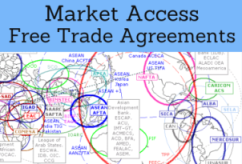
Preferential Access and Trade Agreements of Dominica:
- Dominica and the Caribbean Economic Area
- CARICOM
- CARICOM-Dominican Republic Agreement
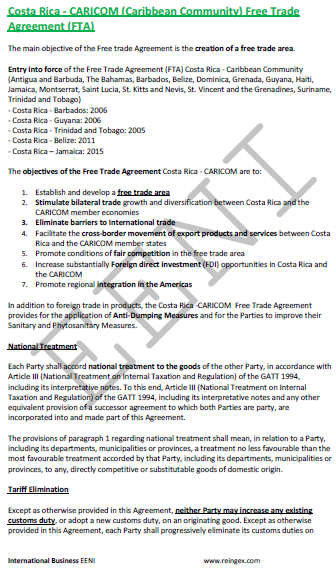
- Costa Rica-CARICOM Agreement (Dominica)
- CARIFORUM-EU Agreement
- Colombia-CARICOM Agreement (Dominica)
- Caribbean Basin Initiative
- The United States-Caribbean Basin Trade Partnership Act
- Caribbean-Canada Trade Agreement
- UK-CARIFORUM Free Trade and Economic Integration Agreement
- Association of Caribbean States
- Bolivarian Alliance for the Peoples of Our America (ALBA)
- Energy supply agreement PetroCaribbean (Venezuela)
- Organization of Eastern Caribbean States (OECS)
- World Trade Organization (WTO)
- Agreement on Trade in Services (GATS)
- Agreement on the Application of Sanitary Measures
- Agreement on Technical Barriers to Trade
- Agreement on Preshipment Inspection
- Agreement on Safeguards
- Trade Facilitation Agreement
- Is not a member of WCO
- Kyoto Convention
- BIC (Containers)
- Chicago Convention (ICAO)
- International Maritime Organization (IMO)
American Trade and Economic Organizations. Dominica is a member of...
- Organization of American States (OAS)
- Economic Commission for Latin America (ECLAC)
- Community of Latin American and Caribbean States (CELAC)
- European Union-CELAC Summit
Global Organizations:
- Commonwealth
- International Organisation of La Francophonie (OIF)
- World Bank
- World Trade Organization (WTO)
- International Monetary Fund
- United Nations
Commonwealth of Dominica.
- Dominica is a French Overseas Territory (PTOUM)
- Dominican Capital: Roseau
- Largest cities: Roseau, Canefield and Portsmouth
- Dominican Parishes: Saint Andrew, Saint David, Saint George, Saint John, Saint Joseph, Saint Luke, Saint Mark, Saint Patrick, Saint Paul and Saint Peter
- Dominica does not share land borders with any country
- Nearest countries to Dominica by sea: Guadalupe and Martinique
- Area of Dominica: 751 km²
- Population of Dominica: 74,000 inhabitants
- Dominican Population density: 105 inhabitants / km²
- Official language of Dominica: English
- French Creole is widely used
- Abolition of Slavery in Dominica: 1834
- Climate of Dominica: tropical
- 1493: discovery by the Spanish (Dominica derives from Sunday, the day that Christopher Columbus discover the Island)
- XVII century: French colonization. Foundation of Rouseau
- 1805: British colonization
- Type of government: Parliamentary Republic
- Dominica became independent from the United Kingdom in 1967
- Boiling Lake has the second most important hot springs in the world
- Territorial tensions with Venezuela over the maritime area that surrounds the Aves Island
Main religion in Dominica: Christianity (Catholicism).
Dominica belongs to the Caribbean Economic Area.
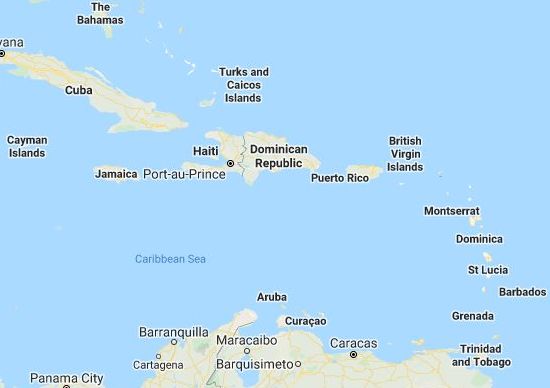
The Dominican Economy.
- Main economic activities of Dominica are: financial services (off-shore), tourism and agriculture
- Other important crops are: citrus, mangoes, tubers, coconuts, cocoa
- Main industries: soap, coconut oil transformation, furniture, cement blocks and footwear
- Currency Dominican: East Caribbean dollar (XCD)
- Country code top-level domain of Dominica:.dm
- Douglas-Charles Airport (45-minute drive to Portsmouth, 1 hour from Roseau)
- Canefield Airport (DCF)
The Dominican Foreign Trade
- Main Exports of Dominica son bananas, soap, vegetables, tamarind, vegetables, grapefruit and oranges
- Main export markets of Dominica: the United States, the UK, France, Brazil, Japan, Jamaica, Antigua and Barbuda, Guyana, Paraguay, Trinidad and Tobago
- Main imports of Dominica: food, machinery, chemicals, fertilizers, minerals, transportation equipment and fuels
- Largest providers of Dominica: Brazil, the United States, Trinidad and Tobago, Netherlands, Venezuela, Finland, UK, France, China, Japan
(c) EENI Global Business School (1995-2025)
Top of this page
