Business in Denmark, Copenhagen, Danish Economy



 WhatsApp
Denmark: one of the least corrupt countries. Danish Foreign Trade, Logistics
Denmark is one of the least corrupt countries in the world
The Kingdom of Denmark is one of the richest countries in the world
Denmark is self-sufficient in energy
Top Danish Industries are food products, machinery, furniture, clothes, chemical products, electronics products, construction products, wind turbines
- Introduction to the Kingdom of Denmark (EU)
- Danish Economy: one of the least corrupt countries in the world
- Doing Business in Copenhagen
- Danish International Trade
- Investment in Denmark
- Foreign Trade and Logistics
- Largest Danish companies
- Access to the Danish Market
- Business Plan for Denmark
The educational aims of the Subject “Foreign Trade, Logistics and Business in Denmark” are:
- To analyze the Danish Economy, Logistics and Foreign Trade
- To conduct research on business opportunities in the Danish Market
- To analyze the Danish trade relations with the student's country
- To learn about Danish free trade agreements as a member of the European Union
- To develop a business plan for the Danish Market

The Subject “Foreign Trade, Logistics and Business in Denmark” is included within the curriculum of the following academic programs at EENI Global Business School:
Masters: International Business, Foreign Trade.
Languages:  +
+  Dinamarca
  Danemark
  Dinamarca.
- Subject Credits “Doing Business in Denmark”: 1

International Trade, Logistics and Business in Denmark
- North Sea-Baltic Corridor
- Pan-European Corridor II
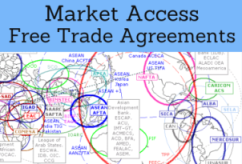
Danish Preferential Access and Trade Agreements:
- Denmark and the European Economic Area
- European Union
- As a member of EU, Denmark is a beneficiary of EU Trade Agreements with Algeria, Ivory Coast, South Africa, South Korea, India, Mexico, Ukraine, Moldova, Georgia etc. besides the Customs Union with Turkey
- European Single Market
- The European Union Services Directive
- European Digital Single Market
- Economic and Monetary Union
- European Customs Union
- Council of the Baltic Sea States
- Regional Cooperation Council
- World Trade Organization (WTO)
- Agreement on Trade in Services (GATS)
- Agreement on the Application of Sanitary Measures
- Agreement on Technical Barriers to Trade
- Agreement on Preshipment Inspection
- Agreement on Safeguards
- Trade Facilitation Agreement
- World Customs Organization (WCO)
- Kyoto Convention
- International Chamber of Commerce
- COTIF Convention (Rail)
- BIC
- Chicago Convention (ICAO)
- International Maritime Organization (IMO)
- Convention for Safe Containers
- Istanbul Convention
- Rotterdam Rules (Maritime Transport)
- Hamburg Rules (Maritime Transport)
- CMR Convention
- International Road Transport Union (IRU)
- TIR Convention
- Guidelines on Safe Load Securing for Road Transport
- International Chamber of Shipping
- CIM & CIT Rules (Rail Transport)
- Customs Convention on Containers - not a member
- European Union
- European Central Bank
- European Investment Bank
- European Bank for Reconstruction and Development (EBRD)
- Economic Commission for Europe (UNECE)
- Organization for Security and Cooperation in Europe (OSCE)
- Organization for Economic Cooperation and Development (OECD)
- United Nations
- Conference on Trade and Development (UNCTAD)
- World Intellectual Property Organization (WIPO)
- Inter-American Development Bank
- World Bank
- World Trade Organization (WTO)
- International Monetary Fund
- Asia-Europe Meeting
- African Development Bank
- Asian Development Bank
The Kingdom of Denmark.
- Capital of Denmark: Copenhagen
- Official Language: Danish
- Area of Denmark: 43,094 km²
- Danish Population: 5.6 million people
- Type of Government: Unitary parliamentary constitutional monarchy (Queen Margaret)
- Border of Denmark: Germany.
- A road joins Sweden and Denmark
- Denmark has two overseas territories: Greenland and Faroe Islands
- Abolition of Slavery in Denmark: 1803
Main Religion in Denmark: Lutheran Protestantism
Denmark belongs to the European Economic Area.
Economy of Denmark.
- Currency of Denmark: Danish krone
- Top Danish enterprises are A.P. Møller-Mærsk (international transport and energy), Lego, ISS, Vestas, Carlsberg
- Denmark joined the EU in 1973
Danish Foreign Trade.
- Main Danish Exports: machinery, foods and instruments
- Top Danish export markets: Germany (17%), Sweden, the UK, Norway
- Top suppliers of Denmark: Germany (21%), Sweden, the Netherlands, the UK, China, Norway
(c) EENI Global Business School (1995-2025)
Top of this page
