
International Development Institutions

International Development Institutions and programs
- European Commission and other European institutions
- World Bank Group
- Regional Development Banks:
- Inter-American Development Bank (IDB)
- Asian Development Bank
- African Development Bank
- European Bank for Reconstruction and Development - Another sub- regional development banks (Andean Development Corporation, CABEI, CDB, BOAD, Islamic Development Bank)
- United Nations Agencies
- Bilateral Aid Agencies (GTZ, DFID, USAID, AECI, France Cooperation)
Languages:  and /or
  Master Comercio Exterior
  Master Commerce International.
Description (International Development Institutions and Programs).
The objectives of this subject are to:
- Acquire sufficient knowledge of the structure activities of key international institutions, their programs and procurements of products, services, and works
- Become acquainted with the websites of these institutions, their procurement notices, loans and technical assistance programs, project databases, the main portals announcing tenders and grants, and databases of experts
In this subject; we will study the advantages and disadvantages of working in projects with funding from the main European and international institutions. We will analyze business opportunities offered by these Organizations.
Moreover, we will become acquainted with the websites of the different institutions and with the main bilateral agencies working with developing or transition countries.
Various financial and non-financial institutions have appeared in the last decades in the international community, with purposes varying from one another, but trying to promote the economic and social development and fight poverty. These institutions can be classified into various types according to the nature of their key activities.
Sometimes these Organizations are known as “multilateral financial institutions” (or “Multilateral Development Banks”), but formally this term refers to the Group of banks (the WB, the Asian Development Bank, the European Bank for Reconstruction and Development, etc.) of a multilateral structure, that is; they belong to a series of countries, which own their capital and enjoy the benefit of having some different instruments to promote the development in the target region.
International Development Institutions and programs:
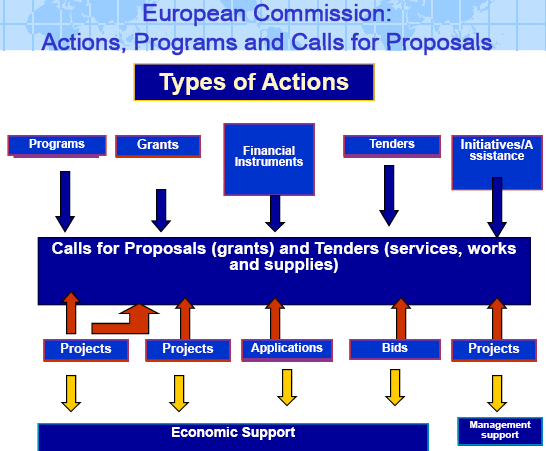
However, some international institution's tendering projects are not of a financial nature, but rather provide technical assistance, international trade-related or research activities.
Both the financial and the non-financial institutions are a major source of business and employment opportunities for companies, individual experts, and Non-Governmental organization.
Business Opportunities with International institutions represent approximately 60 billion dollars per year. Funds provided by the OECD (Organization for Economic Cooperation and Development) member states, whether disbursed as grants, loans or credits for the Emerging and the developing countries are used for financing programs and projects, which contribute to the development and improvement of quality of life of beneficiary countries, these programs and projects, in turn, buy services and goods according to strict procedures, such as national or international tenders and calls for proposals.
The international institution's fund programs the following sectors:
- Rural development and agriculture
- transport
- Environment
- Health and medical equipment
- Energy
- Education and training
- Competitiveness, international trade and Small and medium-sized enterprises
- Infrastructure
- Water and sanitation
- Financial sector
- modernization of the Government
- Macroeconomics support
- Urban development
- Tourism and local development.
INTERNATIONAL FINANCIAL institutions.
The Bank works worldwide to fight poverty through five agencies or units, in virtually all countries of the World and all areas of development, with loans, other financial instruments, grants, technical assistance, research, and training.
This Bank works in the African countries and grants and loans mainly. It grants loans and delivers technical assistance to public borrowers, but can also lend to private companies or banks.
This Bank works in Pacific- Asian countries (it does not operate in the Middle Eastern countries that geographically belongs to the Asian Continent). Among its most active customers, we can find (according to some loans received): China, the Philippines, Indonesia, Thailand, and India.
The European Bank for Reconstruction and Development.
Created in 1990 to support the economic transition towards the market economy in the countries of Central and Eastern Europe and the former Soviet Union, with headquarters located in London. It focuses on both the private and public sector and works in infrastructure, energy, Small and Medium Enterprise, and promoting the market economy.
InterAmerican Development Bank.
It is the main multilateral Bank channelling funds to Latin America and the Caribbean. The main activity of the Bank is granting loans for carrying out projects and technical assistance for reforming the Government structures; develop the infrastructure, and social development.
The European Union PROGRAMS:
The EU has a series of cooperation programs with the third countries, which offer valuable business opportunities: in consulting, supplies, works and infrastructure projects.
The European Union EXTERNAL AID programs (EUROPEAID):
The EU has a series of cooperation programs with the third countries, which offer valuable business opportunities: in consulting, supplies, works and infrastructure projects. The main programs are described and how to spot tender and grant opportunities.
OTHER INTERNATIONAL DEVELOPMENT INSTITUTIONS
The UN agencies and funds, Regional Development Banks, sub-regional banks, international aid agencies, both from countries -called bilateral agencies- and private-public partnerships for development, foundations, and international NGOs; all constitute a very interesting market for tenders, grants and individual contracts for experts. All will be reviewed briefly, their websites and procurement portals analyzed, and the type of announcements for tenders, grants, and experts described.
Additionally, the websites of public and private portals announcing tenders, jobs and loans/projects, and news; will also be reviewed and described (Devbusiness.com, Devex.com; assortis.com;
Development Aid).